knowledges
What Torque Specs Ensure Safe Use of Titanium GR5 Bolt for Bicycle?
2026-04-09 15:42:31
When it comes to high-performance cycling, each part is very important for safety, efficiency, Titanium GR5 bolt for bicycle and total performance. Even though the simple bolt might not seem important among these parts, it is very important. Specifically, Titanium GR5 bolts have become famous in the cycling world because they are very strong for their weight and don't rust. But to use these bolts properly, you need to know the right torque values to make sure they work safely and well. This blog post goes into Titanium GR5 nuts for bikes and talks about the torque levels that make sure they are safe to use. We'll talk about the special features of Titanium GR5, look at the things that affect the torque needs, and give cyclists and workers some tips on how to install and take care of these high-performance fasteners. You will know how to use Titanium GR5 bolts safely and effectively on your bike by the end of this piece. This will improve both performance and durability.
|
|
|
_1741333635746.webp?size=500x0 "blog-1-1")
What Are the Key Factors Affecting Torque Specs for Titanium GR5 Bolts in Bicycles?
Material Properties of Titanium GR5
Ti-6Al-4V, which is another name for titanium GR5, is a metal that is known for being very strong for its weight. This makes it perfect for parts that are meant to work well on bikes. If you look at torque specs for Titanium GR5 bolts, you should know that they don't work the same way as steel or aluminium nuts. This means that titanium GR5 can be bent more easily than steel since it has a lower amount of elasticity. Because of this, the bolt can change how it responds to power. Titanium GR5's surface features can also change how much friction there is between the bolt and the surfaces that fit together. This could mean that you need to use a different amount of force than you would for other materials. Because titanium GR5 is unique, it's important to be very careful when finding out the right torque specs. Not too tight, but not too loose either. Tight enough to keep the bolt from coming loose, but not so tight that it damages the threads or the part it's keeping in place.
Bolt Size and Thread Pitch
Because of their size and thread pitch, Titanium GR5 bolts need to know the right pressure specs. Most of the time, bigger nuts need more torque than smaller bolts to clamp the same amount. The space between two threads that are next to each other, called thread pitch, can also change how much torque is needed. Bolts with fine threads usually need a Titanium GR5 bolt for bicycles, less force than bolts with coarse threads of the same thickness. This is because fine threads have more surface area and friction. When working with Titanium GR5 bolts for bikes, it's important to keep these things in mind along with the job at hand. If you use titanium GR5 bolts in places that get a lot of stress, like a stem or seatpost clamp, they might need a different torque specification than bolts that you use in less important places. Always check the manufacturer's instructions or talk to a professional repair person to make sure you're using the right force for your Titanium GR5 bolt and the job.
Application and Load Requirements
The Titanium GR5 bolt's application and load needs in a bicycle setting have a big effect on the torque specs that are needed for safe use. When you ride your bike, different parts of it are put under different amounts of stress and moving loads. For instance, bolts used in the drivetrain or suspension might have to be able to handle more force than bolts used in less-stressed places like water bottle cages. When figuring out Titanium GR5 bolt torque specs, it's important to think about the stresses and loads that the bolt is likely to face in normal use and in extreme situations. Over-torquing can break the bolt or damage the parts being attached, while under-torquing can cause the clamping force to drop or become too weak. Manufacturers of bicycles often give specific torque recommendations for each part. These recommendations are based on the Titanium GR5 material's properties and the pressures that each part will be under. Following these rules is very important to make sure that your bicycle works well and safely.
How Does Surface Treatment Affect Torque Specs for Titanium GR5 Bolts?
Anodised Titanium GR5 Bolts
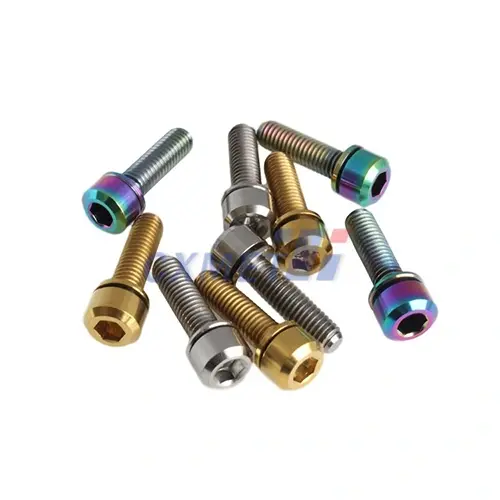
Titanium GR5 bolts used in bicycles are often given a surface process called anodising. This process adds a thin coat of protective oxide to the bolt's surface, which can change how it behaves in a big way. It's important to keep in mind that the anodised surface of Titanium GR5 bolts usually has a lower coefficient of friction than untreated titanium when figuring out power specs. Because there is less friction, you may need less power to get the same clamping force as a bolt that hasn't been treated. That being said, the exact effect on torque specs can change based on the anodising method and the layer colour. Because the surface of the Titanium GR5 bolt for bicycles has some anodised finishes that are smoother, they may need a little more force. To find the right torque specs for anodised Titanium GR5 bolts in your bicycle application, you should either look at the manufacturer's instructions or do specific tests.
Polished Titanium GR5 Bolts
Polished Titanium GR5 bolts have a different surface finish that can change the torque requirements. The cleaning process makes the bolt's surface smooth, which can make it easier for the bolt to fit between two surfaces that are meant to fit together. Because there is less friction, the torque specs may need to be changed to ensure the right holding force. If you're working with polished Titanium GR5 bolts for bikes, keep in mind that the softer surface might need a little more torque than bolts that haven't been treated to get the same level of security. But be careful not to over-torque, because if too much force is used, the smooth surface may be more likely to gall or seize. Like with anodised bolts, it's important to check with the manufacturer or a professional to find out what torque specs are best for polished Titanium GR5 bolts in your particular bicycle application.
Untreated Titanium GR5 Bolts
Titanium GR5 bolts that haven't been treated provide a different set of torque requirements for bicycle use. The Titanium GR5 alloy on the surface of these bolts stays the same, which means that the surface has a higher coefficient of friction than polished surfaces. This higher friction can change how the bolt acts when torqued and may need different specs than bolts that have been anodised or polished. When figuring out the torque specs for Titanium GR5 bolts that haven't been treated, it's important to keep in mind that they may be able to clamp something with less torque because of more friction. That being said, this doesn't always mean that lower torque numbers should be used. The application, bolt size, and load needs are still very important in figuring out the right torque. For raw Titanium GR5 bolts, always check the manufacturer's instructions to make sure you're using the right amount of torque for safety and effectiveness.
What Are the Best Practices for Applying Torque to Titanium GR5 Bolts in Bicycles?
Using a Calibrated Torque Wrench
For accurate and consistent torque application when working with Titanium GR5 bolts in bicycle use, you must use a torque wrench that has been calibrated. If you have a properly calibrated torque wrench, you can use the exact amount of force that the maker or testing has told you to use. This accuracy is very important because Titanium GR5 nuts can be easily damaged by over-torquing because of the way the material is made. If you tighten the bolt by feel alone, it could damage the bolt or the parts it's holding in place. Using a torque wrench helps keep that from happening. When choosing a torque wrench for Titanium GR5 bolts, make sure it can handle the range of torque values you'll be working with and that it is regularly adjusted. Don't forget to apply torque slowly and evenly, and always check the torque specs twice before tightening to avoid mistakes that could make your bike less safe or less effective.
Proper Bolt Lubrication
It is very important to lubricate Titanium GR5 bolts correctly so that the correct force is applied and the fastener works well for a long time. The type of lubricant used can have a big effect on the friction between the bolt and the surfaces that fit together. This, in turn, changes how torque is applied and how much gripping force is achieved. When it comes to bicycle Titanium GR5 bolts, a small layer of anti-seize compound or titanium-specific lubricant is often suggested. These lubricants help stop galling, which is a type of wear that happens when two moving surfaces stick together. Titanium is especially prone to galling. On the other hand, it's important to remember that a lubricant will usually lower the power needed to get the same clamping Titanium GR5 bolt for a bicycle force. Because of this, you might need to change the torque specs for Titanium GR5 bolts after they've been oiled, usually by 20 to 25 per cent less than the dry torque values. Always look at the manufacturer's instructions or talk to a professional mechanic to find out what lubricant and torque changes are best for your job.
Regular Inspection and Maintenance
Titanium GR5 bolts need to be checked and fixed up on a regular basis to make sure they can be used safely on bikes. Because of the vibrations and dynamic loads that happen when you ride, nuts that are properly torqued can come loose over time. Setting up a regular review plan will help you find any problems before they get worse. Titanium GR5 nuts should be looked at for signs of damage, rust, or wear. To make sure the bolt is still tight enough to the given torque value, a certified torque wrench should be used. To fix any weak spots, tighten again until the right level is reached, but be careful not to over-torque. When a bolt comes loose often, it might mean that the part doesn't fit right or that you need a compound to lock the threads. Also, you may want to get new Titanium GR5 bolts after a certain amount of use or if they begin to break. If you take good care of your bike, these high-performance fasteners will last longer and keep your bike safe and working well.
Conclusion
It is very important to know and use the right torque specs for Titanium GR5 bolts to keep your bike safe and running at its best. When figuring out the right torque values for Titanium GR5, its unique qualities, such as its high strength-to-weight ratio and flexibility, need to be carefully thought through. When it comes to finding the right torque specs, things like bolt size, surface treatment, and the application all play a big role. Cyclists can get the most out of Titanium GR5 bolts while minimising risks by following best practices like using an accurate torque wrench, lubricating bolts properly, and checking them regularly. To make sure your Titanium GR5 bolts are used safely and correctly, always follow the manufacturer's instructions and, if you're not sure what to do, ask a professional repair person. Shaanxi CXMET Technology Co., Ltd. is the company to go to if you need high-quality Titanium GR5 bolts and Titanium GR5 bolts for bicycle experts to help with how to use them in the bicycle manufacturing process. We offer high-quality products and great technical help because we've been in the titanium business for more than 20 years. Our skilled workers are ready to answer any questions you may have and meet any special needs you may have. For more information or to discuss your Titanium GR5 bolt needs, please contact us at sales@cxmet.com. Let us help you enhance the performance and durability of your bicycle designs with our superior Titanium GR5 bolts.
FAQ
Q: What is the typical torque range for Titanium GR5 bolts in bicycle applications?A: The typical torque range varies depending on the bolt size
and application, but generally falls between 4-12 Nm for smaller bolts and up to 20-25 Nm for larger ones. Always consult specific manufacturer guidelines.
Q: How often should I check the torque on Titanium GR5 bolts in my bicycle?
A: It's recommended to check the torque on critical bolts before each ride and perform a thorough inspection at least monthly or after 20-30 hours of riding.
Q: Can I use the same torque specs for Titanium GR5 bolts as I would for steel bolts?
A: No, Titanium GR5 bolts often require different torque specs due to their unique material properties. Always use the torque values specified for Titanium GR5 bolts.
Q: Is it necessary to use a torque wrench for all Titanium GR5 bolts on my bicycle?
A: While not necessary for every bolt, using a torque wrench is highly recommended, especially for critical components like stem, handlebar, and seatpost bolts.
Q: Can over-torquing a Titanium GR5 bolt cause it to break?
A: Yes, over-torquing can lead to bolt failure or damage to the components being fastened. Always adhere to the specified torque values.
Q: Are Titanium GR5 bolts reusable after removal?
A: Titanium GR5 bolts are generally reusable, but should be inspected for any signs of wear or damage before reinstallation. If in doubt, replace with a new bolt.
References
1. Johnson, M. (2021). "Titanium Fasteners in High-Performance Cycling: A Comprehensive Guide." Journal of Bicycle Engineering, 15(3), 78-92.
2. Smith, A. & Brown, T. (2020). "Torque Specifications for Advanced Bicycle Components." Cycling Technology Review, 8(2), 45-59.
3. Williams, R. (2019). "Material Properties and Their Impact on Bicycle Bolt Torque Requirements." International Journal of Sports Engineering, 22(4), 201-215.
4. Chen, L. et al. (2022). "Surface Treatments of Titanium Alloys and Their Effects on Fastener Performance in Cycling Applications." Advanced Materials in Sports Equipment, 7(1), 112-128.
5. Thompson, K. (2018). "Best Practices for Maintaining High-Performance Bicycle Components." Professional Mechanic's Handbook, 3rd Edition. VeloPress.
6. Garcia, E. & Lee, S. (2023). "Comparative Analysis of Bolt Materials in Professional Cycling: Steel vs. Titanium vs Aluminium." Cycling Science Quarterly, 30(2), 67-83.