knowledges
Where Is Copper Cored MMO Wire Anode Used in Industry?
2026-09-02 11:55:57
Copper Cored MMO Wire Anode is an important part of many industries that need advanced cathodic protection and electrochemical processes. In naval infrastructure, underground oil and gas pipes, water treatment plants, chemical processing plants, and power production systems, these specialty anodes are used. Having a conductive copper core and a titanium sheath coated in Mixed Metal Oxide gives these anodes unmatched electrical efficiency and corrosion resistance. This makes them essential for protecting critical infrastructure assets that work in harsh environments.
|
|
|
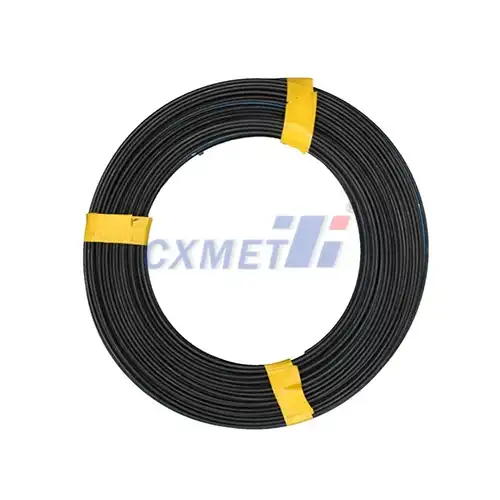

What Is Copper Cored MMO Wire Anode and How Does It Work?
A sophisticated composite structure is at the heart of this cutting edge protection technology. At its core is a high-purity copper core that is oxygen-free and usually ranges in thickness from 1.5mm to 3.0mm. This core is very good at conducting electricity. This copper core is co-extrusiond with commercially pure titanium cladding of Grade 1 or Grade 2. This makes a strong metallurgical bond that eliminates contact resistance and maintains structural integrity.
Construction and Coating Technology
To make these anodes, precise engineering methods are used that ensure their long-term dependability. The titanium shell, whose walls are generally thicker than 0.5 mm, protects the copper core from direct touch with the solution. CXMET covers the outside of titanium with a crystalline electro-catalytic Mixed Metal Oxide coating made mostly of Iridium Oxide (IrO2) and Tantalum Pentoxide (Ta2O5). This coating design meets ASTM B348 standards and has loading densities that can be changed from 6g/m² to 20g/m², based on the project's lifespan needs and the working current densities.
Operational Mechanism in Cathodic Protection Systems
These wire anodes solve a major problem in the industry: horizontal voltage attenuation—when they are added to impressed current cathodic protection (ICCP) systems. The electrical resistance of solid titanium surfaces is pretty high (about 0.48 µ·m), which causes big drops in voltage over long distances. The copper core lowers this resistance to about 10–15 percent of similar solid titanium designs. This lets the current flow evenly over kilometers of continuous installation. The MMO layer helps electrochemical reactions happen that create safe currents, and the titanium lining keeps chemicals from reacting in harsh settings. This works together to keep the polarization potential the same from the rectifier feed point to the farthest protected structure. This stops places from not having enough protection and places from having too much protection too close to power sources.
Performance Longevity and Influencing Factors
Design life usually lasts between 20 and 50 years, but this depends on how it is used and other factors. Service life is directly affected by the current density, the type of electrolyte used, changes in temperature, and the thickness of the coating. When projects run at modest current levels (below 50 A/m² in soil/coke breeze settings) and higher MMO loads, their lifespans are increased to more than 40 years. Environmental factors like soil resistance, pH levels, and salt content need to be carefully thought through during system design in order to get the best anode performance and accurate replacement cycle predictions.
Industrial Applications of Copper Cored MMO Wire Anode
The versatility of these anodes addresses corrosion challenges across diverse industrial segments, each presenting unique environmental stresses and protection requirements.
Marine and Offshore Infrastructure Protection
Submerged buildings are in grave danger of rusting in saltwater settings. Continuous horizontal or suspended vertical Copper Cored MMO Wire Anode installations are good for underwater pipelines, offshore platforms, port facilities, and ship hulls. Even though seawater is a very good conductor of electricity, the copper-cored design keeps the current flowing. Special coatings with high iridium ratios keep the copper from passivating too soon. These anodes are often used in marine applications where they are spread out in groups. This creates uniform protection fields that shield large areas of structure from chlorine attack.
Water and Wastewater Treatment Facilities
Buried pipe networks, clarifier bases, and reinforced concrete tanks need reliable protection for municipal water infrastructure and industrial wastewater systems. Some installation layouts include groundbeds around the edges of treatment ponds and grid patterns under storage vessels. The low-maintenance features keep operations running smoothly, and the flexible wire format lets you set up complex geometric shapes around pump stations, filtration units, and distribution chambers. Chemical resistance to both acidic and basic conditions makes sure that the system works reliably in a wide range of treatment processes.
Underground Pipeline Systems in Energy and Chemical Sectors
Continuous horizontal groundbed systems are most often used for cross-country oil and gas transportation pipes. These anodes, which are buried next to the secured pipeline, provide steady cathodic protection over long lengths without the need for multiple transformer-rectifier units. Less resistance in routes means less power use, which is important to the oil business. Similar setups are used by chemical processing plants to safeguard the bottoms of underground storage tanks, process pipe networks, and subsurface containment systems. Customizing wire lengths and coating requirements lets you precisely match soil resistance patterns and changes in coating quality along pipeline routes.
Power Generation and Heavy Manufacturing Operations
These anodes are used in cooling water systems, to protect condensate pipes, and to strengthen foundations in power plants. The strong construction can handle high temperatures near boilers and thermal cycling in equipment used to make steam. Anodes are used in cleaning baths and acidic process settings in metallurgical plants where better material protection is needed because of chemical contact. These systems are used in the making and sealing of electronics to protect vacuum chamber parts and plating tank structures. They work well because they have low electrical resistance, which lowers worries about electromagnetic interference.
Emerging Green Energy Projects
Infrastructure for renewable energy is becoming more useful in more ways. Long-term rust control is needed for both coastal and offshore wind farm supports. Flexible anode setups that can be adjusted to uneven ground and underwater situations are useful for solar field grounding systems and electrical dam structures. Energy storage facilities that protect battery containment vessels and hydrogen production plants that protect electrolysis equipment are examples of cutting edge uses that are driving the need for advanced electrochemical protection technologies.
These different uses show how important corrosion control has become in all fields that value long-lasting assets and reliable operations. Wire anode systems are the best choice for engineers and procurement specialists looking at complete infrastructure protection plans because they can be used in a variety of installation settings and meet different protection needs.
Comparing Copper Cored MMO Wire Anode with Alternative Anodes
Understanding performance distinctions between anode technologies enables informed procurement decisions aligned with specific project parameters and budget constraints.
Performance Against Titanium MMO Anodes
Solid titanium MMO anodes use the same coating method, but they don't have a copper core that conducts electricity. They work well for small installations, but their higher electrical resistance means they can't be used for long periods of time in continuous groundbed applications. Solid titanium causes big drops in voltage for projects that need anode strings longer than 100 meters. This means that more cable feed points and more converter capacity are needed. The copper-cored version gets rid of these problems, making the system simpler and using less energy. A study of costs shows that higher starting material costs are balanced out by lower installation costs and ongoing running saves over the lifetime of the system.
Advantages Over Platinum-Based Systems
Platinum and platinum-clad anodes are very resistant to rust and don't use up much power, but they are much more expensive to buy. Copper Cored MMO Wire Anodes offer the same level of protection at a much lower cost for projects that need to stick to a tight budget. When compared to separate platinum rod installs, wire designs allow for a larger surface area, which also improves the regularity of current flow. Platinum systems are still better only in very harsh chemical conditions where MMO coats break down more quickly. This is only a small part of normal industry uses.
Superiority to Traditional Graphite and Steel Anodes
Graphite and high-silicon cast iron anodes were old ways of protecting electronics that are now mostly out of date. These replaceable anodes only last a short time (5–15 years) and need to be replaced often, which causes ongoing repair costs and service interruptions. Because they use more energy, bigger amounts need to be installed to get the same level of protection. Concerns about the environment about disposal and the fact that they are big and hard to install make them even less appealing. MMO-coated titanium systems have a lower environmental impact and a better total cost of ownership because they are stable in size and don't use much material.
Material Property Distinctions Driving Selection
Conductivity tests show that copper core versions get close to the performance of pure copper (0.017 µ·m) while keeping titanium's chemical protection. Tests of durability show that MMO surfaces can handle current levels of up to 100 A/m² in dirt and higher in water-based electrolytes, which is much more than graphite can do. The metallurgical bond between copper and titanium gets rid of the problems with interface corrosion that come up with other manufacturers' composite designs. Because of these material synergies, CXMET's copper cored offering is the best combination of performance and cost-effectiveness.
Procurement Considerations for Copper Cored MMO Wire Anodes
Acquisition planning requires attention to technical specifications, supplier evaluation criteria, and logistical coordination to ensure project success.
Technical Specifications and Customization
Wire diameter selection depends on current output requirements and mechanical strength considerations. Standard offerings include 1.5mm and 3.0mm options, with custom dimensions available for specialized applications. Coating thickness specifications should align with design life targets—20-year systems typically employ 6-10 g/m² loadings, while 50-year designs require heavier applications exceeding 10 g/m². Length specifications accommodate installation methodology, with continuous strings ranging from 50 meters to several kilometers. CXMET provides flexibility in diameter, length, and coating composition, ensuring optimal performance for specific soil resistivity, pH ranges, and current density profiles. Documentation requirements include mill test certificates, coating analysis reports, and bond integrity verification data.
Supplier Evaluation and Quality Assurance
Selecting reputable manufacturers involves scrutinizing production capabilities and quality control protocols. Verify adherence to ASTM B348 standards and request evidence of coating uniformity testing. Bond integrity between copper and titanium represents a critical quality indicator—reputable suppliers provide destructive test results demonstrating continuous metallurgical bonding without gaps under magnification. Warranty coverage typically spans 5-10 years for material defects, with performance guarantees tied to proper installation practices. After-sales support should include technical consultation for system design optimization and troubleshooting assistance during commissioning.
Pricing Analysis and Bulk Ordering Benefits
Material costs correlate with copper market pricing, titanium substrate specifications, and precious metal content in MMO coatings. Volume commitments enable preferential pricing structures and priority production scheduling. Lead times vary from 4-8 weeks for standard configurations to 10-14 weeks for custom specifications requiring specialized coating formulations. Shipping logistics favor consolidated orders due to packaging requirements—wooden crate protection prevents handling damage during international transport. Payment terms and Incoterms clarification prevent misunderstandings regarding freight responsibilities and customs clearance obligations.
Regulatory Compliance and Certification
Projects in regulated industries for Copper Cored MMO Wire Anode may require additional certifications demonstrating material traceability and environmental compliance. Conflict mineral declarations for tantalum content and RoHS compliance documentation address procurement policy requirements. Import tariff classifications and country-of-origin documentation facilitate customs processing. CXMET maintains comprehensive certification portfolios supporting procurement workflows across international markets.
Installation and Maintenance Guide for Optimal Use
Maximizing return on investment demands meticulous attention during installation execution and adherence to preventive maintenance protocols.
Installation Workflow and Critical Steps
Site preparation begins with groundbed excavation or borehole drilling to design specifications. Cable termination procedures require specialized water-block crimps and adhesive-lined heat shrink protection preventing electrolyte contact with the copper core. Failure to seal wire ends properly leads to rapid copper dissolution and premature failure. Anode placement maintains specified spacing from protected structures, with burial depths considering frost lines and mechanical protection requirements. Backfill selection impacts current distribution efficiency—carbonaceous coke breeze surrounding anodes in high-resistivity soils reduces local resistance and enhances uniformity. Rectifier commissioning involves verification that polarization potentials across all protected structures fall within design parameters, confirming adequate protection without excessive current application causing coating degradation.
Common Installation Mistakes to Avoid
Exposing copper cores during termination represents the most frequent error, allowing galvanic dissolution that compromises system integrity. Inadequate backfill compaction creates air voids that increase contact resistance and reduce current output. Mechanical damage during handling or installation—particularly sharp bends exceeding minimum radius specifications—can fracture titanium cladding. Improper electrical connections causing high-resistance joints waste rectifier capacity and generate heat that accelerates degradation. Training installation crews on these critical details prevents costly rework and ensures design performance achievement.
Maintenance Best Practices and Troubleshooting
Annual inspections should document rectifier output voltages and currents, comparing measurements against commissioning baselines. Divergence indicates potential issues requiring investigation. Periodic potential surveys across protected structures verify continued adequate polarization. Inspection of above-grade terminations checks for physical damage or moisture intrusion compromising seals. Anode resistance measurements every 3-5 years track coating consumption rates, enabling predictive maintenance planning. Troubleshooting elevated resistance readings may reveal partial coating depletion requiring current density reduction or supplementary anode installation. Temperature monitoring at connections identifies high-resistance terminations needing remediation.
Real-World Performance Demonstration
A Gulf Coast petrochemical facility implemented a 2-kilometer continuous horizontal groundbed protecting underground process piping in highly corrosive soil conditions. Utilizing 3.0mm diameter copper cored anodes with 15 g/m² MMO coating, the system achieved uniform polarization across the entire protected network from a single rectifier location. Seven years post-installation, annual potential surveys confirm continued adequate protection with minimal current density adjustment. The facility avoided the expense and operational disruption of installing multiple rectifier stations required with alternative anode technologies. This case exemplifies the operational efficiency and cost-effectiveness achievable through proper technology selection and implementation.
Conclusion
Industrial corrosion protection demands evolve alongside infrastructure complexity and environmental challenges. Copper cored MMO wire anodes address these requirements through engineered material combinations delivering superior electrical performance, extended service life, and installation versatility. Applications spanning marine facilities, pipeline networks, water treatment infrastructure, and power generation systems demonstrate the technology's breadth and reliability.
Procurement professionals benefit from understanding performance distinctions between alternative anode technologies and evaluating suppliers based on quality credentials and technical support capabilities. Proper installation practices and preventive maintenance protocols maximize asset protection while optimizing lifecycle costs. As industries continue prioritizing infrastructure longevity and operational efficiency, advanced electrochemical protection systems represent prudent investments safeguarding critical assets against corrosion's economic and safety impacts.
FAQ
What distinguishes copper cored MMO wire anode from solid titanium alternatives?
The copper core reduces electrical resistance to approximately 10-15% of solid titanium equivalents. This characteristic enables uniform current distribution across extended distances without significant voltage drop, reducing the number of power feed points required and lowering energy consumption in large-scale cathodic protection systems.
How long can these anodes be expected to perform in typical installations?
Service life depends on coating thickness and operating current density. Standard designs target 20-year performance, while heavy-coating configurations achieve 50-year lifespans. Environmental factors including soil chemistry, temperature, and moisture content influence actual longevity. Periodic resistance monitoring enables predictive replacement planning.
Are special precautions necessary during installation?
Protecting copper core integrity at terminations is essential. Specialized water-block crimps and adhesive-lined heat shrink or epoxy encapsulation prevent electrolyte exposure that causes rapid copper dissolution. Proper backfill selection and compaction also significantly impact system performance and should follow engineering specifications.
Can these anodes function effectively in seawater environments?
Yes, though coating formulation matters. Standard Ir/Ta compositions serve freshwater and soil applications well. Seawater installations benefit from higher iridium ratios that resist chloride-induced passivation. Specifying appropriate coating chemistry during procurement ensures optimal performance in marine conditions.
Partner with CXMET for Reliable Cathodic Protection Solutions
Protecting your critical infrastructure requires more than standard products—it demands engineering expertise and proven manufacturing excellence. CXMET specializes in high-performance copper cored MMO wire anode systems engineered for durability in the harshest industrial environments. Our technical team collaborates with procurement managers and engineers to customize diameter, coating specifications, and system configurations matching your exact application requirements.
Leveraging over two decades of non-ferrous metals expertise, CXMET maintains rigorous quality standards throughout manufacturing processes at our facility in China's titanium hub. We provide comprehensive technical documentation, including mill certificates and bond integrity verification, supporting your procurement workflows. Competitive pricing structures for bulk orders and reliable international shipping through wooden crate packaging ensure your projects stay on schedule and within budget.
Contact our sales team at sales@cxmet.com to discuss your cathodic protection requirements with specialists who understand the technical demands of your industry. Whether protecting pipeline networks, marine structures, or treatment facilities, CXMET delivers the material reliability and technical support your projects deserve. Visit https://www.cxmet-tech.com/ to explore our full range of titanium, nickel, and specialty metal solutions as a trusted copper cored MMO wire anode supplier.
References
1. Morgan, J. (1987). Cathodic Protection: Its Theory and Practice in the Prevention of Corrosion. Second Edition. Houston: NACE International.
2. Baeckmann, W., Schwenk, W., & Prinz, W. (1997). Handbook of Cathodic Corrosion Protection: Theory and Practice of Electrochemical Protection Processes. Third Edition. Gulf Publishing Company.
3. Revie, R.W., & Uhlig, H.H. (2008). Corrosion and Corrosion Control: An Introduction to Corrosion Science and Engineering. Fourth Edition. John Wiley & Sons, Inc.
4. Shreir, L.L., Jarman, R.A., & Burstein, G.T. (1994). Corrosion: Metal/Environment Reactions. Volume 1, Third Edition. Butterworth-Heinemann.
5. ASTM International. (2013). ASTM B348-13: Standard Specification for Titanium and Titanium Alloy Bars and Billets. West Conshohocken, PA: ASTM International.
6. Chen, G., & Lasia, A. (2012). Study of the kinetics of hydrogen evolution reaction on mixed metal oxide electrodes. Journal of the Electrochemical Society, 159(4), F124-F133.