knowledges
Where to Buy and Import Gr23 Medical Titanium Rod
2026-11-17 17:04:16
You can buy Gr23 Medical Titanium Rod directly from a manufacturer, a certified supplier, or a regional distributor. Each route suits a different order size. For custom diameters, lot traceability, and repeat production, a China-based manufacturer such as CXMET is often the most direct path. To import into the United States, send a full specification, request an EN 10204 3.1 certificate, compare the total landed cost, and confirm customs details with your broker. This guide covers the standards, sourcing choices, and checks that help engineers and procurement teams buy with confidence.
|
|
|
Gr23 Medical Titanium Rod Properties, Standards, and Alternatives
Composition and Governing Standards
A type of alloy called Ti-6Al-4V ELI, which is what the Gr23 Medical Titanium Rod is made of, has about 6% aluminum and 4% vanadium. ELI stands for "extra low interstitial." ASTM F136 sets limits of 0.13% for oxygen and 0.25% for iron. It also says how much nitrogen, carbon, and hydrogen can be there. It is safe for parts that carry weight inside the body to bend and break in these strict ways. Buyers often write down ASTM F136, ISO 5832-3, and AMS 4930 on the order. Rod from CXMET that meets all three of these requirements can be bought. Because chemicals change when they get hot, it's better to read the certificate for each lot than to trust a general description or the phrase "medical grade."
Mechanical and Physical Performance
At least 860 MPa of force can be used to pull Gr23 Medical Titanium Rod apart, and at least 795 MPa can be used to stretch it. The metal weighs about 45% less than stainless steel because its density is 4.43 g/cm³. It has a value of about 110 GPa, which is half of what stainless steel has. This means that bone can take on more of the weight, and stress buffering is less likely to happen. Niinomi looked at these things in biological titanium alloys in 1998 and found a link between them and how well implants worked. Because it doesn't let magnetic forces pass through it, the metal can be used in MRI machines. It doesn't rust in salt water or body fluids either. Spinal rods and hip stems need to be able to handle cyclic loading every day so they don't wear out.
Gr23 Versus Grade 5, Stainless Steel, and Grade 12
You can use the Ti-6Al-4V system in Grade 5 and Grade 23, but Grade 23 has tighter rules for the middle elements. I recommend Gr23 Medical Titanium Rod for its ability to bend and not break easily, making it good for use in implants. Grade 5 often costs less and works well in chemical and marine hardware, among other places. Stainless steel implant alloys may be easier to find where you live, but they are heavier, have a higher modulus, and react to magnetic fields in a different way. It's easy to shape Grade 12 (Ti-0.3Mo-0.8Ni) and doesn't rust as much as Ti-6Al-4V, but it's not as strong. To compare materials, you need to look at more than just general metal charts. You also need to consider the loading conditions, device shape, surface finish, and governing standard.
Where to Buy a GR23 Medical Titanium Rod?
Manufacturers, Suppliers, and Distributors Compared
People can buy Gr23 Medical Titanium Rod in three main ways. The people who make things can talk to your engineers about chemistry, process routes, and tolerances since they are responsible for production. Often, approved sellers work with multiple mills and handle all the paperwork for you. This is helpful when you need a few bars fast and want to keep shipping within the United States as easy as possible. Metal service centers and regional distributors keep stock in the area. You give up being flexible. Most of the time, you need to place a mill order for custom widths or finishes because stock sizes are set. Which route to take depends on your business, your lead time goal, and the risk of breaking the law. For prototype work, stock materials are usually the best choice. On the other hand, direct maker relationships work best for regular OEM contracts.
China-Based, US, and European Sources
People who hold stock in the US and Europe can ship quickly and bill locally, which is why a lot of people choose them for urgent small lots. China has factories that can make things in any size and send them all over the world. There is a place in Shaanxi in China called CXMET that is known as the Titanium Valley. They make rods that are up to 6000 mm long and 4 mm to 200 mm wide. You shouldn't just choose an area based on its location; you should also look at its history and people's skills. You should ask each applicant for a sample, the standard, and the type of license they want. You should also ask for records of inspections. Check each source the same way before you place an order, no matter what country it is in.
What CXMET Offers OEM Buyers?
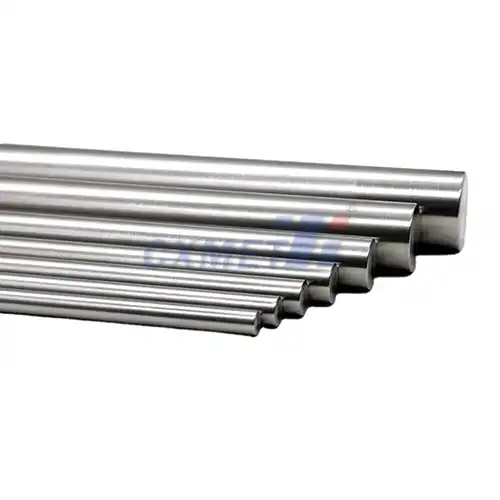
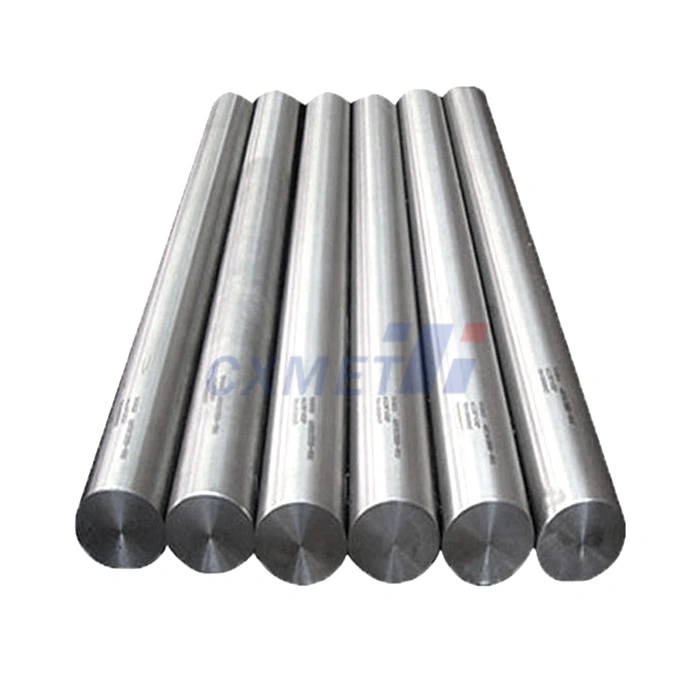
Shaanxi CXMET Technology Co., Ltd. has been around since 2005 and has a 50,000-square-meter building where more than 80 techs work. We work with metals like tin, nickel, tantalum, niobium, tungsten, molybdenum, zirconium, and more than one of these. There are many industries that buy from us, such as the medical, electronics, vacuum, coating, marine, oil, and chemical industries. You can polish, turn, peel, or grind our Gr23 Medical Titanium Rod without a center because it is made of round titanium bars. You can get them with H9–H11 ranges or your own set of limits. We test everything with ultrasound waves in line with AMS-STD-2154, and we can trace each lot back to its original batch. You can ask for packaging that is sterile or ready for a cleanroom.
How to Choose a Gr23 Medical Titanium Rod for Medical Applications?
Define the Application and Regulatory Scenario
Start with the finished part. A spinal rod, an intramedullary nail, a tooth abutment, and surgical tools all need to be strong, have a good finish, and be clean in different ways. Next, look for the way to regulate things. The stick is raw material, so the company that makes the device has to ensure that it was cut, cleaned, and passivated in a way that meets ASTM F86 standards. They also need to keep an eye on the supplier. The FDA is in charge of finished implants in the US, so your quality team will ask for materials that can be tracked. Write down the standard (ASTM F136, ISO 5832-3, or AMS 4930), what the Gr23 Medical Titanium Rod will be used for, and the steps that will be taken afterward. Then, ask for a price.
Specify Dimensions, Tolerances, and Surface Finish
A clear drawing can keep you from having to do expensive rework. Write down the width, the length, the tolerance, whether it needs to be straight or round, and the end state. CXMET's Gr23 Medical Titanium Rod can be up to 6000 mm long, 4 mm to 200 mm wide, and has specs from H9 to H11, or can be set by the customer. The surface can be polished, turned, peeled, or ground without a center. The metal can also be pickled or anodized. A polished rod isn't always better than a ground rod. For very precise control of the diameter, centerless grinding works well. Polishing, on the other hand, may be a better choice for parts that require a specific finish on the outside. Not how shiny the bar is, but what you need to do to cut and clean it.
Match the Process Route to Your Component
Different types of metal, like those that are forged, rolled, drawn, ground, and made, have different grain structures, costs, and wait times. It saves time and money by rolling and drawing bars until they are almost the right size. It's possible to forge bigger pieces. The surface is peeled off and ground down to remove the top layer. This makes the skin smooth so that it can be cut very finely. This is the way that quality checks should go. To find flaws inside, you should use ultrasonic testing. Check the microstructure to make sure that all the alpha and beta phase structures are the same, and there is no alpha case. Test each heat lot for tensile and hardness. As soon as possible, let the seller know about your plan to machine the material. Even a small change in the way it's stored can save time and materials.
Importing Gr23 Medical Titanium Rod: Procurement and Logistics Checklist
Build a Complete RFQ
Less back-and-forth is needed when you ask for a quote, and the process goes faster. Specify the metal name (Ti-6Al-4V ELI, Gr23), the size in inches, the length, the tolerance, the surface finish, the heat condition, the number, the testing requirements, the package, the delivery port, and the terms of delivery. Please send a picture if you have one. Tell them if you want samples first or if you want to buy more. In order to plan for supply, it is important to know the difference between a one-time prototype lot and a yearly volume that will be bought over and over again. Tell them right away if you need an audit or a quality questionnaire. A full RFQ also lets the supplier point out a too-small tolerance before the work starts.
Documents, Duties, and Total Landed Cost
The price per unit doesn't tell the whole story. There are extra costs for finishing, inspection, freight, insurance, taxes, and paperwork on top of the landed cost. There must be a commercial invoice, packing list, bill of lading, certificate of origin, and mill certificate for each lot of goods that are brought into the US. According to EN 10204 (2004), the 3.1 certificate is a piece of paper that has been signed by a manufacturer-approved agent who is not part of the production department. The duty rates and tariff classifications can be found with the help of a licensed customs broker. Things like this change over time. Find out how often the product will be provided, the minimum order amount, the lead time for samples, and how the product will be protected. For managed OEM programs, ask for a written process for telling people about changes.
Common Risks and How to Avoid Them
Failures are easy to fix most of the time. Someone buys Grade 5 when they need Grade 23, a general certificate that can't be used to track heat, or a bright surface without making sure it meets certain standards. Quotes that are too low can hide problems like sizes that don't match up, bad finishes, not enough paperwork, or deliveries that are late. Write down the exact grade and norm on the buy order. Once the lot is delivered, please ensure that each certificate is attached and compare the chemistry to the ASTM F136 limits. Before you give a provider the go-ahead, talk to your engineers, quality, and regulatory teams about their import and regulation tasks. The paperwork that goes with the Gr23 Medical Titanium Rod should always match what's written on the bar.
Supplier Evaluation and Buying Process for Gr23 Medical Titanium Rod
Score Technical Capability and Quality Systems
Make a report first, then ask for samples. Make sure the provider can make the sizes, shapes, styles, and conditions of the material that you need. Also, make sure that the supplier can test the goods for chemicals, mechanical issues, size issues, and ultrasonic waves. You should ask for ISO certifications, calibration records, reports of corrective actions taken, and the ability to make changes. Keep an eye on how the seller handles export paperwork, claims, customer checks, prototypes, and repeat orders. Providers who answer technical questions quickly and in writing are likely to have a well-run business. Quality and following the rules are more important than price. After that, finish the score by adding delivery, logistics, and communication.
Follow a Step-by-Step Buying Process
First, write down the basic requirements. Next, separate the needs that must be met from the ones that could be met. Next, make a short list of places that make and sell in bulk. Then, look at their licenses and how they keep track of their goods. Then, look at the samples to see if they meet your needs. Ask for samples that are typical and have records that match. After scoring each bid, go over the ways to accept them, the paperwork, the packaging, the change notice, and how to handle problems in the quality agreement and purchase order. Before you start full production, you should agree on how long we have to wait and how we will ship the goods. Your production plan will be safe because this order makes sure that your engineering, buying, and quality teams all have the same information.
Inspect the First Shipment and Build a Baseline
Compare the first package to the certificates and the rules you set. Check how hot the rod is, how thick it is, how straight it is, and how the surface looks. Make sure the chemistry meets ASTM F136 standards, which say that the iron level must be less than 0.25% and the oxygen level must be less than 0.13%. Read over the reports on the ultrasonic and mechanical tests. You should use what you find as a base for the next deals. Write down what needs to be fixed and report anything that doesn't match right away. When this early check is done, it sets up a supply link that can be used again and again. Each lot of Gr23 Medical Titanium Rod goes through a technical review that we help with here at CXMET, and we also answer customer quality queries.
Conclusion
Choosing the right material is the first thing you need to do when you want to buy a Gr23 medical titanium rod. As the last step, you need to make sure that the given lot fits the material. Ti-6Al-4V ELI is not the same as Grade 5 because the limits between the crystals are tighter. ASTM F136, ISO 5832-3, and AMS 4930 are the groups that set the rules. While manufacturers, suppliers, and distributors all deal with goods, they do so in different amounts. You should choose one based on how much customization you need, how long the lead time is, and the legal risk. To get correct quotes, you need a clear standard that includes tests, size, tolerance, and finish. It's better to look at the total landing cost than the unit price when comparing prices. It is less likely that grades will be mixed up, paperwork will be lost, or material will be turned down when heat tracking, lot-specific certificates, source scoring, and first-shipment inspection are used.
FAQ
What separates Gr5 from Gr23?
O₂ stays at 0.13%, and iron stays at 0.25% in Gr23. This makes implants more flexible and less likely to break. More interstitial levels can pass through Gr5, so it works better for manufacturing parts than for implants.
Is the rod a finished implant?
The rod is not complicated. The person who makes the gadget cleans, passivates, checks, and is in charge of the last part.
How can I confirm a genuine Gr23 Medical Titanium Rod?
Make sure that the iron level stays below 0.25% and the oxygen level stays below 0.13%. In the next step, look at the EN 10204 3.1 certificate and match the heat number on the bar to that number. The sound and mechanical tests should also be given to you.
Is a polished rod better than a ground rod?
Not all the time. You should choose the style that is easiest to machine, clean, and work with. A ground rod that doesn't have a center can often give you good control over the width.
What should a quotation request include?
Send the number, along with the standard, width, length, range, finish, and place where the test needs to be done. If you have a picture, please send it as well. Early clarity shortens the time it takes to quote.
Request a Gr23 Medical Titanium Rod Quote from CXMET
After you send your model, standard, width, length, number, and finish to sales@cxmet.com, they will send you a clear price. Titanium Valley in China is where we make Gr23 medical titanium rods. There are sizes of our round bars from 4 mm to 200 mm, and they come with EN 10204 3.1 certificates, batch tracking, and finishing that is done to order. Our group of more than 80 techs does both small-run prototypes and big jobs that come in every year. Visit https://www.cxmet-tech.com/ to learn more about the product.
References
1. ASTM International, Standard Specification for Wrought Titanium-6Aluminum-4Vanadium ELI (Extra Low Interstitial) Alloy for Surgical Implant Applications (UNS R56401), ASTM F136, 2021.
2. International Organization for Standardization, Implants for Surgery: Metallic Materials, Part 3: Wrought Titanium 6-Aluminium 4-Vanadium Alloy, ISO 5832-3, 2021.
3. European Committee for Standardization, Metallic Products: Types of Inspection Documents, EN 10204, 2004.
4. Niinomi, M., "Mechanical Properties of Biomedical Titanium Alloys," Materials Science and Engineering A, 1998.
5. Geetha, M., Singh, A.K., Asokamani, R., and Gogia, A.K., "Ti-Based Biomaterials, the Ultimate Choice for Orthopaedic Implants: A Review," Progress in Materials Science, 2009.
6. Boyer, R., Welsch, G., and Collings, E.W., Materials Properties Handbook: Titanium Alloys, ASM International, 1994.