knowledges
Where to Buy High Quality Gr1 Pure Titanium Bar for Import?
2026-11-10 16:36:05
If you are asking where to buy High Quality Gr1 Pure Titanium Bar for import, start with a manufacturer or exporter that can show Grade 1 production capability, ASTM B348 experience, full mill certificates, and heat-number traceability. Distributors can fill urgent orders for standard sizes, but a producer gives you more control over diameter, length, tolerance, and surface finish. Shaanxi CXMET Technology Co., Ltd. supplies cold-rolled, round Gr1 titanium bars from China in diameters from 2 mm to 300 mm. This guide shows how to compare suppliers, confirm specifications, and manage the import process with fewer surprises.
|
|
|

Understanding High-Quality Gr1 Pure Titanium Bar and Its Best-Fit Applications
What Is a Gr1 Pure Titanium Bar?
It's called a "High Quality Gr1 Pure Titanium Bar," and it's made of Grade 1 pure titanium. You can buy it in shops. The standard grade that is the softest is this one. At most, ASTM B348 says that oxygen can be 0.18% and iron can be 0.20%. There is also a limit on N₂O, CO₂, and gas. This low interstitial level makes the metal very bendy and easy to shape when it is cold. The strength must be at least 240 MPa in tension, at least 170 MPa in yield, and at least 24% longer than it was before. 4.51 g/cm³ is how dense it is. When I read something again, I first look at how it is put together. You should ask for "round," "square," "flat," or "custom-cut" metals from overseas suppliers because they use "bar" and "rod" in different ways.
Why Choose Gr1 Titanium Bar for Corrosion-Resistant Projects?
TiO₂ is a thin, stable film that can be found on top of both water and air. With this film, the bar is safe in salt water, wet air, chlorides, and many other chemical sites. Also, if you scratch it, it heals quickly to reveal new metal. Gr1 is best for parts that need to bend or bend without breaking because it is flexible and not as strong. Along with the plan for making the part, procurement teams should read the hardness, density, modulus, tensile strength, and yield strength. To machine, you need sharp tools, a steady flow of coolant, and the ability to control chips. Oxygen and nitrogen can weaken the weld zone, so you need full inert gas protection when you weld. For tough jobs, big loads, or wear and tear, Gr2 or a metal might be better.
Gr1 Titanium Bar vs. Gr2, Grade 5, and Stainless Steel
ASTM B348 says that Gr2 must have a minimum tension of 345 MPa and a yield strength of 275 MPa. What this means is that it can hold the same amount of weight as Gr1 and still not rust. Gr1 is better at moving and drawing. You can pull on Grade 5 (Ti-6Al-4V) with at least 895 MPa of force, but it is harder to form and join. Though stainless steel initially costs less, it has a mass of about 8 g/cm³, which is about 1.8 times that of titanium (4.51 g/cm³), and salt service can damage it by making pits in it. Choose the right grade based on the load, the environment, how it will be made, the magnetic needs, your budget, and not just the price.
How to Evaluate High-Quality Gr1 Pure Titanium Bar Suppliers
What a Qualified Supplier Should Show
Things the seller gives you in the box when you buy the High Quality Gr1 Pure Titanium Bar can tell you a lot. This is true whether you are making a full run or just a test project. An accepted source uses ASTM B348 and keeps track of the heat number from the melt to the shipment. They also give out full mill certificates. As for the chemical and mechanical results, measurements, inspection records, and the state of delivery, you should ask for them. Test them with ultrasound, and see if they can melt, forge, roll, machine, straighten, check the surface, and cut to order. The background of exports and ISO certification is important, but you should also ask for proof in the form of papers and other sources. EN 10204 says that a 3.1 certificate has test results that have been approved by the certified inspector for the manufacturer. On the other hand, a 3.2 certificate has test results that either the buyer's agent or another inspector of their choice has approved.
Where to Buy: Manufacturer, Exporter, or Distributor
When you decide where to buy High Quality Gr1 Pure Titanium Bar, you should look at three types of places. Most of the time, you can get more custom sizes, tolerances, and prices by buying directly from the factory. Because wholesalers keep stock in their own areas, they can help with standard sizes, mixed sales, and urgent needs. It is best to find a maker or exporter that can look over the drawings and help with things like cut lengths, surface standards, packing, and delivery times for OEM projects and repeat orders. Before you buy, make sure you know if the item is in stock, the lead time, the minimum order quantity (MOQ), the certificates, the inspection options, the Incoterms, and what to do after the sale. A clear answer shows what a seller will do when the order comes in. When there is a technical question, it takes less time to get answers because the producer has its own production line.
Why Work with a Qualified Titanium Bar Manufacturer
It is the job of the company that makes High Quality Gr1 Pure Titanium Bars to handle the raw materials, melt them, shape them, inspect them, keep records, and make sure that every batch is the same. Being able to control those things so well makes it easier to offer unique sizes, shapes, finishes, packing, and tolerances. It's also helpful for recurring programs to have production schedules, reserved capacity, and inventory plans that make sure that repeat orders are always the same. Specifications can be looked over, materials can be picked out, quotes can be gotten, inspections can be planned, and export papers can be made. Find out how the service company handles lots that don't meet their standards. A clear answer shows that the system for quality has come a long way. This is because a supplier relationship lasts for years, not just one package. Before you sign, you should see how responsive, open, and on-time the company is.
Specifications, Price, and Logistics for High-Quality Gr1 Pure Titanium Bar
Specifications to Confirm in Your RFQ
The full list of things you need to know before you buy High Quality Gr1 Pure Titanium Bar includes the grade, standard, diameter, length, quantity, tolerance, surface condition, and delivery condition. Forged, rolled, peeled, ground, polished, or machined bars are the types of bars you can ask for. Let them know if they need extra space for machined bars. Decide ahead of time what is straight, what is round, how accurate the length of the cut is, and what kinds of flaws on the surface are acceptable. It could be a chemical analysis, a tensile test, a hardness test, a dimensional inspection, an ultrasonic test, or an inspection by a third party. Write down the tests you need. Getting these things taken care of early on will help you avoid quote gaps, production delays, and arguments over acceptance. The writing on the quote, the sale, and the certificate should all be the same.
Price, MOQ, and Stock Availability
Why is High Quality Gr1 Pure Titanium Bar so expensive? It depends on the cost of the raw materials, the size, how hard it is to make, the surface finish, testing, custom cutting, amount, packing, freight, currency, and the terms of trade. You should compare more than just price per kilogram. You should also compare how much it costs to land. This is because testing, freight, and taxes can make two quotes rank differently. You should find out if the material is already made or needs to be made, and you should also ask for heat numbers that are available. It costs more to make small diameters and tight tolerances than it does to make large standard sizes, so quotes are different for each item. Your team will be able to stick to project dates if the MOQ and delivery schedule are written down.
Import Logistics and Packaging
Right away, choose an Incoterm. There are rules called Incoterms 2020 that were made by the International Chamber of Commerce. They say who pays for insurance and freight and when the buyer takes on the danger. People usually choose between FOB, CIF, and DAP. There are different ways for each one to split cost and risk. Before the cargo ships to the US, you should talk to your customs broker about the duty rates and how the goods will be classified. The High Quality Gr1 Pure Titanium Bar should be packed so that it doesn't break, get wet, get dirty, or have its surface damaged. Iron can't scratch or damage the surface because there is a protective covering, wooden cases, and space between the bars. People can buy CXMET packs based on what they want.
A Practical Import Process for High-Quality Gr1 Pure Titanium Bar
Step-by-Step Import Buying Process
Before you can buy a high-quality Gr1 Pure Titanium Bar, you need to make a precise RFQ that lists your technical, economic, inspection, and shipping needs. Check the vendors' qualifications, see what they can make, see how easy it is to keep track of them, see how much experience they have exporting, and see how quickly they can react. When you compare prices, make sure you look at the total cost, which includes the paperwork, testing, shipping, insurance, payment terms, and help with filing a claim. Before you send out important parts, you should either get samples, look over the mill certificates, or have someone else check them out. Then, write down all the details that were agreed upon in the purchase order. This should include any tolerances, rules for packaging, Incoterms, and delivery dates. This method turns a general request into a limited buy, and it creates a single record that everyone can use.
Common Import Risks and How to Avoid Them
You're taking the most risk when you pick a seller based only on price. Others mix up Grade 1 with Grade 2 or an alloy, get certificates that aren't complete, and believe what the stock says without seeing proof. The quote, the award, the label on the box, and the buy order should all have the same exact grade. If you are getting High Quality Gr1 Pure Titanium Bar from more than one place, this is very important. Then, find your way back to the lot and make sure the heat numbers and mechanical data match. Make sure you get a written delivery plan so you can tell the difference between what's in stock and what will be made soon. Agree ahead of time on how technical support, reports of nonconformity, replacements, and returns will work.
What to Inspect When the Bars Arrive
Hold the certificate in your hand and open the box. On the purchase order, you can find the amount, labels, heat numbers, diameter, length, straightness, and condition of the surface. It is important to treat all High Quality Gr1 Pure Titanium Bars the same. Check that the grade label says Gr1 and that the science and mechanical qualities meet ASTM B348 standards. As an example, the stretch must be at least 24% and the tensile strength must be at least 240 MPa. Make a picture of any damage to the things before you move them. Then, send a letter to the seller as agreed in the claim terms. Keep bars inside, off the floor, and away from carbon steel so they don't get dirty. A short welcome list will save time if a good question comes up later.
CXMET High-Quality Gr1 Pure Titanium Bar for Industrial Buyers
Product Specifications
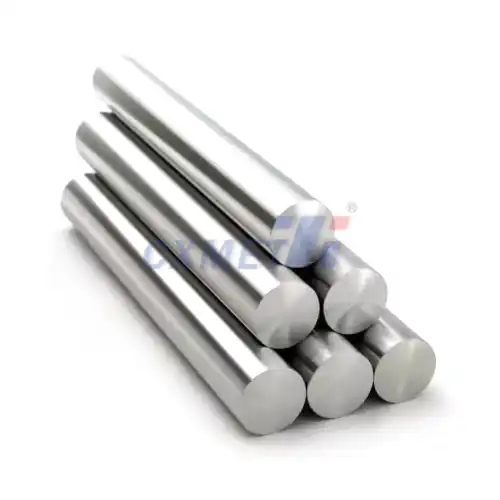
CXMET sells high-quality Gr1 Pure Titanium Bar that is round and cold-rolled. It is made in China. The bars are at least 99.5% pure titanium because they meet ASTM B348, ASTM F67, and AMS 4921. You can get them in any length you want. The diameters range from 2 mm to 300 mm, and the lengths go up to 6000 mm. It must be able to stretch at least 24%, yield at least 170 MPa, and pull apart at least 240 MPa. As per ISO guidelines or your own needs, you can choose to polish, pickle, or sandblast the surface. The accuracy range is from h9 to h11. This can be done by ISO, SGS, EN 10204 3.1 or 3.2, or someone else. How you package things for transport depends on what you need.
Applications Across Your Industries
Our high-quality Gr1 pure titanium bar is used in petrochemical units, heat exchangers, and storage tanks, among other applications. For work at sea and in the air, people buy it for propeller shafts and machines that take salt out of seawater. People in the vacuum and electronics businesses use it to protect materials and electrical parts. Gr1 is used in fuel cells, condensers for power plants, and some parts of nuclear plants. It is bought by people who work in medicine for surgery tools, bone screws, and replacement teeth. It's bought by people in the aerospace business for parts and ducts that don't hold weight. It can be very cold or 400°C, but they can still do their job. If a part needs to hold a lot of weight, I tell people to avoid getting Gr1 because it has a minimum yield strength of 170 MPa. Instead, they should get Gr2 or a grade 5.
Quality Control and Technical Support
Shaanxi CXMET Technology Co., Ltd. has been in business since 2005 and is in the "Titanium Valley" in Shaanxi state, China. It has a house that's 50,000 square meters, and more than 80 techs work there. In the more than 20 years that our team has worked with metals, they have melted, cast, and finally cold rolled them. Buyers can talk to us about chemical testing, mechanical testing, acoustic testing, and measurement checks before they place an order. When people ask them about products, our engineers look at drawings and think of ways to solve problems at work. Nickel, tantalum, niobium, tungsten, molybdenum, zirconium, and alloys of these metals are some of the other metals we work with. This type of metal comes in handy when you need more than one metal for a job.
Conclusion
When the grade is right for the job and the supplier can back up their quality, it's best to buy High Quality Gr1 Pure Titanium Bar for import. When it comes to widely pure grades, Gr1 is the most bendable and easy to shape. It also does an impressive job of resisting corrosion. For big loads, Gr2 or Grade 5 are better. If you are clear about the standard, size, tolerance, finish, and tests, you can avoid most disputes. It's better to look at landing cost, Incoterms, and packing than price per kilogram. The risk of importing is lower when there are mill certificates, heat numbers that can be watched, and a written plan for what to do with faulty goods. People who run their own factories can make custom sizes and keep orders coming in, which makes them a reliable choice for OEM programs.
FAQ
How does Gr1 differ from the Gr2 titanium bar?
Because Gr1 has less iron and oxygen, it is more flexible and easy to shape when it is cold. Gr2 has a tensile strength of at least 345 MPa, but Gr1's is only 240 MPa. This strengthens it so it can hold more weight and not rust.
Which documents should arrive with the shipment?
Ask for an EN 10204 3.1 mill test certificate that lists the lot or heat number, the chemical analysis, the mechanical results, the heat treatment conditions, and the standard that applies, such as ASTM B348 or ASTM F67. The marks on the bar should match the heat number on the sign-up sheet.
Can a high-quality Gr1 pure titanium bar be welded?
Yes, welding is basic. Pure argon should be used to protect the area where you're welding because oxygen and nitrogen can pick up on the joint and weaken it. Furthermore, wipe down the bar before you join.
What should an RFQ include?
You should write down the type of material, the size, the number, the finish on the outside, the testing needs, the end location, the Incoterm, and the delivery date. Providers can give more accurate prices and wait times if they have all the information they need.
Request a High-Quality Gr1 Pure Titanium Bar Quotation from CXMET.
Send an email to sales@cxmet.com with your grade, the ASTM standard, the size, the quantity, the surface finish, the testing needs, the location, and the date you want the goods to arrive. The CXMET team will get back to you with the lead time, price, MOQ, and level of stock. We can make any size of high-quality Gr1 pure titanium bars. We also give technical help and certificates that meet EN 10204 standards. Visit https://www.cxmet-tech.com/ to learn more about the goods.
References
1. ASTM International, ASTM B348/B348M, Standard Specification for Titanium and Titanium Alloy Bars and Billets, 2019
2. ASTM International, ASTM F67, Standard Specification for Unalloyed Titanium for Surgical Implant Applications, 2013
3. Donachie, M. J., Titanium: A Technical Guide, 2nd Edition, ASM International, 2000
4. Leyens, C. and Peters, M. (Eds.), Titanium and Titanium Alloys: Fundamentals and Applications, Wiley-VCH, 2003
5. International Chamber of Commerce, Incoterms 2020, 2019
6. European Committee for Standardization, EN 10204: Metallic Products – Types of Inspection Documents, 2004