knowledges
Where to Buy Titanium Grade 4 Round Bar from Top Manufacturers?
2026-11-10 16:36:02
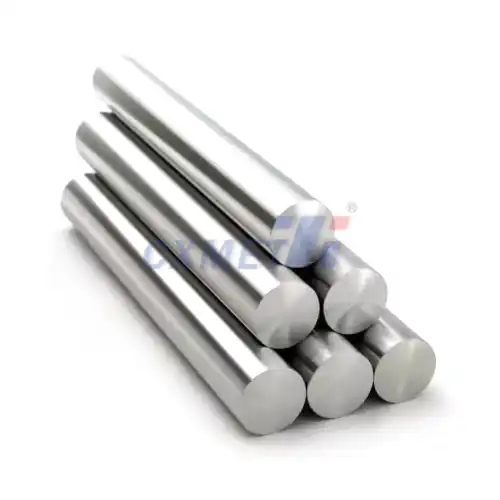
The best place to buy titanium Grade 4 Round Bar is a certified manufacturer that controls production, testing, and export packaging in one operation. I recommend that U.S. buyers compare mills and qualified suppliers on ASTM B348 compliance, heat-level traceability, size range, and landed cost rather than unit price alone. Shaanxi CXMET Technology Co., Ltd. supplies this product from the "China Titanium Valley," with diameters from 6 mm to 250 mm and lengths up to 6000 mm. This guide explains what to specify, how to compare offers, and which checks protect your project.
|
|
|

Why Is Titanium Grade 4 Round Bar a Preferred Engineering Material?
Composition, Standards, and Production Routes
The most powerful pure titanium that you can buy is titanium Grade 4 round bar. At least 98.6% of it is titanium, and the particles are in the alpha phase. ASTM B348 says that the oxygen level must be 0.40%, the iron level must be 0.50%, the carbon level must be 0.08%, and the nitrogen level must be 0.05%. It has power now. CXMET makes titanium Grade 4 round bars that can be forged, hot rolled, or cold drawn to meet the standards of ASTM B348, ASME SB348, and AMS 4921. It is best to use hot-rolled bar for general machining stock and cold-drawn bar for smaller pieces. A forged bar is best for bigger pieces. You need to figure out which route gave you the heat because the way something was handled changes its skills and limits.
Mechanical and Physical Properties
The stretch must be at least 15%, the yield strength must be at least 483 MPa, and the tensile strength must be at least 550 MPa. ASTM B348 says that Grade 2 must have a tensile strength of at least 345 MPa and a yield strength of at least 275 MPa. In other words, titanium Grade 4 round bar adds a clear step of strength to the same pure chemicals. The bar has a density of 4.51 g/cm³, a modulus of about 105 GPa, and a temperature expansion of about 8.6 µm/m K. It is not magnetic. Ask for heat-specific test certificates and compare each number to the standard version on your order. Values change based on the diameter and the situation.
Where Titanium Grade 4 Round Bar Is Used
Titanium Grade 4 Round Bar is used by engineers to make parts for ships, offshore platforms, power plants, chemical processing plants, spaceships, medical equipment, and more. Gears, nuts, rings, pins, rings, heat exchanger hardware, valve and pump parts, and machined fittings are some of the most common parts. It's good to use this grade in acidic places, seawater, and marine air. It also helps designs that need to be light because it has a low density. The product data says it can work in temperatures as low as -40°C and as high as 400°C, but I think you should check the real design case first. Chlorides, stress, long-term exposure, small cracks, and touching metals that are not the same can all lead to corrosion. You should ask the seller about any implant standards, such as ASTM F67, so that they can back up what they say they will do.
Titanium Grade 4 Round Bar Comparisons for Material Selection
Grade 4 Versus Grade 2 and Grade 5
Most steel is grade 2, which is not alloyed. It is easy to shape and join. Titanium Grade 4 Round Bar is stronger than Grade 3 and has the same chemistry that keeps it from rusting. This means it can be used for parts that are loaded, like fasteners and shafts. To meet ASTM B348, Grade 5 (Ti-6Al-4V) must have a minimum tensile strength of 895 MPa. This is a lot more than titanium Grade 4 Round Bar. It is harder to cast, machine, and make, and it costs more. It is made of aluminum and vanadium. I believe Grade 5 should only be used when the plan calls for it and experts say it's okay. Titanium Grade 4 Round Bar is a good choice as long as the load case strain is less than 550 MPa.
Grade 4 Versus 316L and Duplex Stainless Steel
Because it costs less per kilogram, stainless steel is often the best choice for dry or mild service. The math changes when it comes to ocean water and chloride service. 316L can get pits and cracks that let corrosion in, and duplex grades still have limits for chloride and temperature. Titanium measures 4.51 g/cm³ dense, while 316L is about 8 g/cm³ dense. What this means is that titanium Grade 4 Round Bar is lighter when it comes to loads and rotating mass. If something lasts longer and needs less maintenance, the higher price may be worth it. Check out the full price, not just the quote.
Building a Simple Decision Matrix
It's fair to talk because there's a weighted grid. Write down things like price, how easy it is to machine or weld, how strong it is, how resistant it is to rust, and how risky the application is. After that, give each one a weight that matches how it will be used. For a pump shaft that is in salt water, corrosion and strength might be important. For a bracket that is on dry land, price might be important. Each individual should get a score based on things like 316L, pair, Grade 2, titanium Grade 4 Round Bar, and Grade 5. In the next step, have engineering and purchasing look over the score together. One more thing it does is remember why you chose a material, which is useful for checks and repeat orders. When there is a lot at stake, you can try out a small amount of titanium Grade 4 Round Bar to see how it works and how it can be made before you buy a lot of it.
How to Choose the Right Titanium Grade 4 Round Bar Supplier?
Define the Specification Before Requesting Quotes
You can't just look at prices to pick a source. This is what you need to do. Before you send an inquiry, you should know the standard, diameter, length, tolerance, surface condition, manufacturing route, annual volume, application, and documentation needs. When the sources are clear, suppliers can quote like for like, which cuts down on the back and forth. Even though they both have the same nominal diameter, a hot-rolled black bar and a cold-drawn titanium Grade 4 Round Bar with a tight tolerance are not the same. Please let us know if you need tests for hardness, ultrasound, or mechanical properties. These things change the price and the length of time you have to wait.
Capabilities and Proof of Control
Check whether the supplier does all these things themselves or hires outside shops for each one. Instead of believing what someone says, it is better to ask for proof that they are ISO 9001 certified. There is a link between each titanium Grade 4 Round Bar and a melt through its heat level traceability, material test certificates, and dimension reports. Important orders can receive an extra check from a third party if desired. CXMET has a 50,000-square-meter building in Shaanxi that it opened in 2005. More than 80 trained techs use titanium, nickel, tantalum, niobium, tungsten, molybdenum, and zirconium to make things there.
Manufacturer, Stockholder, or Trading Company
The plan for distribution changes the cost, the speed, and who is responsible for what. A maker is responsible for making things and can handle both one-of-a-kind and big orders. A qualified stockholder can ship standard sizes quickly, but they might not be able to handle tolerances that aren't standard. A trading business may be able to get many things, but it may not be able to see how they make them. Find out who issues the license and melts, rolls, or fakes the money. You should also look over the packaging, Incoterms, customs papers, and reaction times for U.S. projects before you give out the order. A company that can easily handle your titanium Grade 4 Round Bar order is likely to give you clear answers right away.
Titanium Grade 4 Round Bar Sizes, Custom Options, and Pricing
Stock Sizes, Finishes, and Custom Services for Titanium Grade 4 Round Bar
What kinds of materials are available? It depends on their diameter, length, standard, finish, and production batch. Separate your ready stock, production stock, and made-to-order stuff to make your plan more clear. They come in lengths up to 6000 mm and widths from 6 mm to 250 mm. We can also cut them to fit your needs. It's possible to turn, pickle, shine, and sand some surfaces. We can also cut machine parts to length, package them so they are ready to be shipped, and make sure they meet the export standards of our customers. You should write down the end state, margin, roundness, ovality, cut accuracy, and roundness on the picture. Scheduled releases and planned safety stock make sure that there is always enough to meet demand that keeps coming up.
How to Compare Prices Correctly?
It's possible to get quotes by the kilogram, the meter, the piece, or the order. Change them to one unit. A titanium Grade 4 round bar is thought to weigh 0.00354 kilograms for every meter it is across. As an example, a 50 mm bar is about 8.85 kg/m. Talk to the supplier about the actual weight, the amount of room for cutting, and how the money will be billed. Costs of testing, surface treatment, cutting, machining, packing, freight, taxes, and inspection are all added up to the final price. And the best price for titanium Grade 4 round bar might cost more if the work takes longer than planned or more work needs to be done.
Writing an RFQ for Titanium Grade 4 Round Bar
Having a full RFQ saves days of work. There should be information about the type, standard, and edition, as well as the size, number, lengths, certificates needed, inspection rules, location, Incoterm, payment terms, and delivery schedule. Send them drawings of the parts you will make and let them know if you expect to work with them again next year. This is because volume can change both price and production planning. Ask everyone who bids to give prices based on the same delivery and technical conditions. This will keep things fair. The lowest original number should not be as important as the total landed cost and supply risk. This is because a late shipment of one important titanium Grade 4 Round Bar can stop a bigger assembly from moving.
Quality Control, Buying Process, and Working with CXMET
Quality Checklist for Titanium Grade 4 Round Bar
The first thing you should do is check that the label says titanium Grade 4 Round Bar and not "unspecified commercially pure titanium." Before you send the item, make sure you check its heat number, chemical make-up, tensile strength, yield strength, elongation, dimensions, straightness, surface state, and ASTM B348 standards. The bar should be kept out of water, away from damage or contamination, and away from carbon steel racks or tools. For big projects, you should add verification of the materials or an inspection by a third party. Request original certificates or traceable documentation regarding the product's origin, along with a written procedure for replacing substandard materials, handling claims, and addressing issues.
Recommended Buying Process
With a structured process, there is less technical, commercial, and delivery risk. First, put the uses into groups based on things like pressure, temperature, load, wear and tear, welding, safety, and legal requirements. Next, make a short list of manufacturers and distributors whose standards, range of sizes, and ability are similar to yours. Send out an RFQ with plans and due dates. Then, rate the bids based on how well they meet your needs and on things like price, quality, lead time, transportation, customization, service, and lead time. Before you sign an annual contract or set a release date with a new or important provider, you should accept a sample or the first item. Having a backup source that has been approved makes things safer in case something goes wrong.
Why Work with a Specialized Manufacturer like CXMET?
A skilled provider can do more than just make things or buy things. They can also inspect, record, cut, machine, and package goods to send abroad. Through near-net-size supply, that single-source route speeds up coordination, makes it easier to track heat, and cuts down on waste from machining. CXMET can handle any size of test order from OEMs, distributors, or projects. Our team can also give you detailed answers about plans, tolerances, and the materials you can choose. Our goods are used in the vacuum, coating, medical, electricity, power metallurgy, marine, and oil industries. Work with a titanium Grade 4 round bar company that does these tasks in-house, and the quality will not change from one test order to the next.
Final Buying Recommendations
Before you buy titanium Grade 4 Round Bar, read the details. Look at more than just the label. Titanium Grade 4 Round Bar is the best choice when you need a pure metal that won't rust, is lighter, and stronger than Grade 2. You should only think about using grade 5 titanium alloys if an expert says it's okay. You should judge stainless steel by how heavy it is, how it affects the earth, how much it costs over its lifetime, and how easy it is to clean. If you need standard sizes fast, choose a stockholder. For custom or high-volume orders, choose a manufacturer. For parts that have already been handled, choose a value-added provider. Before you buy something, look it over from a business and technical point of view. Keep the certificates that come with each heat so it's easy to do audits and reorders in the future.
Conclusion
The best pure titanium item you can buy is the titanium Grade 4 Round Bar. As of now, it weighs 4.51 grams per cubic centimeter, can pull apart at least 550 MPa, and can stretch at least 483 MPa. It doesn't rust in salt water, acids, or chlorine either. With the right checks, it can be used for parts in the marine, chemical, power, aircraft, and medical fields. It makes it stronger than Grade 2 and easier to work with than Grade 5. Plus, it can be cheaper over its whole life when chlorides are present than stainless steel. You should be able to see clear specifications, compare prices based on the landed cost, keep track of the heat level, and find a supply model that works with your order size and customization needs in order to make a good purchase.
FAQ
Is Grade 4 stronger than Grade 2 titanium?
Yes. ASTM B348 says that titanium Grade 4 round bar has the lowest tensile strength of 550 MPa and the lowest yield strength of 483 MPa. They are 345 MPa and 275 MPa for Grade 2. Most of the extra strength comes from letting more air in.
Is the titanium Grade 4 round bar suitable for marine service?
It does well in salt water and air near the sea. Before you choose the material, make sure you know about the temperature, stress, and joint design. Even hot salt solutions and small cracks can damage it.
Can I order cut-to-length bars?
Yes. For lengths up to 6000 mm, CXMET cuts to length. You should say how long the titanium Grade 4 round bar can be and when it ends in your question.
Which documents should I request?
It is important to get records of inspections, heat tracking, material test certificates, packing lists, and certificates of origin. It is important to make sure that all of the documents have the same ASTM B348 version and product state. Also, you should only compare prices when the technical and shipping terms are the same.
Request a Quote for Titanium Grade 4 Round Bar
To get an accurate quote from the CXMET team, send an email to sales@cxmet.com with the size, length, quantity, standard, finish, tolerance, inspection needs, destination, and due date for delivery. On the Titanium Valley in China, we have been making titanium Grade 4 round bars for a long time. We can make custom products, process cut-to-length orders, provide heat-specific documentation, package items for export, and manage logistics for trial, OEM, and project orders. Visit https://www.cxmet-tech.com/ to review our product range.
References
1. ASTM International, Standard Specification for Titanium and Titanium Alloy Bars and Billets (ASTM B348/B348M), 2019
2. ASM International, Titanium: A Technical Guide, 2nd Edition, 2000
3. ASM International, Materials Properties Handbook: Titanium Alloys, 1994
4. Wiley-VCH, Titanium and Titanium Alloys: Fundamentals and Applications, 2003
5. ASTM International, Standard Specification for Unalloyed Titanium, for Surgical Implant Applications (ASTM F67), 2013
6. ASM International, ASM Handbook Volume 13: Corrosion, 1987