knowledges
Why Are Titanium Electrodes Essential in Electroplating Processes?
2026-06-09 16:52:57
Nickel electrodes are now necessary for all electroplating jobs because they solve basic problems that have been plaguing the business for decades. Traditional graphite or lead anodes break down quickly and pollute plating baths. Dimensionally titanium electrode electrode anodes (DSA) made from high-purity titanium supports, on the other hand, keep their shape over long periods of time. This stability means that the coating thickness stays the same, upkeep needs are cut down, and a lot less energy is used. When these electrodes are covered with electrocatalytic metal oxides like iridium or ruthenium, they improve the flow of current and stop the buildup of anode sludge that lowers the quality of the finish.
|
|
|

Understanding Titanium Electrodes in Electroplating
What Defines a Titanium Electrode?
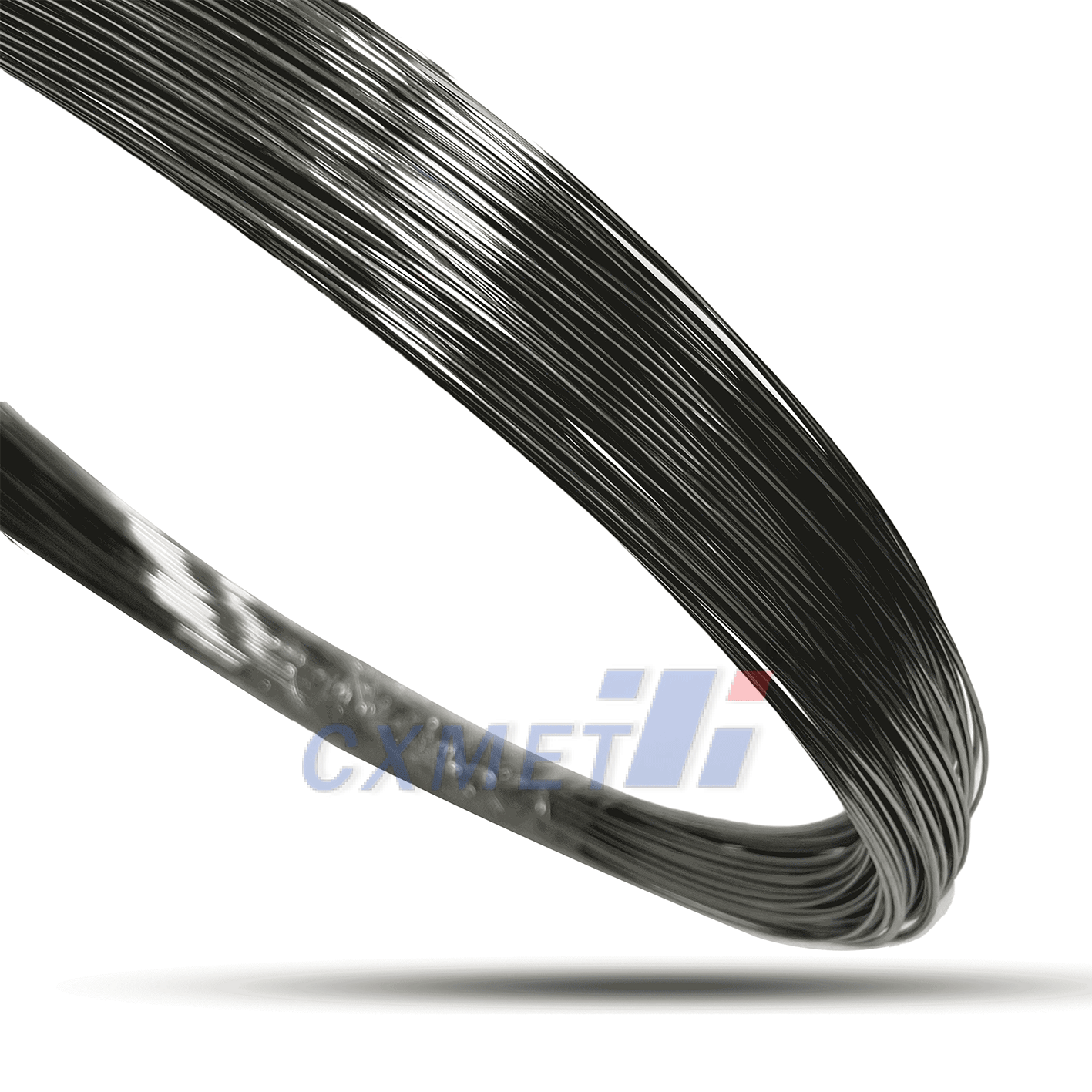
A titanium electrode is a complex electrocatalytic part made up of a Grade 1 or 2 titanium substrate that meets ASTM B265 standards and is carefully covered with precious metal layers or mixed metal oxides (MMO). The base material has a high level of mechanical strength and is resistant to corrosion. The catalytic coating makes it easier for electrons to move around during electrochemical reactions. This two-layer design fixes important problems with older electrode materials, mainly the dimensional instability that causes gaps between electrodes to change and current to flow unevenly.
Types of Coated Titanium Electrodes
Three main coating combinations are used most often in industrial electroplating. Platinum-coated titanium electrodes have the best catalytic activity and electrical conductivity. This makes them perfect for uses that need to precisely control deposition rates and have very little overpotential. Ruthenium-iridium coated types work very well in acidic environments and at high temperatures, and they keep their catalytic efficiency even when exposed to harsh chemicals. Iridium-tantalum configurations last a very long time in alkaline electrolytes. They are especially useful in situations where replacing the electrodes would mess up production plans or quality control rules.
Functional Mechanisms in Electrochemical Processes
The titanium electrode acts as the anode in electroplating, helping oxidation processes happen, and the target substrate acts as the cathode, taking in metal ions. The electrocatalytic coating lowers the hurdles to activation, which lets reactions happen at lower cell voltages. Compared to other electrode materials, this efficiency means that a lot less energy is used. The security of the coating keeps it from dissolving or changing size, so the distance between the electrodes stays the same over time, and the current density stays the same across the plating surface.
Advantages of Using Titanium Electrodes Over Other Materials
Superior Corrosion Resistance and Extended Lifespan
Our titanium electrodes are precision-engineered to be the best. They have better titanium electrode corrosion protection than graphite alternatives, which means they last five to ten times longer. The very pure titanium substrate is very resistant to harsh chemical environments, such as chlorine-rich brines and the concentrated sulphuric acid solutions that are typical in electroplating baths. Traditional graphite anodes need to be replaced every few months because they wear down and break down structurally. But titanium-based anodes can keep working reliably for years if they are properly maintained. This means that they don't need to be replaced as often, which directly affects operational efficiency and production continuity. As maintenance schedules get more stable, procurement managers can better control their inventory and lower the costs of keeping spare parts on hand. This durability is especially useful in environments with constant production, where unplanned shutdowns cost a lot of money.
Enhanced Energy Efficiency and Coating Quality
Titanium electrodes need less overpotential than other materials when they are working at current levels up to 10 kA/m². This trait leads to lower cell voltages and, as a result, lower energy use, usually by 15–30% based on the specifics of the application. The carefully designed surface area improves catalytic activity, speeding up the reaction without needing more electricity. Even current distribution across the electrode surface creates uniform electrolysis, which gets rid of the hot spots and uneven plating thickness that happen when using anodes that aren't stable in terms of their shape. The strong design keeps the mechanical stability even when exposed to chemicals and changing temperatures, keeping the inter-electrode spacing the same over the service life. Parts come out of the plating bath with a regular coating thickness and a better finish, which lowers the number of parts that need to be rejected and the cost of reworking them.
Cost-Effectiveness Despite Higher Initial Investment
Titanium electrodes are more expensive to buy up front than graphite or basic lead alloys, but a full lifecycle analysis shows that they have big total cost benefits. The longer operational lifespan greatly lowers the number of times that the system needs to be replaced, which saves money on both the cost of materials and the labour needed for installation. Energy savings keep adding up over the service life, and the initial cost difference is often recovered within the first operational year. Getting rid of anode sludge contamination lowers the frequency of electrolyte replacement and increases bath life, which lowers chemical use and waste disposal costs. The better consistency of the coating cuts down on scrap and rework, which raises the total production yield. When you add these things together, they make a strong economic case for choosing titanium-based solutions, especially in high-volume operations where small gains in efficiency add up to big savings over time.
Practical Applications and Use Cases of Titanium Electrodes
Industry-Specific Applications
Titanium electrodes are used by companies that make automotive parts for both decorative chrome plating and useful zinc coating, which keeps important parts from rusting. These electrodes are used in the aircraft industry to precisely cadmium plate fasteners and structural parts. The uniformity of the coating thickness has a direct effect on the safety margins and service life. Electronics companies use them to plate copper and nickel on circuit boards and connectors. Their dimensional stability ensures that the electrical properties and trace widths stay the same. Medical device makers need electrodes that are very pure and uniform. Biocompatible coatings are put on surgical instruments and implantable parts to make them meet strict regulatory requirements. The coatings are the same from batch to batch, which makes quality assurance processes easier to follow. The pharmaceutical industry uses these electrodes in equipment that needs to be cleaned and sanitised a lot. They like how resistant they are to harsh cleaning agents, titanium electrode, and thermal cycles.
Maintenance Strategies for Maximum Service Life
Customisable coats with IrO2, RuO2, or Pt can be used for different purposes, but they still need to be maintained properly to last as long as they're supposed to. Regular inspections should check the integrity of the coating, looking for signs of wear and tear at the edges and contact spots. Cleaning it on a regular basis with the right chemicals gets rid of organic buildup without hurting the catalytic layer, which keeps the surface activity at its best. Operating parameters must stay within certain ranges to stop degradation from speeding up. When you go over the maximum current density ratings, you create too much heat that can damage the coating structures. Also, working temperatures above 80°C may weaken the bond between the substrate and the catalytic layer. Keeping the right electrolyte composition and pH levels stops coating materials from being attacked by acids, which increases the time between refurbishment rounds.
Troubleshooting Common Issues
When a coating's performance drops too soon, a thorough investigation usually finds operating issues instead of material flaws. Most of the time, bad electrical connections or bad rack design are to blame for uneven current distribution, not electrode failure. By measuring the electrical resistance between touch points on a regular basis, problems can be found early on before they affect the quality of the production. Outside sources of contamination can poison catalytic surfaces, making them less effective without doing any obvious damage. Electrolyte analysis and filtration can often fix the problem without replacing the electrodes.
Procurement Guide for Titanium Electrodes
Critical Specification Factors
Material grade selection forms the foundation of procurement decisions, with Grade 1 titanium offering superior formability for complex geometries while Grade 2 provides enhanced strength for larger electrodes subjected to mechanical stress. Standard dimensions of 1000mm x 500mm x 3mm serve many applications, but customization capabilities accommodate unique equipment configurations and process requirements. Coating selection depends on electrolyte chemistry, with ruthenium-iridium formulations excelling in acidic chloride environments while platinum variants suit alkaline cyanide baths. Coating thickness specifications ranging from 2-5 μm balance performance requirements against cost considerations. Thicker coatings extend service life in aggressive environments but increase material costs and may affect catalytic response characteristics. Engineers must evaluate trade-offs between initial investment and expected service intervals when establishing procurement specifications. Certifications verifying ASTM B265 compliance and coating composition analysis assure material authenticity and performance capability.
Supplier Landscape and Sourcing Strategy
The global supplier base includes established manufacturers throughout Asia, North America, and Europe, each offering distinct advantages. Shaanxi CXMET Technology Co., Ltd., located in China's "Titanium Valley," leverages regional material availability and specialized manufacturing expertise developed over more than two decades. Our facility spans 50,000 square meters and employs over 80 professional technicians experienced in advanced coating technologies and quality control protocols. This concentration of technical capability enables rapid customization and responsive support for complex application requirements. Pricing trends reflect raw material costs, coating complexity, and order volumes. Bulk purchasing arrangements typically secure 10-25% discounts compared to spot orders, making volume commitments attractive for established production lines with predictable consumption patterns. Minimum order quantities vary among suppliers, with specialized configurations sometimes requiring higher volumes to justify tooling investments. Lead times extend from two weeks for standard products to eight weeks for fully customized solutions requiring engineering collaboration.
Strategic Procurement Considerations
Checking the compatibility of equipment stops expensive merging problems before they happen. Electrode mounting systems, ways of connecting to electricity, and physical sizes must all work with the infrastructure that is already in place or with planned updates. Getting suppliers involved early in the process of specifying tools makes sure that electrodes and plating systems work well together. When fixing performance problems or finding the best process parameters, technical support is very important. Suppliers with application engineering resources offer more than just low prices. Long-term supply agreements keep prices stable and ensure that capacity is allocated even when the market changes. Creating connections with trustworthy alternative sources lowers the risks in the supply chain and gives you more power in talks. Quality systems, manufacturing skills, and financial security are all checked as part of thorough vendor qualification processes. This keeps production schedules from being slowed down by interruptions and poor quality.
Titanium Electrodes — Future Trends and Innovations
Advanced Surface Treatment Technologies
Emerging coating formulations incorporate nanostructured materials that enhance catalytic titanium electrode efficiency while reducing precious metal content. These innovations decrease material costs without compromising performance, making titanium electrodes increasingly competitive across broader application ranges. Surface texturing techniques increase effective area without enlarging physical dimensions, boosting current handling capacity within existing equipment footprints. Multilayer coating architectures combine materials with complementary properties, optimizing both catalytic activity and mechanical durability.
Integration with Smart Manufacturing Systems
Closed-loop control systems use electrode performance data more and more in automation and process tracking technologies. In real time, sensors built into electrode assemblies keep track of temperature, current distribution, and coating state. This lets maintenance plans be made ahead of time, and parameters can be changed automatically. These features make it so that operators don't have to do as much, while also making the process more consistent and making the electrodes last longer. Cloud-based analytics tools collect performance data from multiple installations and find ways to improve things. This speeds up troubleshooting when problems happen.
Sustainability and Circular Economy Initiatives
New developments in recycling help deal with old electrodes and restore useful coating materials and titanium substrates for reuse. Closed-loop recycling programs cut down on the use of new materials and the cost of dumping, which is in line with companies' goals for sustainability and stricter environmental rules. Recoating services make electrodes last longer than their original service terms. This saves money compared to replacing them and cuts down on waste. These circular economy approaches are appealing to procurement managers who want to be good to the earth and make money at the same time.
Conclusion
Titanium electrodes have turned electroplating from a process that used a lot of energy and had inconsistent quality into an industrial process that is accurate and quick. Dimensional stability, superior corrosion resistance, and outstanding catalytic performance work together to solve basic problems that limited output and raised costs with older technologies. Titanium-based electrode solutions offer measurable benefits in all three areas, as production companies are under more and more pressure to use less energy, make less waste, and make better products. When companies make strategic decisions about what to buy, putting lifecycle costs ahead of initial purchase prices can unlock big practical benefits and set businesses up to stay competitive as industries change.
FAQ
1. How do I select the appropriate titanium electrode type for my specific electroplating process?
Selection depends primarily on electrolyte chemistry and operating conditions. Platinum-coated electrodes excel in applications requiring minimal overpotential and precise control, particularly in precious metal plating. Ruthenium-iridium coatings suit acidic chloride environments common in zinc and copper plating, while iridium-tantalum formulations perform optimally in alkaline baths used for nickel and chromium deposition. Operating temperature, current density requirements, and expected service life influence coating thickness specifications. Consulting with application engineers who understand both electrochemical principles and practical production requirements ensures optimal specification.
2. What maintenance practices maximize titanium electrode service life?
Regular visual inspection identifies coating damage before performance degrades significantly. Cleaning protocols using appropriate solvents remove organic buildup without attacking catalytic layers; avoid abrasive cleaning methods that scratch surfaces. Maintain electrolyte composition within specified ranges to prevent aggressive chemical attack. Monitor electrical connections for developing resistance that creates hot spots and accelerates localized degradation. Operating within rated current density and temperature limits prevents thermal stress that compromises coating adhesion. Proper storage during production breaks protects electrodes from atmospheric contamination and physical damage.
3. Are titanium electrodes cost-effective compared to traditional alternatives?
Comprehensive lifecycle analysis demonstrates clear cost advantages despite higher initial prices. Extended service life reduces replacement frequency and associated labor costs. Energy savings from lower overpotential requirements accumulate continuously, often recovering cost differentials within twelve months. Elimination of anode sludge reduces electrolyte replacement frequency and extends bath life. Superior coating consistency minimizes rejection rates and rework expenses, improving overall yield. High-volume operations realize particularly compelling economics where marginal efficiency improvements generate substantial cumulative benefits.
Partner with CXMET for Superior Titanium Electrode Solutions
Selecting the right titanium electrode supplier ensures your electroplating titanium electrode operations achieve optimal efficiency and coating quality. CXMET combines manufacturing excellence with responsive technical support, delivering engineered solutions tailored to your specific application requirements. Our Grade 1 and 2 titanium electrodes feature precision-applied coatings optimized for diverse chemical environments and operating conditions. As an experienced titanium electrode manufacturer with over 20 years serving the marine, chemical processing, electronics, and coating industries, we understand the technical challenges procurement managers and process engineers face daily. Contact our application specialists at sales@cxmet.com to discuss custom electrode configurations, request detailed technical specifications, or obtain competitive quotations for your next project. Our commitment to quality, reliability, and customer satisfaction has earned us lasting partnerships with leading manufacturers across North America.
References
1. Chen, G., "Dimensionally Stable Anodes: Fundamentals and Industrial Applications," Journal of Electrochemical Science and Engineering, Vol. 8, No. 3, 2018, pp. 215-234.
2. Morrison, R.T., and Patterson, M.L., "Comparative Analysis of Electrode Materials in Industrial Electroplating," Surface Finishing Technology, Vol. 45, No. 2, 2019, pp. 87-103.
3. International Titanium Association, "Titanium in Electrochemical Applications: Technical Guidelines and Best Practices," 4th Edition, Denver, Colorado, 2020.
4. Yamamoto, K., Suzuki, T., and Nakamura, H., "Mixed Metal Oxide Coatings for Enhanced Electrocatalytic Performance," Materials Science and Electrochemistry, Vol. 156, 2021, pp. 445-462.
5. Weber, H., "Energy Efficiency in Modern Electroplating: The Role of Advanced Electrode Technologies," Industrial Electrochemistry Review, Vol. 32, No. 4, 2020, pp. 298-315.
6. Association of Metal Finishers, "Procurement Guidelines for Electroplating Equipment and Consumables," Technical Bulletin Series, Chicago, Illinois, 2022.