knowledges
Why Choose OEM Customized CNC Titanium Parts?
2026-11-04 17:06:18
When other metals are not sufficient, original equipment manufacturers (OEMs) opt for customized CNC titanium parts since each component is a perfect fit and performs very well. Titanium is a material that possesses a high strength-to-weight ratio, outstanding resistance to fatigue, and corrosion resistance in seawater, chlorides, and acids. When milling to a drawing, tolerance, surface polish, and documentation may all be controlled separately, which guarantees that each batch will be similar to the one that came before it. Over the course of twenty years, the team at Shaanxi CXMET Technology Co., Ltd. has been working on projects that are very comparable to this one. It is recommended that engineering and procurement teams in the United States read this article before making an order in order to gain knowledge of the associated benefits, grades, procedure, pricing, and supplier checks.
|
|
|
What Are OEM Customized CNC Titanium Parts?
How Do Manufacturers Define These Components?
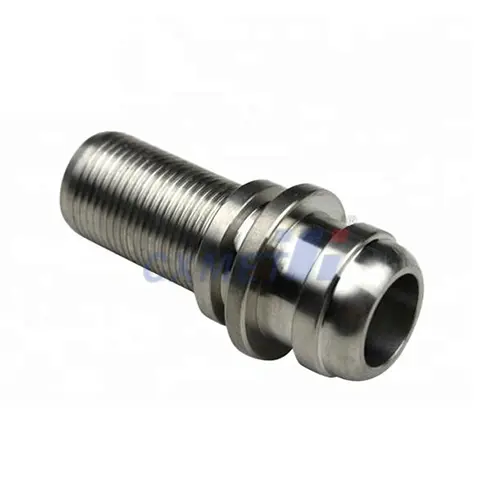
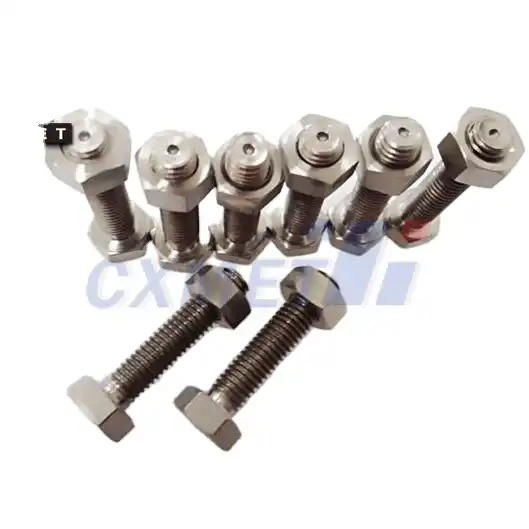
Customized CNC Titanium Parts are precise parts made from a customer's drawing, 3D model, tolerance scheme, and operating instructions. People who make things start with Ti bar, plate, billet, tube, or forging stock. Then, based on the form, they either drill, turn, mill, bore, thread, or use multi-axis machining. These parts are not like catalog items; they can only be used in a certain way, with a certain load, and in a certain environment. Sea, chemical, and oil and gas equipment can leak or wear out quickly if the fit of a fitting or housing isn't just right. You can keep track of the part better with the information that comes with it, such as inspection records and material licenses.
What Does OEM Support for Customized CNC Titanium Parts Include?
OEM help is more than just cutting metal. Suppliers can use the same model to make prototypes, small batches, trial runs, and orders that are placed more than once. People who want to buy something can also ask for a review of the first item, unique packaging, stickers, surface treatment, and deals that keep information secret. As an OEM/ODM partner, CXMET helps customers bring their product ideas to life. Because we only need one piece for a small order, your engineering team can try out an idea before committing to a bigger order. A written scope also lets both sides agree on changes to the drawings, the amount of work to be done, and the times for release before the work begins.
What Are the Core Specifications of Our Customized CNC Titanium Parts?
Under the name CXMET, parts made of titanium that we create for CNC milling are sent to us from China. Nickel Grade 5 is the standard metal. It can be pure or golden in color. We can machine things to within ±0.01 mm and have a surface finish of Ra 0.8. If you ask, we can heat-treat your items, and our company is ISO 9001:2015 certified. Sizes can be changed from 2 mm to 800 mm long and from 2 mm to 400 mm wide. About 4.43 g/cm³ is how dense Grade 5 is, which is about 45% less than steel. In other words, these parts make the whole thing lighter while keeping its power. The next thing we do is compare titanium to the metals that buyers usually look at first. Aluminum alloys like 6061 have a mass of about 2.7 g/cm³, which is less than titanium's mass of 4.43 g/cm³. Tin, on the other hand, is generally stronger and doesn't bend as much when it's heavy. Plus, it can handle chemicals and saltwater better than most types of aluminum, which is important for equipment used in chemicals and the marine industry. Since aluminum is less expensive and can be worked on more quickly, it is often the best choice for light, unimportant brackets and covers. When a part needs to hold a lot of weight while still being strong, withstand hard media, or last for years without needing to be changed, Customized CNC Titanium Parts are the best option. In that case, the longer lifetime usually makes up for the higher price per unit.
Why Choose CNC Machined Titanium Over Other Materials?
How Does Titanium Compare With Aluminum?
Stainless steel is still a good choice for many styles. Most of the time, it lasts longer and costs less. Titanium has a volume that is about 45% lighter than steel. Each type of titanium has the same or better tensile strength. A layer of oxide is also formed that can fix itself and is not affected by chlorides, saltwater, or many acids. It's also not magnetic. This makes it a good choice for chemical process equipment, as well as for use offshore and below the sea, where pitting and crevice corrosion can shorten the life of many steels. It's possible that stainless steel will last longer if it gets a lot of use, is cheap, or has a lot of moving parts. Engineers should look at both metals and compare them to how they will be used in the real world.
How Does Titanium Compare With Stainless Steel?
CNC machining makes sure that all groups get the same exact interfaces and results. Because of this, a lot of OEM teams pick it for bearing seats, sealing faces, and threads. Titanium has complicated internal channels and lattice structures that are hard to cut. 3D printing is a good way to make titanium parts. Forging makes the structure stronger before it is machined for the last time. Some jobs need blanks that are just the right size, which can be done on a CNC machine. We start with your drawing and check to see if bar, billet, or made stock fits the shape when we make Customized CNC Titanium Parts. The next question is what grade to use when everything is done.
Why Is CNC Machining Often Better Than 3D Printing or Forging Alone?
CNC machining makes sure that all groups get the same exact interfaces and results. Because of this, a lot of OEM teams pick it for bearing seats, sealing faces, and threads. Titanium has complicated internal channels and lattice structures that are hard to cut. 3D printing is a good way to make titanium parts. Forging makes the structure stronger before it is machined for the last time. Some jobs need blanks that are just the right size, which can be done on a CNC machine.
Which Titanium Grade Is Best, and How Are the Parts Made?
Grade 2 or Grade 5: Which Should You Specify?
Just being strong isn't enough to get the right grade. Things like loads, the environment, the temperature, rules, and money are also issues. At the point of sale, ASTM B348 says that Grade 2 titanium must have a tensile strength of at least 345 MPa. For this reason, it can be used in heat exchangers, chemical processing equipment, and ship fittings. It is also easy to weld. It is much stronger than Grade 5, which is also called Ti-6Al-4V. When heated, the material can exceed 1,000 MPa. High-performance parts in aerospace, medicine, racing, and industry that need to hold weight are usually made of this material. To make customized CNC Titanium Parts, we always use grade 5 material. If your plan needs them, send us the specs for the other grade, and we'll take a look.
Where Do Grade 9, Grade 23, and Specifications Fit?
Grade 9 (Ti-3Al-2.5V) is between Grades 2 and 5. It doesn't rust and is stronger than the titanium you can buy in shops. Grade 23 is Ti-6Al-4V ELI, a form with less oxygen that is used in medicine. It is covered by ASTM F136 for use in medical devices. People who want to order customized CNC Titanium Parts should be clear about the rules. This could be an ISO standard, ASTM B348 for alloys and bars, or AMS 4928 for alloys and bars made of Ti-6Al-4V. They should also check the conditions for the heat treatment, make sure the material is available, and make sure they meet the standards for the license. We can heat treat your parts if you ask.
How Are Customized CNC Titanium Parts Manufactured?
The first step in making something is going over the plan, CAD file, GD&T, finish needs, and order number. After that, it picks the wood, the stock size, the grain direction, and a safe way to hold the work. Since titanium doesn't move heat around well, the cutting edge gets hot. This breaks down metal easily and speeds up the wear on tools (Ezugwu and Wang, 1997). Because of this, machinists use coolants with high pressure, carbide tools that are sharp, cutting speeds that aren't too fast or too slow, and chip-control methods that keep burrs and heat to a minimum. From the beginning of the design process at CXMET to the end of the inspection process, we use CNC machining technology. After that, we finish and ship each order based on the terms that were agreed upon. After the part has been machined, we make sure it fits well and has a good finish.
What Tolerances, Finishes, and Applications Should Buyers Expect?
How Tight Can Tolerances Go on Customized CNC Titanium Parts?
What can be tolerated depends on the machine's state, the tools used, how the work is held, and the way it is checked. General limits can be used for aspects that aren't very important. Mating surfaces, bores, threads, and locating datums, on the other hand, need more control and inspection. GD&T is useful for everyone because it shows where something is, how flat it is, how perpendicular it is, how it profiles, how concentrically it points, and how much runout it has in relation to certain datums. In general, tight limits should only be put on features that change how something works. This is because checking and machining cost more for each extra-tight measurement. Our team can look at your drawing and show you where a lower limit would save you money without hurting performance.
Which Surface Finishes Are Available?
When someone buys Customized CNC Titanium Parts, they can often choose from standard cutting, fine milling, deburring, polishing, brushing, bead blasting, passivation, or chosen anodizing. We offer a Ra 0.8 finish, and the parts can be natural or golden. What comes after function is finish choice. For implants, a rough surface that has been bead-blasted is often best because it helps bone grow. On the other hand, the sides of surgical tools should be cleaned or anodized to keep them clean and reduce friction. With titanium anodizing, the oxide's thickness is changed so that colors can be made without dyes. Parts won't fade and will be easy to find this way. Give each surface a rough finish instead of a smooth one. Write down the finish needs for each surface on the drawing.
Where Are These Components Used?
Customized CNC Titanium Parts are used in industries that require strong, lightweight, and rust-proof components. Our goods are used in vacuum, medical, power metallurgy, marine, oil, chemical, and coating equipment. Mariners want fittings that don't rust, and astronauts want parts for the structure and the landing gear. People who work in medicine use surgical tools and implants, so biocompatibility is important. Also, these goods need to follow rules and standard methods. Parts for fast cars are made out of titanium. Strong materials that break down many steels can't hurt titanium in chemical and oil plants. The grade, tolerance, and documentation needs are different for each use case. The next part talks about how the price changes based on the application.
How Do Cost, Quotes, and Supplier Selection Work?
What Drives the Price of Customized CNC Titanium Parts?
There are many things that affect the price, such as the type of material used, the size of the stock, the shape, the setup time, the programming, the tool wear, the inspection, the finishing, the shipping, and so on. Prototypes and small runs cost more per unit because the time needed for setup and building is spread out over fewer pieces. Ti is more expensive than aluminum because its raw materials are more expensive, it cuts more slowly, and you need stronger tools to work with it. Smart people look at more than just price when they compare. It may be worth the extra money up front if it means less weight, longer service life, resistance to corrosion, less maintenance, and a lower chance of breaking. You can save money with a design-for-manufacturing review that makes hard-to-use parts easier to use and loosens tolerances that aren't needed. You can try out a design before you order a lot of them with our 1-piece MOQ.
What Should Your Quote Request Include?
The first thing you need to do to get a good price for customized CNC titanium parts is to be honest about everything. Send the most up-to-date 2D and 3D CAD models, along with the grade of titanium, material specs, quantity, and demand per year. GD&T, surface finish, secondary treatments, inspection level, certification needs, packaging, where the item is going, and when it needs to be delivered should all be added. What kind of job is it? Is it a sample, a small order, a test run, or a large production run? Don't just look at the unit price when you compare bids. Look into how the materials were certified, what was inspected, how much the tools or programming cost, the different ways the work can be finished, the lead time, how it will be shipped, and the guarantee. Get each supplier to write down their technical assumptions so that you can compare all of the quotes you get.
How Do You Choose a Supplier and Confirm Titanium Fits?
Quality certification, material that can be tracked, and good technical communication are all things that a good supplier should have. They should also be able to do CNC turning, milling, and multi-axis work. CXMET has been around since 2005, is spread out over 50,000 square meters in the "China Titanium Valley," and employs over 80 skilled technicians. Zirconium, molybdenum, tantalum, nickel, titanium, and molybdenum alloys are what we work with. We are certified by ISO 9001:2015. Before you order metal, make sure it fits right. Aluminum is good for making parts that are light and not very important. Stainless steel is good for designs that need to be resistant to wear. And additive manufacturing is good for making very complicated internal channels. If you need strength at a low weight, long-term rust resistance, or stress performance, customized CNC titanium parts are a good option.
Conclusion
Customized CNC Titanium Parts are very strong for their weight, and they don't rust or wear down quickly. Because of this, they can be used in chemical, medical, aerospace, and marine settings. You can still use aluminum and stainless steel for designs that need to be light or last a long time. What grade to use depends on the loads, the environment, and the needs. Grade 2 is best for things that need to be resistant to rust, and Grade 5 is best for things that need to be strong. Titanium doesn't let heat pass through it easily, so it needs to be carefully worked with and cooled. Tight specs should only be used on parts that change how the metal works. This is because price changes based on things like material, shape, sets, cutting time, and checking. Lifecycle value is a better way to compare things than unit cost. It's safer to buy from someone whose quality is known, whose materials can be tracked, and who communicates clearly and gives full quotes. If all of these things are true, then it is worth the cost to machine titanium parts to a specific drawing.
FAQ
Why do customized CNC titanium parts cost more than aluminum?
As a raw material, titanium costs more than aluminum. It also takes longer to cut, and tools wear out faster. When you order a small amount, the unit price goes up because the costs of setting up, programming, and checking are spread out over a smaller number of pieces. The gap may get smaller over time as parts last longer and lose less weight.
Can I order a prototype or a single piece?
Yes. You can be sure you like a design before we make it because the least you have to order is one piece. We also work with ODMs and take on repeat OEM orders. Before we start, we can look at your picture. Lead times depend on what the order is and how many of them there are.
What tolerance and finish does CXMET provide?
We make Grade 5 parts, so the surface has a roughness of 0.8, and there is a ±0.01 mm error. If you ask, we can heat-treat your items, and our company is ISO 9001:2015 certified. What you get depends on the shape and what your picture needs.
What information do you need for a quote?
Send a 2D drawing, a 3D CAD model, the grade, the amount, the limits, the surface finish, the destination, the due dates for inspection and certification, and the goods. Also include a 2D or 3D drawing. What kind of order is it? Is it for a prototype, a test run, or a lot of them?
Request Your Customized CNC Titanium Parts Quote from CXMET
We will look over your plans for your next project after you send them to CXMET. We have a lot of experience because we have been making customized CNC titanium parts since 2005. We can make Grade 5 parts to ±0.01 mm with a Ra 0.8 finish and work with both OEMs and ODMs. We can make prototypes and run a business because our MOQ is only one piece, and we are certified to ISO 9001:2015. Email sales@cxmet.com or visit https://www.cxmet-tech.com/ to get a price and expert review.
References
1. Donachie, M. J. Titanium: A Technical Guide, 2nd Edition, ASM International, 2000.
2. Lütjering, G., and Williams, J. C. Titanium, 2nd Edition, Springer, 2007.
3. Ezugwu, E. O., and Wang, Z. M. "Titanium Alloys and Their Machinability—A Review," Journal of Materials Processing Technology, 1997.
4. ASTM International. ASTM B348/B348M, Standard Specification for Titanium and Titanium Alloy Bars and Billets, 2019.
5. International Organization for Standardization. ISO 9001:2015, Quality Management Systems—Requirements, 2015.
6. Boyer, R., Welsch, G., and Collings, E. W. (Eds.). Materials Properties Handbook: Titanium Alloys, ASM International, 1994.