knowledges
Why Switch to a titanium electrode from Lead-Based Anodes?
2026-09-16 17:14:38
The transition to advanced titanium electrode materials has reached a critical juncture for industries committed to operational excellence and regulatory compliance. While lead-based anodes have served as workhorses across electroplating, water treatment, and chemical processing for decades, their escalating limitations cannot be ignored. Switching to modern alternatives delivers measurable improvements in durability, environmental safety, and total cost of ownership. Our comprehensive analysis demonstrates why procurement managers and engineering teams are increasingly selecting titanium-based solutions as their preferred electrode technology. These advanced materials address critical pain points while offering superior electrochemical performance and extended operational lifespans that directly impact your bottom line.
|
|
|
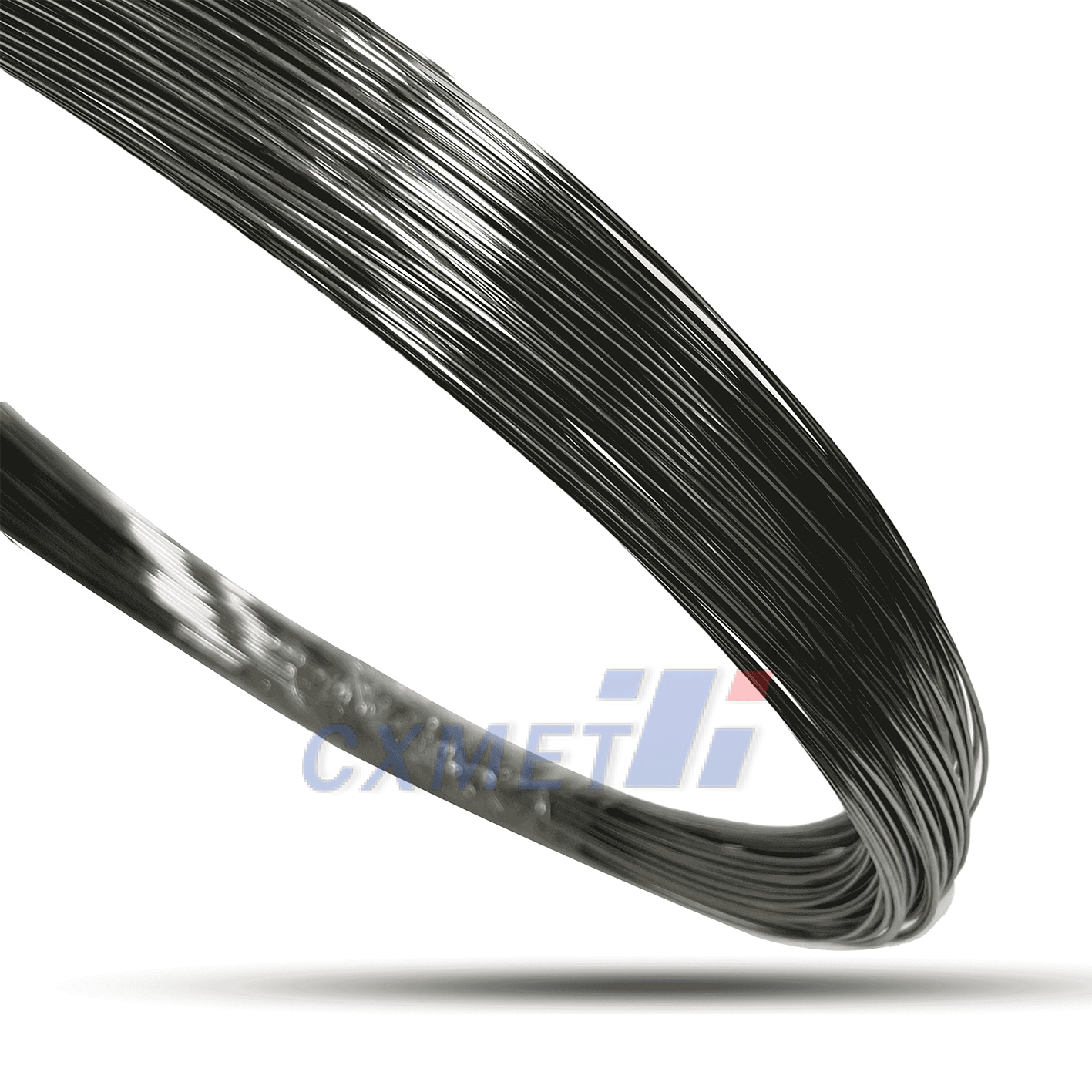

Why Titanium Electrodes Are Superior: Core Advantages
Modern electrode technology delivers huge improvements in a wide range of performance areas. Before looking at specific benefits, it's important to understand the basic qualities of the material to understand why modern solutions work better than traditional ones.
Exceptional Corrosion Resistance and Longevity
The oxide layer that forms naturally on titanium surfaces makes them very resistant to chemical attack. Titanium grades 1 and 2 are very resistant to sulfuric acid concentrations up to 10%, chloride solutions, and alkaline conditions that break down lead-based options very quickly. Our titanium electrodes are made with high-purity titanium plates that are in line with ASTM B265 standards and keep their structural stability over long periods of use. This resistance directly leads to working lifespans longer than five to ten years under normal conditions, which means they don't need to be replaced as often as standard materials, 400 to 600% less often.
Enhanced Electrochemical Performance
Specialized catalyst coatings improve the electrochemical activity and current efficiency. Using iridium oxide, ruthenium oxide, or platinum in mixed metal oxide formulas makes the surfaces very active and helps electron transfer processes happen. These designed surfaces make sure that the current is spread evenly across the titanium electrodes, so there are no hot spots or uneven accumulation patterns like there are with lead anodes. Our carefully planned surface areas maximize catalytic activity while keeping their mechanical stability at 10 kA/m² current densities.
Environmental Stewardship and Compliance
Modern titanium electrode treatments get rid of the harmful waste streams that come from breaking down lead and releasing particles. Facilities that switch to new materials say that the costs of getting rid of hazardous waste and meeting regulatory requirements for paperwork have gone down by a huge amount. Heavy metal pollution makes it easier to treat wastewater and lowers the risk of environmental responsibility. Updating electrode technology gives companies that are trying to get ISO 14001 approval or meeting business sustainability requirements real benefits.
Simplified Maintenance Protocols
The strong design and resistance to degradation of properly specified titanium electrodes greatly lower the need for maintenance work. Instead of complicated chemical treatments, cleaning tasks become simple mechanical ones. Lower decline rates keep performance traits stable over the life of the operation, which means that process parameters don't need to be changed as often and quality control isn't needed as much. The predictable performance trends help engineering teams plan output more accurately, which they value. Because of these benefits, current electrode technologies are smart economic choices for places that care about environmental responsibility, practical excellence, and lowering long-term costs.
Technical Comparison: Titanium Electrodes vs Lead-Based Anodes
Material Properties and Manufacturing Standards
When making advanced titanium electrodes, special techniques are used to make performance characteristics that can't be achieved with regular materials. Our products are made with high-purity titanium plates that meet strict ASTM B265 standards. This makes sure that the products are highly conductive and have strong structures. Before the catalyst is applied, the substrate is prepared by going through cycles of thermal treatment that improve the grain structure and surface properties.
Coating technologies are important ways to improve efficiency. Using thermal breakdown to apply layers of mixed metal oxides makes stable, highly conductive surface structures. Iridium oxide mixtures work best in oxygen evolution situations that happen a lot in water treatment, while ruthenium oxide mixtures work best in chlorine evolution situations that happen a lot in brine electrolysis. When these special coatings are put on at controlled thicknesses of 2 to 5 micrometers, they make the catalyst work more efficiently than if the lead surfaces weren't coated. Lead anodes don't have any designed surface structures, so they only use the qualities of the bulk material. Their natural softness makes them vulnerable to mechanical damage, and electrochemical dissolution keeps destroying their surface properties and accuracy in measurements.
Performance Metrics and Economic Analysis
Comparisons based on numbers show big differences in success across key factors. Current tests show that modern titanium electrodes that are properly defined keep 85–95% of their efficiency over the course of their useful life, while lead anodes lose efficiency over time as the surface breaks down. During multi-year operational periods, this difference in efficiency directly leads to changes in energy use that have big cost effects.
Using life span similarities to make an economic case is very convincing. When our engineers make titanium electrodes with the right catalyst mixtures, they usually last between 50,000 and 80,000 hours of use before they stop working properly and need to be replaced or fixed. Lead anodes usually need to be replaced every 8,000 to 15,000 hours, which means that replacement frequency ratios are higher than 5:1. Total cost-per-operating-hour estimates always favor advanced electrode technologies by large amounts when lifetime costs like replacement labor, output interruptions, and inventory carrying costs are taken into account.
Application-Specific Considerations
Electrochemical environments are different for each industrial process, so titanium electrode specifications need to be tailored to each process. When acidic sulfate solutions are used in copper electrowinning, the chemicals must be very stable and the machines must be very strong. Our Grade 1 titanium substrates coated with iridium-tantalum oxide formulations work perfectly in these tough conditions. They act as permanent cathode substrates that get rid of the need for starter sheets.
Nickel and cobalt electrorefining applications have strict purity needs because contamination causes unacceptable quality risks in the result. The chemical inertness of properly chosen titanium electrode materials stops metallic ions from entering, which would make it harder to make battery-grade metal. To meet the standards for product approval, facilities that make high-purity specialty metals always use the latest electrode technologies. The stable chlorine evolving properties of ruthenium-iridium oxide layers help water treatment chlorination systems work better. These formulations keep the rates of hypochlorite production steady without the changes in size and particle loss that happen in lead-based systems. Municipal water authorities and industrial facilities like these technologies because they work reliably and require less maintenance.
How to Transition from Lead-Based Anodes to Titanium Electrodes
System Evaluation and Specification Development
Successful upgrades to titanium electrode technology start with a full analysis of how things are currently working. It is important for engineering teams to keep track of things like current levels, electrolyte compositions, temperature profiles, and operating task cycles. These factors help with the creation of specifications and make sure that the features of the electrodes meet the needs of the application.
Electrode sizes, mounting options, and electrical connection methods are some of the physical configuration factors that need to be thought about. Our usual sizes are 1000mm x 500mm x 3mm, but we can make them smaller or bigger to fit your specific fitting needs. Facilities that already have mounting equipment can often benefit from upgrades that are dimensionally compatible and require less installation changes.
Coating Selection and Performance Optimization
Choosing the right catalyst mixtures has a huge effect on the success of operations. For uses that involve chlorine evolution, ruthenium-iridium oxide coatings that are best for halogen environments are needed. Iridium-tantalum oxide mixtures that don't react with acidic oxidation are good for oxygen generation processes like water electrolysis or metal electrowinning. Platinum coatings are expensive, but they are used in specific situations that need the highest level of chemical inertness.
The final material choices are based on the operating temperature ranges and current density specifications. Standard formulations work best at temperatures up to 80°C, while high-temperature forms are designed to work in harsher temperatures. Current densities of up to 10 kA/m² are higher than what is needed for most industrial applications. This gives large operating margins that make equipment last longer.
Procurement Strategy and Supplier Evaluation
Titanium electrode technology is an important part of the process that needs to be carefully screened before it can be supplied. Manufacturing certifications, quality control protocols, technical support capabilities, and business terms should all be part of the evaluation criteria. ISO 9001 certification shows that you handle quality in a planned way, and industry-specific standards show that you know how to make certain things.
Strategies for planning projects and keeping track of supplies are affected by lead times. Standard configurations usually ship in shorter amounts of time, while customized specifications need longer manufacturing cycles. When you buy in bulk, you can usually get better prices and make sure you have enough supplies for planned upkeep tasks. Warranty terms and promises of technical support are important ways to lower the risk. Manufacturers with a good reputation back up their products with performance guarantees and offer application engineering help to make sure installations go smoothly. Recoating services allow used wires to be fixed up, which increases the useful life of assets and lowers long-term capital costs.
Case Studies & Success Stories in Switching to Titanium Electrodes
Water Treatment Facility Transformation
A municipal water treatment authority that serves 500,000 people in the region had to deal with rising maintenance costs and worries about the dependability of its old lead anode systems. Replacements that happened too often messed up chlorination processes and made it harder to get rid of hazardous waste. The plant switched to anodes with dimensionally stable ruthenium-iridium oxide layers that are made for making hypochlorite all the time.
Operational results were better than expected in a number of ways. The time between replacing a titanium electrode went from 14 months to more than 60 months, which cut down on three replacement rounds over a five-year review period. The amount of work that needed to be done on maintenance dropped by 65%, which let people be moved to regular maintenance tasks. By measuring energy use, it was found that better current spread led to a 12% increase in productivity. Getting rid of waste streams that contained lead made it easier to meet environmental compliance requirements and cut annual disposal costs by $18,000.
Electroplating Operation Performance Enhancement
Anode degradation and particulate contamination led to quality problems at a precision electroforming facility that made aerospace parts. When the lead anode broke down, it released impurities that changed the microstructure and mechanical properties of the deposit. Advanced titanium electrode technology with iridium oxide layers on precisely machined titanium surfaces was used in the process.
Quality gains were seen right away after installation. Measurements of deposit purity showed that amounts of metallic contamination dropped below the limits of detection. This meant that the facility could meet the standards for AS9100 approval. The regularity of the surface finish got a lot better, which cut down on the need for extra processing and the amount of scrap that was made. Because the electrodes lasted longer, they didn't need to be replaced every three months, which used 16 hours of production capacity every year. Total cost of ownership estimates showed a 38-month payback time, even with the high initial investment. The system is expected to save $24,000 a year in operational costs.
Chemical Processing Success
In highly oxidative sulfuric acid settings, an electrolytic manganese dioxide production plant had trouble keeping titanium electrodes in good shape. The extreme chemical conditions meant that traditional materials didn't last long enough. Using specialized electrode systems with Grade 1 titanium substrates and custom iridium-tantalum oxide formulas had life-changing effects. The operational lifespans went from 18 months to 72 months while the quality of the products stayed the same. The plant said that less downtime and more stable process control led to an 8% increase in output capacity.
Conclusion
The switch from old lead-based anodes to new titanium electrode technology has measurable advantages in terms of operations, finances, and the environment. The best corrosion protection, longer operating lifespans, better electrochemical performance, and easier upkeep routines make advanced materials smart economic choices for buying organizations that are looking to the future. This guide has technical similarities, case study evidence, and application-specific considerations that give engineering teams and procurement managers the knowledge they need to confidently define the right solutions. Facilities that focus on creating long-term value, following regulations, and achieving operational excellence are becoming more aware that upgrades to electrode technology are more like strategic investments than luxuries. The calculations of performance advantages and total cost of ownership always show strong economic reasons that support procurement suggestions and make it easier for stakeholders to agree.
FAQ
What determines electrode lifespan in industrial applications?
The main things that determine how long a titanium electrode works are the current density, the composition of the electrolyte, and the temperature. When used within the recommended parameters and with the right specifications, electrodes usually last between 50,000 and 80,000 hours. The longest operational periods are seen in places where current densities are less than 5 kA/m² and temperatures are less than 70°C. The type of catalyst coating has a big effect on how long it lasts. Formulations based on iridium last longer in settings with acidic oxygen evolution than formulas based on ruthenium that are better for chlorine service.
Can existing systems accommodate electrode technology upgrades?
Most setups can take straight replacements with only minor changes. Standardized sizes and shapes match typical lead anode outlines, making retrofitting easy. Because new materials have different mechanical qualities, electrical connection methods may need to be changed to work with them. Our expert team helps with application building to check for compatibility and suggest any extra changes that need to be made. Most electroplating, water treatment, and electrowinning businesses are able to make improvements without having to completely rethink their systems.
What maintenance protocols optimize performance?
It turns out that routine maintenance needs for a titanium electrode are a lot easier to handle than lead anode protocols. Visual checks done on a regular basis find any damage to the coating or technical problems that need fixing. Depending on the type of contamination, surface cleaning can use light acid solutions or mechanical ways to get rid of built-up scale or deposits. Checking the integrity of an electrical connection stops resistance from rising, which lowers the efficiency of the current. When wires are properly kept, they don't need much more than these simple steps. Many operations have inspection plans that run every three months, but the exact requirements depend on the severity of the application and the working conditions.
Partner with CXMET for Superior Titanium Electrode Solutions
Upgrading your electrical systems is a long-term strategic choice that will have big effects on how well your business runs, how well it protects the environment, and how well you control costs. When it comes to tailored electrode solutions, CXMET has more than 20 years of experience working with non-ferrous metals and making great products. Our titanium electrodes are made of high-purity Grade 1 and Grade 2 titanium plates that meet ASTM B265 standards. They also have catalyst coatings that are precisely applied and adjusted for your specific application needs.
Our products are made in a 50,000-square-meter factory in Shaanxi Province, which is known as the titanium manufacturing hub of China. More than 80 specialized workers follow strict quality control routines during production. Our expert team gives you application-specific advice and ongoing support, whether your business needs standard configurations or solutions that are specially made for your particular process conditions. Get in touch with a titanium electrode maker with a lot of experience who cares about your business's growth. Email our team at sales@cxmet.com to talk about your specific needs, get technical specs, or set up an evaluation sample. We answer questions quickly and give you solutions that are suited to your procurement goals.
References
1. Schmuki, P., "Electrochemistry of Titanium and Titanium Alloys in Aqueous Solutions," Journal of Applied Electrochemistry, Vol. 42, 2012.
2. Chen, G., "Electrochemical Technologies in Wastewater Treatment," Separation and Purification Technology, Vol. 38, 2004.
3. Comninellis, C., "Electrocatalysis in the Electrochemical Conversion/Combustion of Organic Pollutants for Waste Water Treatment," Electrochimica Acta, Vol. 39, 1994.
4. Trasatti, S., "Physical Electrochemistry of Ceramic Oxides," Electrochimica Acta, Vol. 36, 1991.
5. Beer, H.B., "The Invention and Industrial Development of Metal Anodes," Journal of the Electrochemical Society, Vol. 127, 1980.
6. Hine, F., "Electrode Processes and Electrochemical Engineering," Industrial Electrochemistry Series, Plenum Press, 1985.