knowledges
Can Titanium Square Bar Reduce Corrosion and Maintenance Costs?
2026-11-13 16:07:37
When used under the right conditions, Titanium Square Bar can actually lower maintenance costs and corrosion. Crews may save time on coating, cleaning, inspection, and part replacement thanks to the stable oxide film that resists seawater, chlorides, and many process chemicals. Where a single malfunction can halt output, such as in maritime, offshore, chemical, and water-treatment systems, the savings are most noticeable. The answer includes grade, temperature, chemistry, and service life; titanium is more expensive than aluminum or stainless steel initially. Using this approach, you can see how I evaluate these aspects and when the extra investment is worthwhile.
|
|
|
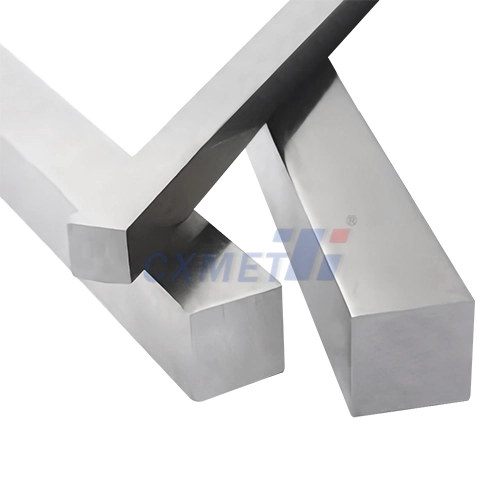

How Titanium Square Bar Reduces Corrosion-Related Maintenance Expenses?
The Self-Healing Oxide Layer
Titanium and oxygen immediately form titanium dioxide. Titanium dioxide is usually a few nanometers thick. Cut or scratched film can be fixed with air or water. Titanium Square Bars' non-reactive coating makes them resistant to seawater, moist chlorine, and many reactive acids. The paint on carbon steel bars must stay on. The metal makes titanium bar paint safe. The surface doesn't stick well since we can't recoat it. This reduces labor and transportation costs for submerged offshore buildings and tools.
Where Maintenance Spending Builds Up?
Large losses rarely result in high maintenance expenses. The builders stop often to clean, recoat, and repair broken or old pieces. A part breaking early can cause the ocean cooling system or chlorine chemical line to fail multiple times. Titanium Square Bar supports, rods, anode hooks, bus bars, and lights rarely experience those issues. Titanium carries energy and doesn't combine with heated chloride solutions in power and chlor-alkali lines. This process keeps rust out of the bath. Since shutting down costs more than running, portions are shut down less as business slows.
Limits Every Buyer Should Know
Titanium rusts. Hot, powerful acids like hydrochloric or sulfuric acid can harm unalloyed grades. They can react strongly together. In hot chloride solutions above 70°C (160°F), strong fissures can cause crevice corrosion in pure grades. Gr7 and Gr12 soles are responsible. Galvanic contact matters too. Steel and aluminum corrode faster in saline water than titanium because they are less noble. Before grading, I require temperature, concentration, flow rate, air level, and contacting metals.
Titanium Square Bar Grades and Properties That Drive Service Life
Commercially Pure Grades: Gr1 to Gr4
The amount of oxygen and iron in each grade is what makes them different for industrial use. From Gr1 to Gr4, it gets harder. Gr1 is the most bendable and soft. Most of the time, Gr2 is used for corrosion work because it is resistant to chemicals, easy to shape, and simple to find. ASTM B348 says that its lowest bending strength is 275 MPa. When Gr3 and Gr4 are mixed together, power is gained at the cost of some shapeability. Titanium Square Bar can be bought from CXMET by people in grades 1 through 4. They don't have to pay extra for alloys that aren't needed, so they can match the strength to the load.
Alloyed Grades: Gr5, Gr7, Gr9, Gr12, and Gr23
Evaluations can be useful. The bending strength of Gr5 (Ti-6Al-4V) must be 828 MPa in accordance with ASTM B348. Because of this, it is perfect for use in industrial components and lightweight valves. But it might not work well with all chemical streams. Gr7 is fortified against acids that degrade metals by adding palladium. Adding nickel and molybdenum to Gr12 makes it more resistant to rust in cracks when exposed to hot salt. Between Gr5 and pure grades, Gr9 (Ti-3Al-2.5V) is the strongest. As per ASTM F136, Gr23 is suitable for use as surgical implants. When looking for healthcare, this is essential.
Physical Properties That Affect Design
TiO2 is 4.51 g/cm³, which is about 60% as dense as steel. That is, a titanium square bar is less heavy and easier to move around on the job site. The metal can be used to make circuits and MRI equipment because it is not magnetic. It can only bwithstand110 to 114 GPa, which is not as much as steel. This makes long, thin parts bend more, so you need to do a lot of math. Machining needs to be planned ahead of time because the cutting edge gets hot when thermal conductivity is low. A lot of coolant, sharp tools, and steady feeds are used in shops. Soft bars are easy to work with even when they're not finished.
Titanium Square Bar Compared With Stainless Steel and Aluminum
Titanium Square Bar vs. Stainless Steel
In comparison to steel, it is less heavy, softer, and resistant to rust. Also, the price per kilogram is lower. Chlorides are not allowed. Grades 304 and 316 can be pitted and crevice-corroded by warm saltwater and process streams that include chloride. Immediate attention is required to review, fix, or modify them. Because of its superior strength-to-weight ratio, titanium is more resistant to corrosion from saltwater and chloride than steel. TiO2 is the way to go when salt is plentiful, difficult to access, or costly to descend. When the weather is mild, use stainless steel. Wearing titanium just on exposed parts can help keep costs down and boost performance.
Titanium Square Bar vs. Aluminum
Aluminum is cheap, light, and simple to work with, so many kinds of buildings can use it. Titanium is stronger and better able to handle chlorides, but it's not as thick (about 2.7 g/cm³). These metals can pit in salty water and air, and they rust more quickly when they touch metals that are worth more. Titanium is strong at higher temperatures, and when it is broken up into smaller pieces, it can hold more weight. This means that an aluminum part can sometimes be bigger than a titanium part that can hold the same amount of weight. For parts that won't last long, indoor tools, or fixtures that don't need to hold a lot of weight, metal might still be cheaper.
Square Versus Other Profiles
Parts such as square framework, pillars, rails, screws, and sculpted stones. In order for these parts to function, they need to be flat on the mounting faces, easy to align, and leak-proof. A bar that is mostly bent or requires turning can be better served by a circular or rectangular profile. Be sure you know the available space, the method of fastening, the bending radius, and the method of machining it before making a decision. Due to the higher per-kilogram cost of titanium, it is recommended to begin with a Titanium Square Bar that closely mimics the desired shape. Debris, broken tools, and trash will go down. If the component is square, cutting it to size first will save both time and material.
Manufacturing, Dimensions, and Quality Checks for Titanium Square Bar
How Processing Changes Cost and Performance?
How something is processed affects its price, appearance, growth, and strength. Hot-rolled, cold-drawn, or annealed CXMET titanium square bar. Making general stock by hot rolling is cheap. Drawing anything cold changes its size and smooths its surface. It also gets harder. This reduces stress and simplifies work. Three finishes are available: bright, machined, and ground. You can boil or sand the surface. Smooth surfaces make vacuum and medical tools less likely to get dirty, and accurate measurements reduce fitting errors. Instead of price, choose condition based on part function.
Choosing Dimensions for a Real Application
The lengths and diameters of CXMET Titanium Square Bar range from 1000 mm to 6000 mm, with the former measuring 4 mm x 4 mm and the latter 200 mm x 200 mm. Personalized sizing is an option. First, make sure there is no vibration, tension, bending, shear, twisting, or contact. Think about the unmanageable length, mounting method, weather, and exposed substances. Incorporate the expenses associated with titanium scrap, machining, cutting loss, and test samples into the total amount you plan to purchase. The following standards apply: ASTM B348, AMS, DIN, or tolerances specified by the customer. You can save enough time and waste by producing many OEM parts that the additional setup isn't necessary. A custom size can help you better anticipate the ultimate form.
Verifying Quality Before You Buy
For the best quality, be sure of what you want to buy before you buy it. Name the grade, the standard, the supply situation, the size, the range of sizes, and the finish on the outside. This is what ASTM B348 is for: bars and billets made of titanium. ASTM F67 is used for medical devices made of pure titanium. For Ti-6Al-4V ELI, ASTM F136 can be used in the same way. Each titanium square bar should come with a material test certificate that lists its chemical composition, mechanical properties, and heat number. This will help you find all of them. Check to see if parts that are likely to break need to be checked for soundness. In China's Titanium Valley, Shaanxi CXMET Technology Co., Ltd. has been in business since 2005 on a 50,000-square-meter site. It has over 80 professionals who can help you with these business issues.
Titanium Square Bar Price, Industry Selection, and Procurement Checklist
Price and Total Cost of Ownership
Type, size, number, method, accuracy, finish, testing, packing, freight, trade terms, and pricing affect kilogram price. That figure alone isn't useful. A cheaper bar that needs to be re-coated, inspected often, or changed early may cost more than a Titanium Square Bar that lasts. Create a cost strategy for equipment delivery, removal, storage, installation, and downtime. Recyclable titanium may be lighter and easier to move. If you wish to compare bulk, made-to-order, approved, or exported orders, receive official quotes.
Best Titanium Square Bar Grade by Industry
Be cautious not to choose the incorrect grade. Before purchasing maritime or offshore equipment, the majority of consumers check the grade for signs of salt and electrical contact. Teams in the chemical, petroleum, and gas industries track concentration, temperature, and flow. Workers having experience with heated chloride or acid that breaks objects may go on to Gr7 or Gr12. Depending on the load and temperature, most power and metal users choose G2 or G5. Those in the pharmaceutical and healthcare industries insist on ASTM F67 or F136. One ought to maintain a clean and smooth face. Clean, magnet-proof uniforms are required of employees in the vacuum, electronics, and clothing industries. These are just guidelines; for specifics on your method, consult rust data.
Procurement Checklist for Titanium Square Bar Buyers
Make sure you have these things before you ask for a quote. Providers use them to figure out what grade and price to charge you.
- Technical specification: Tell them what kind of material you need (hot rolled, cold drawn, or annealed) and how you want the surface finished (polished bright, machined, or ground). This way, they can make sure they send you the right stuff without you having to pay a lot of money to fix mistakes they made later. They can also find out if they need to do any tests, like a chemical study or an ultrasonic check.
- Commercial terms: include the amount, the target delivery date, the destination in the United States, the minimum order quantity, the lead time, the packaging needs, the Incoterms, the payment terms, and whether you need stock material, cut-to-length service, custom sizes, or scheduled repeat orders for ongoing OEM or distributor supply. When the terms are clear, the seller knows when to send the goods and whether they are still available.
- Documentation and supplier fit: material test certificates with chemical composition, mechanical properties, and heat number; being able to trace back to the production lot; having packaging that meets your cleanliness standards; and making sure that the supplier makes the bars themselves and can handle custom processing, inspection arrangements, and repeat production to make sure that every shipment meets the requirements.
With this list complete, the seller can quickly decide if the item is still available without having to call back and forth.
Conclusion
Titanium square bar lessens the expense of repairs and downtime caused by corrosion and chemical contamination, such as chloride or saltwater. The passive oxide film ensures that it never needs re-coating, inspection, or replacement. Still, you need to consider things like galvanic contact, cracks, dry chlorine, and hot reducing acids. To remove rust, Gr2 glue is the best option. Gr7 and Gr12 work great to fix cracks and acid damage. When fixing implants, Gr23 is the way to go. When compared to aluminum and stainless steel, titanium's initial cost is higher. Since it is harder to get and lasts longer, the additional cost might be justified. Next, the format, size, conformance to ASTM B348, F67, or F136, and verified papers of the bar are examined.
FAQ
Is a titanium square bar better than 316 stainless steel in seawater?
If there is chloride in the water, yes, most of the time. Steel that doesn't split or crack is more durable than 316 stainless steel. This means it doesn't need to be fixed or replaced as often. It's possible that stainless steel will cost less even if you live in a mild area. But before you decide, consider how long it will last, how hard it is to get, and how much it will cost to maintain.
Which grade should I choose for corrosion service?
Gr2 is often the best choice because it handles chemicals well, is easy to make, and is easy to find. Gr7 or Gr12 might be a better choice if you need to work with acids or hot chloride that is likely to crack. Choose Gr5 if you care more about strength and light weight than being around chemicals.
What details do you need for a quotation?
Send an email to sales@cxmet.com with the shipment address, grade, length, number of squares, standard, tolerance, surface finish, need for a certificate, and the type of application. The CXMET team can use these details to ensure the person is available, grade them, and write up a formal quote.
Request a CXMET Titanium Square Bar Quote to Cut Your Maintenance Costs.
Are you ready to give up on your next project because of corrosion? Please email sales@cxmet.com with the grade, size, number, and use. CXMET will get back to you with written advice and a price quote. In Titanium Valley in China, we sell square titanium bars. Over 80 techs work for us, and their grades are Gr1, Gr2, Gr5, Gr7, Gr12, and Gr23. We can make the right sizes for you by working with OEMs. To find out more, go to https://www.cxmet-tech.com/.
References
1. NACE International, International Measures of Prevention, Application, and Economics of Corrosion Technologies Study (IMPACT), 2016
2. ASTM International, ASTM B348/B348M: Standard Specification for Titanium and Titanium Alloy Bars and Billets, 2019
3. ASM International, ASM Handbook Volume 13B: Corrosion: Materials (R. W. Schutz, "Corrosion of Titanium and Titanium Alloys"), 2005
4. ASM International, Titanium: A Technical Guide, 2nd Edition (Matthew J. Donachie), 2000
5. Wiley, Corrosion and Corrosion Control, 4th Edition (R. Winston Revie and Herbert H. Uhlig), 2008
6. ASTM International, ASTM F136: Standard Specification for Wrought Titanium-6Aluminum-4Vanadium ELI Alloy for Surgical Implant Applications, 2013