knowledges
How Does Hafnium Wire Compare to Zirconium Wire?
2026-05-11 14:42:30
When looking at refractory metal wire for tough industrial uses, zirconium wire and hafnium wire are often two of the best options. Zirconium wire has a melting point of 1,855 °C, while hafnium wire has a melting point of 2,233 °C, making it much higher. This is an important difference for nuclear plant control rods. On the other hand, zirconium wire is usually more cost-effective and easier to find in stores. This makes it a good choice for chemical processing equipment that isn't in a nuclear power plant. When buying, managers and engineers know these differences; they can match the properties of materials with the needs of specific operations.
|
|
|
Introduction to Hafnium and Zirconium Wires
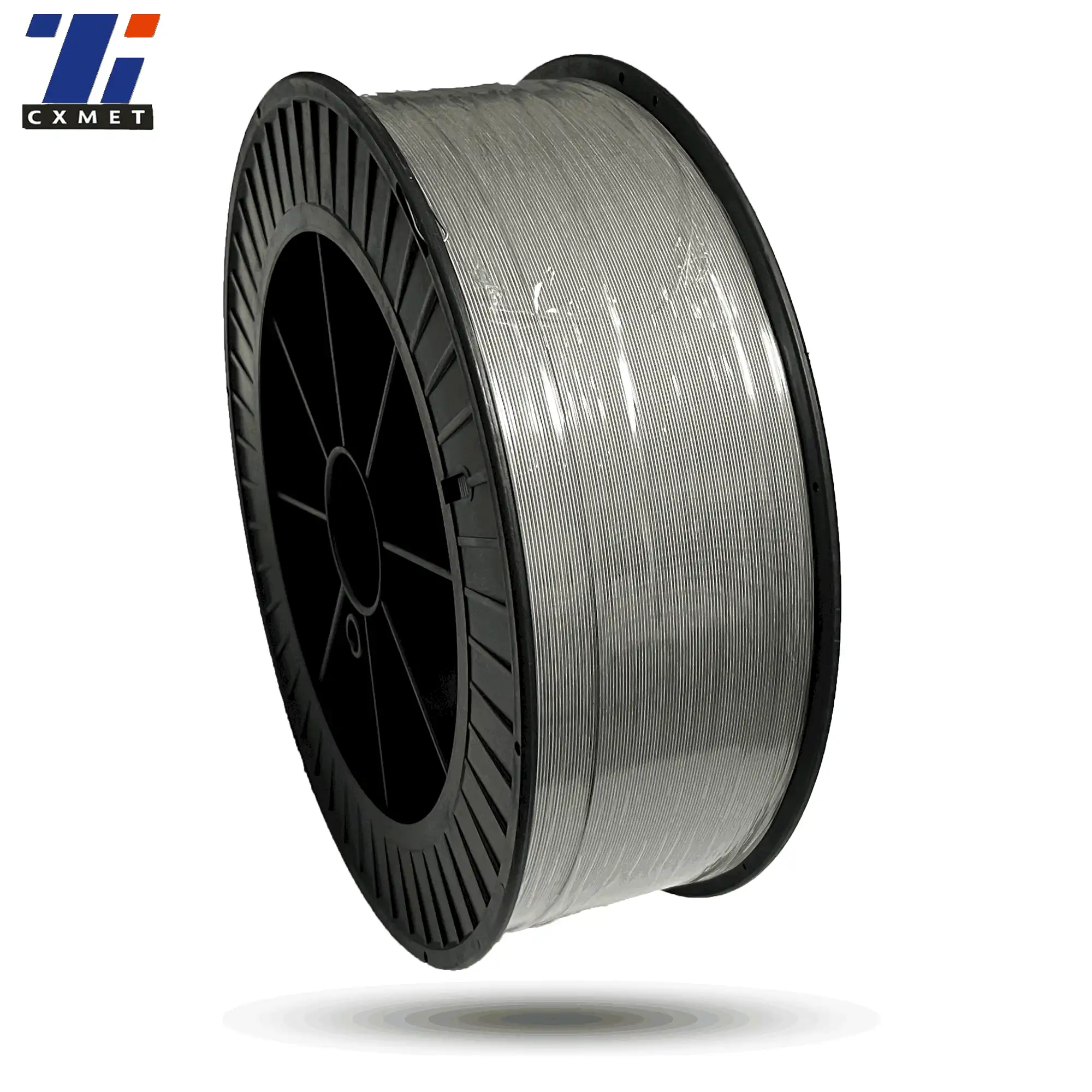
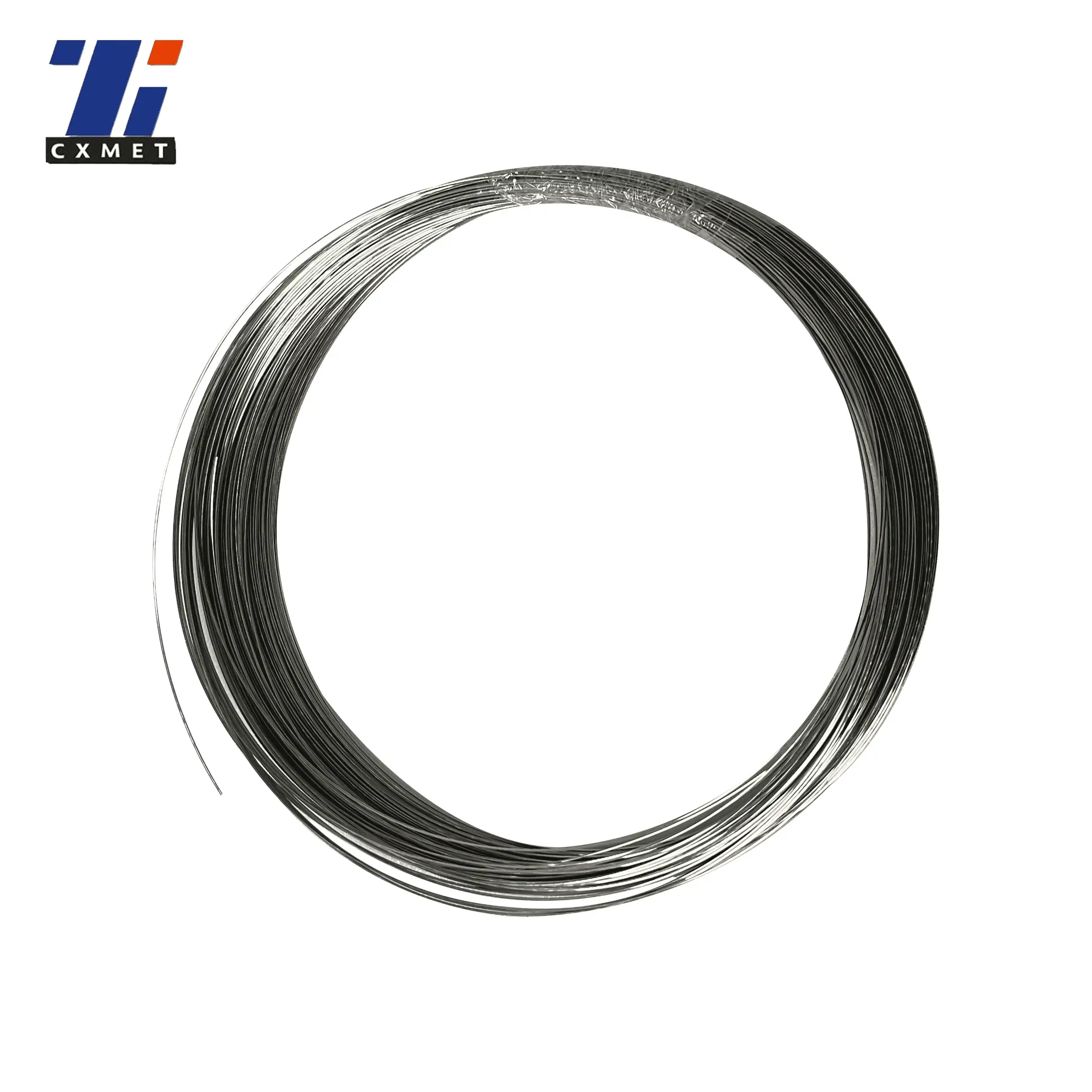
Since their atomic sizes are so close to each other, hafnium and zirconium are both transition metals and have a lot in common chemically. Because they are so similar, it is harder to separate them, and they often fight for the same application places. To make hafnium wire, we start with high-purity hafnium sponge that is 99.5% pure. This sponge goes through vacuum arc melting, hot and cold working, precision drawing, and controlled heating to get widths from 0.1 mm to 3 mm. The wire that was made has a mass of 13.31 g/cm³ and stays structurally sound even in harsh chemical and heat environments. Similar metalworking steps are used to make zirconium wire, though the raw material usually comes from the Kroll process. The two most common grades used in industrial sourcing are commercially pure zirconium (UNS R60702) and zirconium-niobium alloys (UNS R60705). Buyers can better understand how microstructural control and purity levels affect performance reliability in mission-critical installs when they know about these manufacturing basics.
Why Material Selection Matters in Demanding Environments
When things are at stake, choosing the wrong wire material can cause catastrophic breakdowns. Chemical processing plants are constantly exposed to harsh media, and aircraft parts go through thermal cycles that try the limits of what materials can handle. Neutron control must be completely predictable for nuclear plants. Because of these practical issues, comparing materials isn't just for fun; it's necessary to lower risks and keep costs down over time.
Purity and Microstructure: Foundations of Performance
High-purity grades reduce failure modes caused by impurities like hydrogen embrittlement and thinning of grain boundaries. Our hafnium wire stays 99.95% pure, so it will behave the same way in all output runs. Controlled thermomechanical processing improves the microstructure by creating fine grain structures that make the material stronger in tension and against wear. To make sure these important features are correct, procurement teams should always ask for mill test certificates (EN 10204 3.1) that list the chemical make-up, mechanical qualities, and heat treatment values.
Core Technical Comparison of Hafnium vs. Zirconium Wire
When you compare the physical hafnium wire and chemical qualities of two metals side by side, you can see where they shine and where they fall short. This technology standard helps with making decisions that are specific to an application for hafnium wire and zirconium.
Thermal Properties and High-Temperature Performance
Hafnium is one of the hardest metals on the market, with a melting point of 2,233 °C, which is much higher than zirconium's melting point of 1,855 °C. This 378-degree edge is very important in high-temperature furnace gear, plasma-facing parts, and aircraft propulsion systems. When heated to temperatures where zirconium would creep, bend, or change phases, our hafnium wire stays the same size and strength. When used in temperatures above 1,500 °C, hafnium metals are definitely better. However, a lot of industrial processes work between 300 °C and 800 °C, which is a temperature range where zirconium's thermal properties are perfectly fine and save a lot of money. The temperature range of your product is the first thing that you use to choose a material.
Mechanical Strength and Structural Reliability
With a tensile strength of 395 MPa, hafnium wire has good mechanical properties when loaded both statically and dynamically. Zirconium wire, especially UNS R60705 with 2.5% niobium added, can reach tensile strengths that are similar to or slightly higher than steel wire, often hitting 450 to 550 MPa. This makes it competitive in structural uses where neutron absorption is not needed. Alloyed zirconium grades are stronger because of how solid solution strengthening and precipitation hardening work. When engineers are making pressure tanks, heat exchanger pipes, or structural reinforcements, they should look at more than just the final tensile strength. They should also look at the yield strength, the elongation at break, and the fatigue resistance under cyclic loads. When properly treated, both materials are very flexible and can be shaped in many ways without breaking.
Corrosion Resistance in Aggressive Media
Both metals form protective oxide coats that make them very resistant to rust. Zirconium oxide (ZrO₂) and hafnium oxide (HfO₂) don't react with chemicals and can heal themselves. They also stick together. Mineral acids, organic acids, alkaline solutions, and conditions with chloride quickly damage stainless steels. These passive films protect the base metal from most of these. There are important cases. Neither hydrofluoric acid nor liquids containing fluoride can stick to metal; even small amounts of fluoride quickly dissolve the metal. In the same way, sulfuric acid that is highly concentrated and heated can get through the metal layer. To make sure that the materials will work together, procurement managers must give providers full process chemistry information, such as temperature, concentration, and particle profiles. In nuclear settings, hafnium's oxide layer stays stable when neutrons hit it, while zirconium's low neutron capture cross-section makes it the best material for fuel shielding. Because these nuclear qualities are not the same, there must be clear application boundaries in reactor design.
Electrical Conductivity and Resistivity
At room temperature, hafnium wire has an electrical resistivity of 33.3 nΩ·m. This means it can be used for specific electrical links where safety at high temperatures or resistance to corrosion are more important than pure conductivity. Zirconium behaves similarly electrically, with resistance values ranging from 40 to 45 nΩ·m, based on how pure it is and what other metals are added to it. Neither metal can match copper or aluminum in everyday electricity uses. Instead, they are used in specific situations like making semiconductors, vacuum deposition systems, and high-temperature electrodes, where the lower conductivity is acceptable because the material needs to be stable in harsh conditions.
Durability and Reliability: What Sets Hafnium Wire Apart?
Lifecycle cost analysis often shows that high-quality products are more valuable because they last longer, need less maintenance, and don't break down as often as standard hafnium wire alternatives.
Superior Performance in Nuclear Applications
Hafnium's neutron absorption cross-section is many orders of magnitude higher than zirconium's (about 104 barns for thermal neutrons), which is why it is needed for control rod use. When hafnium rods are put into hafnium wire, the core of a reactor, they successfully slow down fission reactions without becoming too radioactive themselves. This is a unique combo that improves both operational control and safety after the reactor has been shut down. The hafnium parts used in naval nuclear reactors on submarines and aircraft carriers are very important because of limited room and the need for high reliability with little upkeep. These tough uses back up hafnium's reputation for reliable, long-lasting performance in the worst possible working conditions.
Case Study: Aerospace Component Longevity
For combustion chamber monitors in next-generation jet engines, a major aerospace company switched from nickel-based superalloy wire to hafnium wire. When operating temperatures got close to 2,000 °C, the original material quickly oxidized and broke down mechanically. This caused sensors to fail every 500 flight hours. When we switched to our hafnium wire, the sensors lasted longer than 2,500 flight hours, which cut down on repair costs and increased the number of times the plane could be used. This proof from the real world shows how choosing the right materials has a direct effect on practical economics.
Comparative Wear Resistance and Fatigue Life
When the surface is treated properly, both hafnium and zirconium are very resistant to grinding wear and contact fatigue. The oxide layers make the surfaces hard, low-friction, and resistant to wear from machines. Material wear is the main way things break when they are heated and cooled over and over again, like in heat exchanger tubes. Because hafnium has a higher melting point, it is less likely to crack due to thermal stress. This means that it can be used for longer in harsh thermal conditions. Zirconium alloys with improved microstructures have similar wear resistance within their working temperature ranges. This means they can be used in uses that aren't too demanding.
Commercial Considerations for Procurement Managers
For projects to be effective, technical excellence must be balanced with business sense regarding hafnium wire sourcing.
Pricing Dynamics and Market Availability
Due to its relative rarity and the difficulty of separating it from zirconium ores, hafnium is much more expensive than zirconium. On the market, hafnium wire is usually 10 to 15 times more expensive than zirconium wire of the same grade. However, prices change depending on demand in the nuclear business and strategic stockpiling. Because of this price difference, getting hafnium needs a strong scientific case—applications must really need its special qualities for the investment to be worth it. Zirconium is easier to get because it comes from a lot of well-established sources and has well-developed supply lines. Standard zirconium wire diameters usually have lead times of 4 to 8 weeks, while hafnium wire may have lead times of 10 to 16 weeks, based on purity needs and custom specs. To avoid delays on the key path, procurement managers should plan projects around these dates.
Quality Certifications and Traceability
Buyers in the industrial sector should insist on full paperwork that proves the materials can be tracked and meet standards. Mill test papers that show chemical analysis by heat lot, mechanical property testing results, dimensional checks, and surface quality ratings are necessary. For nuclear uses, extra certificates check how well the material absorbs neutrons and how well it resists radiation. As part of our quality control, we look at each production batch through a spectroscopic lens, test its strength according to ASTM standards, and use ultrasound to find any problems inside. This strict method makes sure that every meter of wire sent meets the high standards needed for important uses. Before placing a big order, procurement teams should check the quality systems of suppliers and ask for samples to be tested.
Custom Manufacturing Capabilities
Standard wire lengths and sizes are useful for many tasks, but for unique projects, custom designs are often needed. When it comes to production, we can handle non-standard sizes, special surface finishes, exact cut lengths, and custom coiling diameters. Technical support teams work directly with customer engineers to turn application needs into manufacturing standards that keep production costs low while still achieving the best performance. Through economies of scale, buying in bulk can save you money, but the minimum order amounts must match the project volumes to avoid having to pay for extra inventory. We offer custom packing options, such as vacuum-sealed individual coils, moisture-barrier containers, and export-grade crating, to protect the quality hafnium wire of your products while they are being shipped internationally or stored for a long time.
How to Choose Between Hafnium and Zirconium Wire for Your Applications
Decision models help make the process of choosing materials more organized by meeting technical needs with the capabilities and limitations of materials and the costs involved for hafnium wire or zirconium.
Application-Specific Decision Criteria
The ability of hafnium to absorb neutrons makes it an essential part of nuclear plant control systems. No other material can work as well. On the other hand, zirconium alloys are a good choice for heat exchangers in chemical processes that work with organic acids at low temperatures because they are very resistant to corrosion and don't cost nearly as much as hafnium. There is a hazy area between these two clear-cut situations where many things can happen. Temperature is the main factor that affects the choice. Hafnium's heat stability is needed for uses above 1,500 °C. Zirconium can be used in temperatures between 300 °C and 1,200 °C, which changes the decision-making process to focus on lowering costs. It is important to compare the corrosive media chemistry to the resistance profiles of both materials, paying special attention to fluoride pollution that weakens both metals.
Balancing Performance and Budget Constraints
Engineers naturally want to meet the highest performance standards, but procurement pros have to find a balance between technical goals and the facts of the budget. Most of the time, a total cost of ownership study shows that mid-range options offer the best value. Take into account not only the initial cost of the materials, but also the costs of installation, the expected service life, the regularity of upkeep, the replacement costs, and the effects of any downtime. Even though it costs more up front, a part that lasts five times longer and costs three times more is still a better purchase. On the other hand, selecting too many materials for uses that only need basic performance loses money that could be used in other areas. The engineers, buying, and sourcing technical teams can better handle these trade-offs when they talk about them together.
Supplier Partnership and Technical Support
Getting things shouldn't be an exchange; it should be a relationship. Suppliers that have been around for a while and have a lot of technical knowledge become useful partners in fixing problems and making things better all the time. Our expert support team at Shaanxi CXMET Technology Co., Ltd is made up of metallurgists and application engineers who work with customers from the time they choose the materials to the time they make sure the production runs smoothly. We offer metallographic analysis to figure out why things aren't working in the field, thermal modeling to make sure the materials we choose are right, and small samples for testing before large sales. This consultative method lowers the risk of buying and speeds up project timelines by avoiding design mistakes that cause delays that cost a lot of money.
Conclusion
Because they have different levels of temperature stability, mechanical strength, corrosion resistance, and nuclear qualities, hafnium wire and zirconium wire each have their own place in the field of industrial material science. Hafnium is very useful in places with very high temperatures and in nuclear power plants because it can absorb neutrons and melt at 2,233 °C. Zirconium has similar resistance to corrosion and good mechanical performance, but it is much cheaper. This makes it the best choice for chemical processing and uses that need to work at reasonable temperatures. To choose the right materials, you have to make sure that these technical profiles match up with the specific needs of the operation while keeping performance goals and cost limits in mind. When procurement managers take the time to carefully evaluate materials and build relationships with educated sellers, the projects they work on always turn out better.
FAQ
1. Which industries benefit most from hafnium wire?
The main markets for these items are nuclear power plants, naval propulsion systems, aircraft propulsion components, and specialty plasma processing tools. Hafnium has special properties that make it useful in situations with high temperatures (above 1,500 °C) and corrosive conditions, or when exact neutron absorption is needed. Medical device makers also use hafnium to make specialized surgical instruments that need to be biocompatible and have high corrosion resistance.
2. Can hafnium wire be welded to other metals?
Hafnium is easy to join together using tungsten inert gas (TIG) or electron beam welding in places with controlled atmospheres. Because they are chemically similar, it is possible to join different metals to zirconium. It's hard to join hafnium to stainless steels or nickel alloys because the metals expand and contract at different rates, creating weak intermetallic compounds. Instead of straight fusion welding, these parts usually need special transition pieces or mechanical ways to hold them together.
3. How does zirconium-niobium alloy wire compare to pure grades?
A zirconium wire called UNS R60705 that has 2.5% niobium added to it has about twice the tensile and yield strength of pure R60702 grade. It also resists rust very well. This increase in strength lets thinner walls be used in pressure-bearing parts, which makes up for the alloy's small price increase. Adding niobium makes R60705 more resistant to stress corrosion cracking in some chemical environments. This makes it the best standard for challenging structural uses.
Partner with a Trusted Hafnium Wire Supplier for Your Critical Applications
Choosing the right refractory metal wire provider is just as important to the success of a project as choosing the right materials. Shaanxi CXMET Technology Co., Ltd has been making specialized products for more than 20 years and offers full expert support to meet the needs of heavy industry and high-tech manufacturing. We make sure that the hafnium wire we make is 99.95% pure by using modern vacuum metallurgy, precise drawing methods, and strict quality control that includes full documentation for tracking. We offer custom diameter ranges, unique surface finishes, and application-specific technical help to make sure that our goods work best in your particular working environment. Our metallurgical knowledge makes sure that the material specs exactly match the practical needs, whether you need materials for nuclear-grade control rods or parts for space propulsion. You can talk to our expert sales team at sales@cxmet.com about your hafnium wire needs, ask for material certifications, or set up packages of samples for testing.
References
1. Loria, E.A. (2001). "Refractory Metals and Their Industrial Applications," Journal of Metals, Vol. 53, pp. 12-18.
2. Ginzel, H.K. & Schmidt, F.W. (2003). "Nuclear Reactor Materials: Properties and Performance," Nuclear Engineering International, Vol. 48, pp. 34-42.
3. Davies, P.R. & Thompson, R.L. (2007). "Corrosion Behavior of Hafnium and Zirconium Alloys in Chemical Processing Environments," Materials Performance, Vol. 46, pp. 28-35.
4. Chen, W.Y. & Anderson, K.R. (2012). "High-Temperature Mechanical Properties of Refractory Metal Wires," Metallurgical Transactions A, Vol. 43, pp. 1567-1578.
5. International Atomic Energy Agency (2015). "Structural Materials for Nuclear Reactor Control Systems," IAEA Technical Report Series, No. 478.
6. Bradley, M.J. & Foster, J.P. (2018). "Aerospace Applications of Advanced Refractory Metals," Journal of Aerospace Engineering, Vol. 31, pp. 89-102.