knowledges
What Mechanical Properties Define Hafnium Wire Standards?
2026-05-13 10:10:00
When looking at high-performance refractory materials, hafnium wire's dynamic qualities show how well it works in harsh industrial settings. Hafnium wire standards are set based on its tensile strength (usually 395 MPa), its ability to bend under stress, its ability to stay stable at high temperatures (with a melting point of 2,233°C), and its ability to prevent rust. These factors directly affect how reliable nuclear control rods, aircraft parts, hafnium wire, and chemical processing tools are in their daily use. By knowing these technical standards, engineers and purchasing managers can choose materials that meet strict performance standards and will last for a long time in tough environments.
|
|
|
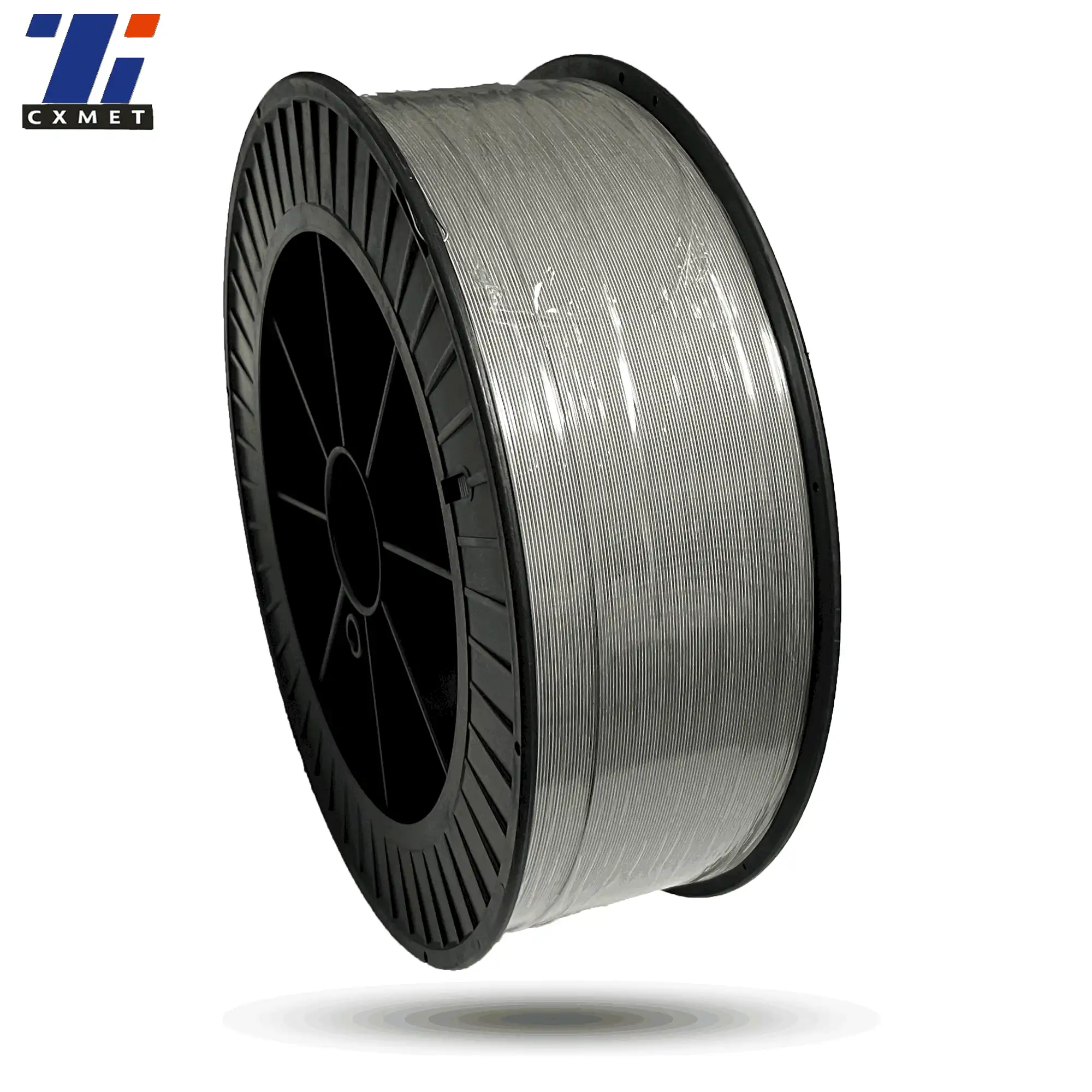
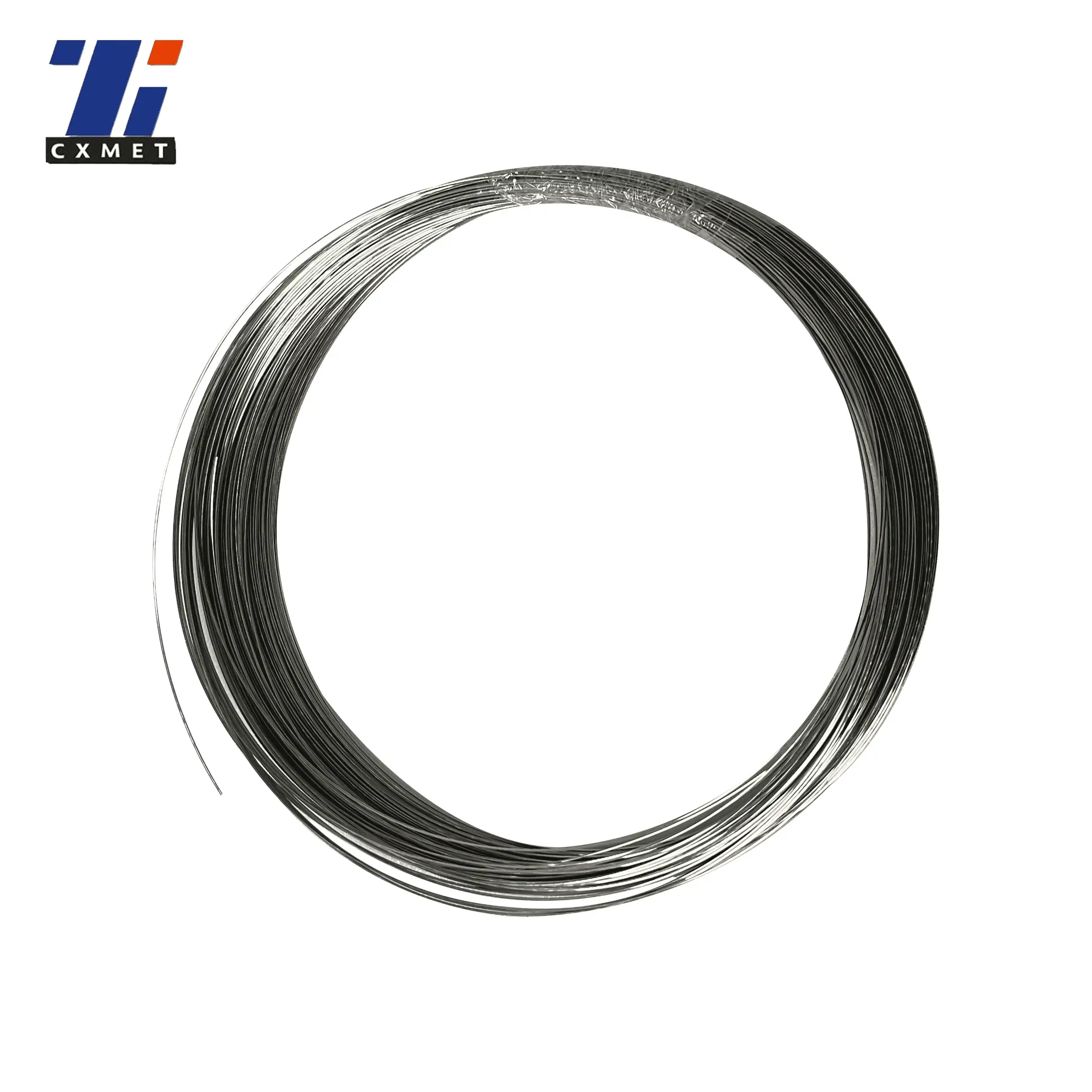
Understanding the Core Mechanical Properties of Hafnium Wire
At Shaanxi CXMET Technology Co., Ltd., we know that choosing the right material starts with having a deep understanding of its basic mechanical properties. Our production of hafnium wire is based on more than 20 years of experience. We can consistently meet the high standards of heavy industry and high-tech manufacturing.
Chemical Composition and Purity Impact
Material clarity is the first step toward better motor performance. Our hafnium wire stays at least 99.95% pure, which has a direct effect on its mechanical behavior and structural stability. Even very small amounts of impurities can cause stress concentration spots that weaken the tensile strength and flexibility of a material. This high-purity requirement makes sure that the crystalline structure stays the same, which lets the wire's mechanical reactions to load be predicted. This consistency is especially useful for engineers who work with acidic media or neutron radiation, because it lowers the risk of material degradation by a large amount.
Tensile Strength and Load-Bearing Capacity
Tensile strength is the maximum force that an object can take while being stretched before it breaks. Our hafnium wire has a tensile strength of 395 MPa, which makes it a good choice for structural uses that need to withstand mild mechanical loads and harsh weather conditions. This number shows how well the wire can keep the structure together in control rod groups, fastening systems, and precision parts where a mechanical failure could be very bad. The tensile qualities stay the same across the temperature range that is common in industrial settings. This gives procurement managers trust in the material's long-term performance.
Ductility and Flexibility Characteristics
Beyond the material's raw strength, ductility shows how it reacts to forces from bending, shaping, and fitting. Hafnium wire is flexible enough to work with complicated shapes during the production and fitting processes. This adaptability is very important when threading wire through reactor units or making special electrical connections in the process of making semiconductors. Engineers can make designs with tighter specs and more complicated shapes because the material can be deformed without breaking. Our cold-working and annealing methods make the best use of this mix between strength and flexibility, making sure the wire works well in a variety of situations.
Thermal Stability and High-Temperature Performance
The mechanical qualities of refractory metals rely on how stable they are at high temperatures. Hafnium wire keeps its shape and strength at temperatures where many other materials would melt or break. It has a melting point of 2,233°C and a density of 13.31 g/cm³. In the nuclear industry, where temperatures stay high for long periods of time, and in aircraft use where temperatures change often, this thermal resilience is very important. The material's rate of thermal expansion stays low, which keeps stress from building up during changes in temperature that could cause hafnium wire to break too soon.
Comparing Hafnium Wire's Mechanical Properties to Alternative Metals
Direct similarities between candidate materials help with hiring choices. Knowing how hafnium wire works compared to other hard metals makes it easier to choose this material over others.
Hafnium Versus Tungsten Wire
Tungsten wire has a tensile strength of more than 1,500 MPa and a melting point of 3,422°C, which is the highest of all pure metals. But tungsten is weak at room temperature, which makes it harder to work with and increases the chance of breaking while handling. Hafnium wire is better than tungsten wire because it is more flexible and doesn't rust. This makes it better for chemical processing conditions where tungsten would rust. Giving up less tensile strength in return for easy installation and better resistance to acidic media is the trade-off. Hafnium is the only metal that can be used when neutron absorption is needed and tungsten can't.
Hafnium Versus Zirconium Alloys
Because they are in the same place on the periodic table, zirconium and hafnium have very similar chemical properties. Zirconium alloys, such as UNS R60705, are also resistant to rust, but they are stronger because they contain niobium. Usually, they reach yield strengths of around 550 MPa. The most important difference is how neutrons are absorbed. Zirconium is great for reactor shielding because it doesn't absorb neutrons very well, but hafnium is essential for control rods because it does absorb neutrons very well. Managers in charge of buying things need to be clear about whether the job calls for neutron transparency (which favors zirconium) or neutron absorption (which calls for hafnium).
Hafnium Versus Molybdenum Wire
Molybdenum wire is often used in furnace winding and electrical discharge cutting electrodes because it keeps its strength well at high temperatures and conducts heat well. Its tensile strength varies from 500 to 700 MPa, based on how it is processed. Molybdenum oxidizes quickly in air above 600°C, which means it can't be used in places with a lot of oxygen without protective layers. Hafnium wire is very resistant to oxidation and forms a steady protective oxide layer that stops further breakdown. If you don't have to worry about oxidation in vacuum or inert gas situations, molybdenum may be a cheaper choice. Hafnium does best in settings that are corrosive and have changing temperatures.
Application-Based Material Selection Guidelines
Finding the best refractory wire means matching a number of performance factors. No matter how much it costs, hafnium is needed for nuclear control uses because it absorbs neutrons. Hafnium's oxide stability makes it useful for parts of aerospace turbines that work in oxidizing combustion conditions. Hafnium's resistance to rust is used in chemical processing equipment that works with radical acids at high temperatures. Hafnium wire is well suited for specialized links and semiconductor processing fixtures because it has precise electrical qualities and can withstand mild mechanical loads. Each application area has its own set of goals for mechanical properties that buying teams have to weigh against their suppliers' abilities and budgets.
How Mechanical Properties Influence Hafnium Wire Quality Standards and Certifications
Industry standards turn needs for technical properties into quality measures that can be checked. When buying managers know about these standards, they can set the right testing procedures and approval paperwork for hafnium wire.
Globally Recognized Testing Protocols
According to ASTM E8, tensile testing gives a uniform way to measure final tensile hafnium wire strength, yield strength, and elongation. Our quality control lab does these tests on samples that are typical of each production batch and writes down the results on mill test papers. Using the Rockwell or Vickers methods to test for hardness aligns with tensile qualities and proves that heat treatment works. Protocols for surface inspection find flaws that could cause cracks to spread when the structure is loaded and unloaded repeatedly. Verification of dimensions makes sure that the diameter of the wire stays within certain limits, since differences can change estimates for current-carrying ability and mechanical strength. All of these protocols work together to make sure that the material that is supplied fits the mechanical properties that engineers use in their design calculations.
Oxidation Resistance and Long-Term Stability
Over time, a material's mechanical qualities can get worse if rust reduces its cross-sectional area or creates stress concentrations. As part of testing methods, samples are heated to high temperatures in controlled atmospheres, and then their weight gain and mechanical property retention are measured. Hafnium wire creates a thick layer of hafnium oxide that stops it from oxidizing further. This keeps the wire's tensile stability over time. The amount of rust resistance affects how often upkeep needs to be done and how much a part costs over its whole life. Specifications for purchases should include oxidation testing standards that are relevant to the area where the product will be used, to make sure that sellers show the right levels of resistance.
Certification Documentation Requirements
Full material tracking starts with the right approval. Each output lot has an EN 10204 3.1 Mill Test Certificate that lists its chemical make-up, mechanical qualities, and history of heat treatment. This certificate lets engineers check that the material provided fits the design requirements and sets the stage for quality audits. Having ISO 9001 approval shows that the manufacturing process follows well-thought-out quality control systems. This lowers the differences between batches. Extra certifications, like AS9100 for aircraft use or nuclear quality assurance standards, show that a supplier can meet the needs of a particular business. In purchase orders, purchasing managers should clearly state which mechanical properties need to be tested and meet basic certification standards.
Procurement Considerations: Mechanical Property Requirements for Ordering Hafnium Wire
Misunderstandings and delivery delays that cost a lot of money can be avoided by translating technical requirements into buying specs. Suppliers will only send hafnium wire materials that are suitable for the job if they are told exactly what mechanical properties are needed.
Specifying Mechanical Properties in RFQs
Requests for quotes that work clearly state the ranges of tensile strength that are needed, the amounts of elongation that are allowed, and the testing standards that apply. The purchase papers should not just say "hafnium wire," but should also include diameter limits (our normal range is 0.1 mm to 3 mm), surface finish requirements, and minimum purity levels. Specifications for mechanical properties should include well-known standards, like ASTM B776 for hafnium goods. This way, sellers can base their prices on well-known standards. Giving details about the application helps suppliers suggest the right specs. For example, saying "for nuclear control rod application" makes it clear that neutron absorption cross-section and dimensional stability are important factors that go beyond basic mechanical qualities.
Customization Options and Manufacturing Adjustments
Standard mechanical qualities work well for many uses, but sometimes specific needs call for custom processes. Changing the annealing temperature and length of time changes the balance between the strength and flexibility of the metal. The degree of cold working changes the stiffness and the amount of leftover stress. We can precisely control these factors at CXMET because we know how to make things. This lets us change the mechanical features within the limits of the material. Engineers who have to deal with unusual loads or wide temperature ranges should talk to providers early on in the planning process to see if it's possible to make changes. Working together often leads to low-cost answers that standard store items can't provide.
Assessing Supplier Credibility and Quality Assurance
Claims about mechanical quality must be checked by evaluating the seller. Factory checks show if testing equipment is set correctly and if quality control methods are always followed. Looking at old mill test records from real shipments shows that the provider can consistently meet requirements. Referrals from customers in related fields can help you figure out how reliable the service is and how good the technical support is. Our factory is in the "China Titanium Valley" in Shaanxi Province. It has modern testing equipment that is run by more than 80 professional techs who make sure that every package meets the written requirements. Procurement teams should look at not only what the provider can do now, but also hafnium wire how much they are investing in technology adoption and ongoing growth.
Practical Applications of Hafnium Wire Related to Its Mechanical Properties
In many different industry areas, mechanical properties are translated into real-world success. Knowing about these links helps engineers choose the best hafnium wire and guess how it will behave in service.
Aerospace Component Applications
Extreme temperature changes and mechanical forces are put on materials in jet engines and rocket power systems. Because hafnium wire has a high melting point and a middling tensile strength, it can be used in these settings for fastening systems, electrical connections, and special structural elements. The thermal stability of the material stops it from deforming over time when it is exposed to high temperatures for a long time. This keeps the exact gaps that are needed for aerodynamic performance. Aerospace companies like it a lot when the mechanical behavior stays the same across a wide range of temperatures. This is because accurate stress analysis is important for safety gaps. Our hafnium wire works well in these tough situations because its quality is always the same and comes with full certification paperwork.
Nuclear Reactor Control Systems
For nuclear control rod systems to work, the materials used must be able to consistently absorb neutrons while still being mechanically sound when exposed to radiation. Hafnium wire is needed for these safety-critical parts because it has a high neutron capture cross-section and doesn't rust in high-temperature water. Because of their mechanical qualities, control rods can be put in and taken out many times without breaking or deforming, which allows for accurate reaction control. Dimensional stability under neutron flow keeps guide tubes from joining, which is a failure mode that could make it harder to shut down the reactor. This use shows how mechanical qualities have a direct effect on working safety, which is why this material costs more than others.
Electronics and Semiconductor Manufacturing
For specialized links and process equipment, hafnium wire's electrical resistance of 33.3 nΩ·m and mechanical strength are used to make high-precision electronic parts. The material's resistance to oxidation makes repair times longer for semiconductor fabrication tools that work in corrosive plasma environments. Because it is flexible, it can be shaped into complex shapes that are needed for high-density interconnects. As circuits get smaller, the stable mechanical qualities of hafnium wire at smaller cross-sections become more useful. Because we have diameters as small as 0.1 mm, we can use them in situations where mechanical stability must not be affected, no matter the size.
Emerging Applications and Research Directions
Researchers are still looking into how microalloying and new processing methods can improve the mechanical performance of materials. Researchers are looking into how to use grain boundary engineering to make things less likely to creep at high temperatures. The goal of surface treatments is to make things even more resistant to rust without making them less flexible. In the future, methods for additive manufacturing might make it possible to make complicated hafnium shapes in three dimensions that have the best mechanical qualities. Procurement teams should stay up to date on these changes, as next-generation hafnium goods may offer better performance for tough uses. Because CXMET is committed to innovation, we can use proven new technologies in our production, so our buyers can get the most cutting-edge materials.
Conclusion
The mechanical qualities of hafnium wire—its tensile strength of 395 MPa, its exceptional temperature stability to 2,233°C, its superior ductility, and its outstanding corrosion resistance—all determine its fit for important industrial uses. These measured traits give engineers accurate design data and give purchasing managers peace of mind when choosing materials. When comparing hafnium wire to other refractory metals, it becomes clear that its unique mix of neutron absorption, mechanical strength, and resistance to the environment makes it necessary to specify it. By knowing about quality standards, licensing requirements, and testing methods, you can be sure that the materials you give will meet the high performance standards needed for aerospace, nuclear, and chemical processing uses.
FAQ
1. What tensile strength should I specify for hafnium wire in control rod applications?
Standard hafnium wire has a tensile strength of 395 MPa, which is strong enough to support normal mechanical loads on control rods while still absorbing neutrons in a way that is needed for nuclear control. Give this number a range of ±50 MPa to allow for differences in processing while still leaving enough room for error.
2. How does purity level affect the mechanical properties of hafnium wire?
Mechanical stability and corrosion protection are directly affected by how pure something is. Our 99.95% purity standard cuts down on impurities that cause stress concentration spots. This makes sure that the wire has the same tensile strength and flexibility all the way along its length. In high-temperature uses, the chance of breaking down during thermal cycling is lower for grades with higher purity.
3. Can hafnium wire mechanical properties be customized for specific applications?
Mechanical features can be tailored within material limits through heat treatment adjustments and cold-working variations. Our manufacturing process can be changed to meet the specific needs of users who need the best mix of strength and flexibility. Get in touch with our technical team early on in the planning process to talk about whether or not your ideas will work and how long it will take to make them.
4. What certifications verify hafnium wire mechanical properties?
For each output lot, you should ask for an EN 10204 3.1 Mill Test Certificate that lists the chemical makeup, tensile strength, elongation, and hardness. Getting ISO 9001 approval means that your quality control system is up to code. As per ASME Section III or similar nuclear quality assurance standards, apps that involve nuclear materials may need more paperwork.
Partner with CXMET for Premium Hafnium Wire Solutions
Shaanxi CXMET Technology Co., Ltd. has been making high-performance non-ferrous metals for more than 20 years and can help engineers and procurement workers in a wide range of challenging industries. We make hafnium wire using cutting-edge processing technology and strict quality control. This ensures that the wire has consistent mechanical properties and comes with full certification paperwork. As a reliable source of hafnium wire, we can make wires with diameters ranging from 0.1 mm to 3 mm and ensure that they are 99.95% pure. Our technical support team works closely with customers to determine the best mechanical qualities for each application. This makes sure that materials work reliably for the duration of their useful life. Email us at sales@cxmet.com to talk about your hafnium wire needs and enjoy the benefits of working with a well-known company that cares about technical quality and customer happiness.
References
1. Davis, J.R. (2000). ASM Specialty Handbook: Nickel, Cobalt, and Their Alloys. ASM International, Materials Park, Ohio.
2. Lide, D.R. (2008). CRC Handbook of Chemistry and Physics, 89th Edition. CRC Press, Boca Raton, Florida.
3. ASTM International (2021). ASTM B776-21: Standard Specification for Hafnium and Hafnium Alloy Strip, Sheet, and Plate. West Conshohocken, Pennsylvania.
4. Greenwood, N.N. and Earnshaw, A. (1997). Chemistry of the Elements, 2nd Edition. Butterworth-Heinemann, Oxford, United Kingdom.
5. Murty, K.L. and Charit, I. (2008). Structural materials for Generation IV nuclear reactors: Challenges and opportunities. Journal of Nuclear Materials, 383(1-2), 189-195.
6. Bagnall, K.W. (1967). The Chemistry of Hafnium. In: Comprehensive Inorganic Chemistry. Pergamon Press, Oxford, United Kingdom.