knowledges
What Tests Ensure Quality in Hafnium Wire Production?
2026-05-13 10:09:58
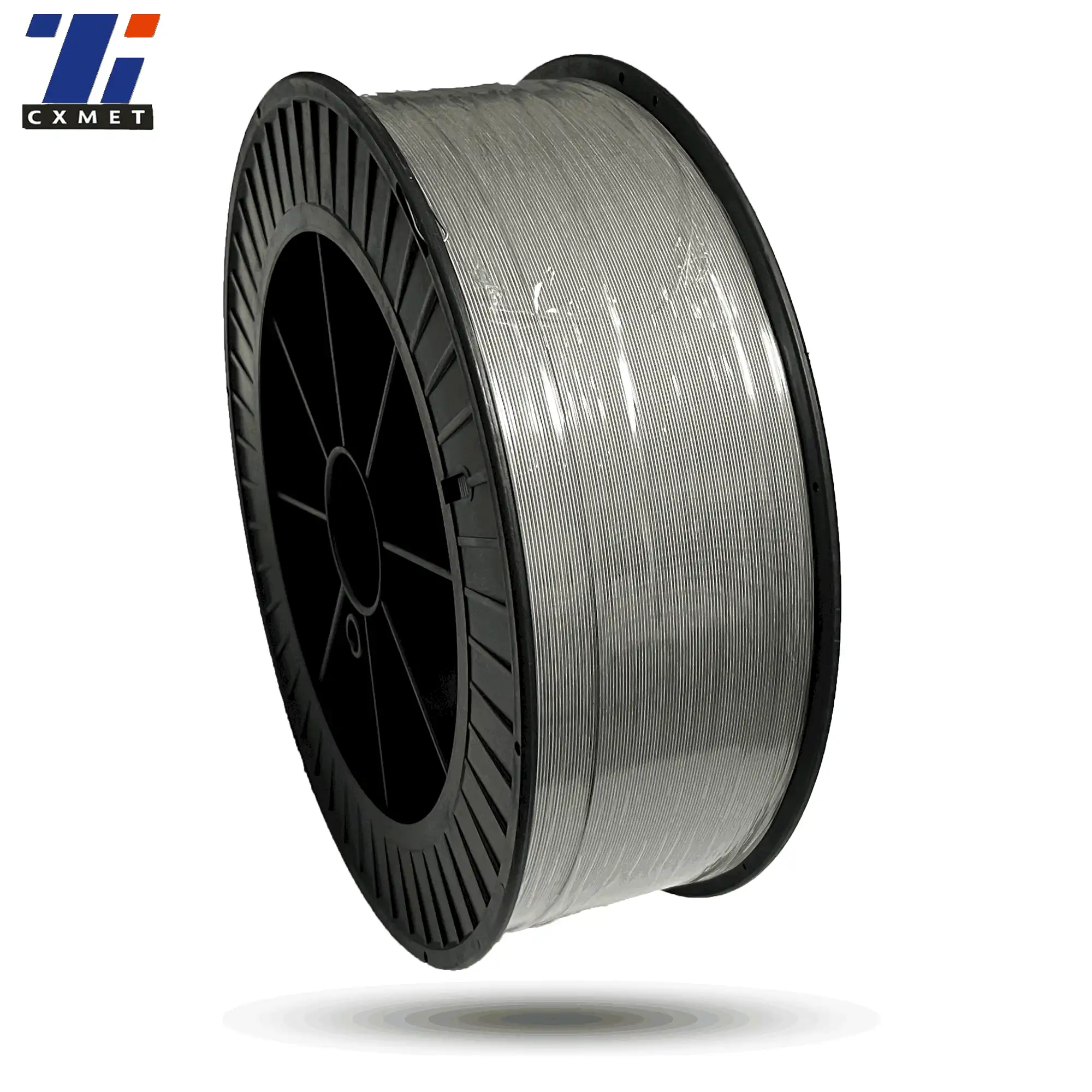
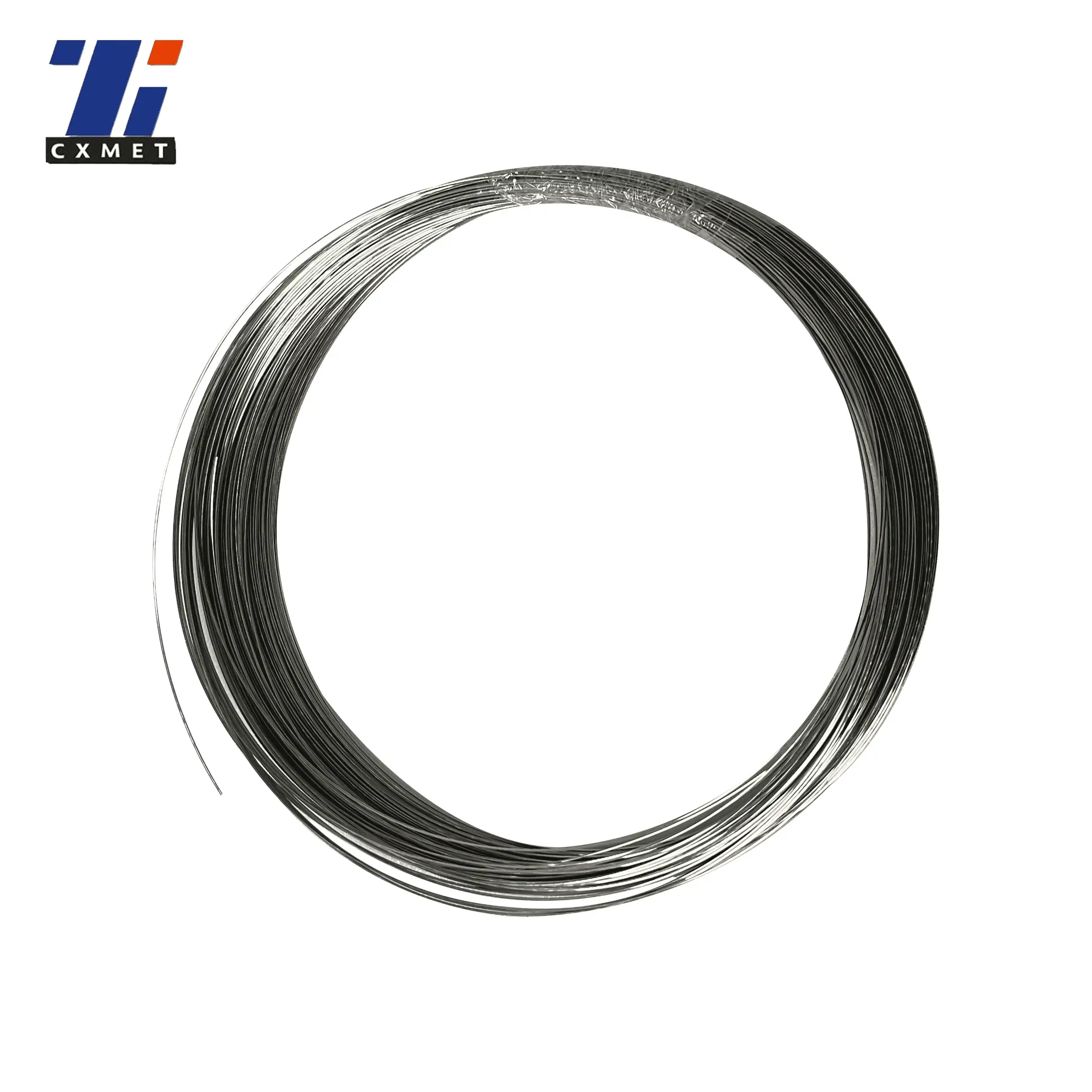
Quality assurance in hafnium wire manufacturing relies on comprehensive hafnium wire testing protocols that verify chemical purity, mechanical integrity, dimensional precision, and performance characteristics. These tests include spectroscopic analysis to confirm 99.95% purity levels, tensile testing to validate 395 MPa strength specifications, dimensional inspections ensuring diameter consistency from 0.1 mm to 3 mm, and thermal evaluations verifying the 2,233°C melting point. Additional procedures assess electrical resistivity, surface integrity, and corrosion resistance. Advanced non-destructive testing methods detect internal defects without compromising material integrity, ensuring every batch of hafnium wire meets stringent industry standards for aerospace, nuclear, and electronics applications.
|
|
|
Understanding Quality Challenges in Hafnium Wire Production
When procurement teams look at sources, they need to be aware of the unique issues that come with making high-performance hafnium wire. Extreme accuracy is needed in the production setting because even small mistakes can hurt the performance of important parts like nuclear control rods or flight components.
Common Quality Issues in Raw Material Processing
Inconsistencies in the raw materials are the biggest problem with quality in output. The starting material, hafnium sponge, often has small amounts of impurities left over from the zirconium separation process. Because hafnium and zirconium have similar chemical qualities, it is hard to separate them. If there are too many impurities, they directly change how neutrons are absorbed, which means the material can't be used in nuclear applications. Suppliers must have strict rules for inspecting arriving materials to find pollution before they are used.
Process-Induced Variability During Wire Drawing
The technical and physical changes that happen during the wire drawing process lower the quality of the finished product. During cold working, uneven die wear makes the wire's thickness vary along its length. During annealing, temperature changes affect the structure of the grains, which has an effect on mechanical qualities like tensile strength and flexibility. These process errors are especially annoying when making wire with a thickness between 0.1 mm and 0.5 mm, because small changes in the tools can cause big changes in the dimensions. These problems are made even worse by things in the environment, like humidity and air pollution during handling.
Mechanical Weaknesses from Improper Heat Treatment
If you don't use the right annealing settings, you can end up with internal stress concentrations and microstructural flaws that hurt the mechanical performance. Not enough cooling leaves behind stresses from drawing, which makes the metal rigid and less flexible. Too much heat treatment makes the grains bigger, which lowers the tensile strength below the required 395 MPa. Professionals in charge of buying things should ask for thorough records of the heat treatment that show exact temperature control and atmosphere management during the annealing cycle.
Core Quality Tests Applied in Hafnium Wire Manufacturing
For production to be effective, there must be thorough testing methods. At CXMET, we use quality hafnium wire control methods with multiple steps that cover all important performance factors. Our testing method uses both traditional scientific methods and high-tech instruments to give a full picture of the object.
Chemical Composition Analysis Methods
Inductively Coupled Plasma Optical Emission Spectroscopy (ICP-OES) and X-ray fluorescence (XRF) studies are used to measure the elements that make up a chemical. ICP-OES finds impurities at parts-per-million levels, which proves that zirconium, titanium, iron, and other impurities stay below certain limits. XRF quickly checks for heavy metal pollution and compares the amount of hafnium to a norm of 99.95% purity. Using combustion methods to analyze carbon and oxygen levels finds intermediate elements that affect how ductile and corrosive something is. When these methods are used together, they provide full compositional proof that meets ASTM B776 standards. For ultra-high purity uses where even tiny contaminants are not acceptable, mass spectrometry provides extra proof. Standard spectroscopic methods might miss some elements, but this study finds them and figures out the isotope ratios. When buying hafnium wire for nuclear uses, purchasing managers should ask for mass spectrometry approval that shows the amount of boron and cadmium is below certain levels.
Mechanical Property Testing Protocols
Tensile testing, which is done under controlled load conditions, measures the final tensile strength, yield strength, and elongation properties of a material. Gradual stress is applied by universal testing tools while strain reaction is recorded. This makes stress-strain curves that show how the material behaves. Our wire always has a tensile strength of 395 MPa and a stretch value that is right for either the work-hardened or annealed state. When you use the Vickers or Rockwell methods to test a material's hardness, you can learn more about its mechanical properties, which are related to its tensile properties and prove that it was processed evenly. By wrapping wire around mandrels with certain sizes, bend testing checks how flexible it is and how good the surface is. Crack-free performance after repeated bends shows that the material has been properly annealed and there are no surface flaws. In fatigue testing, samples are loaded and unloaded over and over again to predict how well they will work in situations where stress cycles happen often. These engineering tests show that the wire will keep its structural stability for the whole time it is in use.
Dimensional and Surface Quality Verification
Laser micrometers and optical comparators are used in precision dimensional checking to make sure that the width of the wire is the same all the way along its length. Statistical process control checks for changes in width, making sure that standard goods meet tolerances of within ±0.01 mm. Fewer margins, as little as ±0.005 mm, can be reached for specific uses that need very accurate measurements. Cracks, pits, scratches, and other surface flaws can be found by looking at the surface with optical imaging and scanning electron microscopy (SEM). Surface roughness measurements are important for uses where the state of the surface affects electrical contact or corrosion resistance. The requirements for the purchase should make it clear what surface conditions are okay and what inspection magnifications are needed.
Thermal and Electrical Performance Evaluations
The 2,233°C melting point was confirmed, and the thermal stability was checked using differential scanning calorimetry (DSC) and thermogravimetric analysis (TGA). These methods find phase changes and temperatures where oxidation starts, which are important for high-temperature uses. At room temperature, four-point probe resistivity tests confirm that the electrical resistivity is 33.3 nΩ·m. Temperature-dependent resistance testing describes how well electricity flows across the expected working range. Measuring thermal conductivity along with resistivity data gives a full picture of how heat and electricity behave, which is very important for electronics and aircraft uses.
Comparative Testing Standards: Hafnium Wire vs. Other High-Temperature Wires
When buying teams know how hafnium wire testing is different from hafnium wire testing other hard metals, they can set realistic goals for performance and correctly evaluate technical data sheets.
Testing Overlaps with Tungsten and Molybdenum Wires
All refractory metal lines are tested mechanically in the same way, to see how strong, hard, and flexible they are. Chemical makeup testing uses spectroscopic methods that are the same for all types of materials. The steps for dimensional checking are the same no matter what base metal is used. Performance standards, on the other hand, are very different. When pulled, tungsten wire usually has tensile strengths of more than 1,000 MPa, while molybdenum wire has strengths in the middle, between 600 and 800 MPa. The 395 MPa standard for hafnium shows that it has a good mix between being strong mechanically and being good at absorbing neutrons.
Application-Specific Testing Priorities
Neutron absorption cross-section measurements and radiation stability tests are given more weight in nuclear uses than in aerospace or electronics. Hafnium wire that is going to be used in nuclear control rods is put through neutron transmission tests and long-term irradiation exposure to make sure that it stays the same size when neutrons are flowing through it. There is no test like these for qualifying tungsten or molybdenum wire for uses other than nuclear ones. High-temperature mechanical property retention and oxidation protection tests are very important for aerospace parts. Tensile tests at high temperatures (1,000°C to 1,500°C) show how strength decreases with temperature. Thermogravimetric research is used to measure the rate of oxidation in atmospheres that are oxidizing. Instead of depending on generic material certifications, procurement managers need to make sure that testing methods are compatible with the settings where the products will be used.
Latest Innovations and Technologies in Hafnium Wire Quality Assurance
Modern technologies for quality assurance are changing the way tests are done. They make it easier to find problems and make production more efficient, which is good for both producers and buying organizations.
Non-Destructive Testing Advancements
Ultrasonic testing devices can now find gaps, inclusions, and problems with the grain structure inside samples without cutting them up. High-frequency sensors that work above 10 MHz can fix flaws smaller than 50 micrometers, making sure that the hafnium wire is completely solid inside. Eddy current testing uses electromagnetic induction to find flaws on the surface and close to the surface. This allows for quick, ongoing checking during production. Automated eddy current systems scan the whole length of the production line at high speeds, keeping track of where defects are and how bad they are. This thorough checking method gets rid of the problems that come with quality control based on samples, making sure that every meter of supplied wire meets the requirements. An X-ray computed tomography (CT) scan can show the internal structure in three dimensions, showing porosity patterns and inclusion shapes that can't be seen with regular metallography.
AI and Machine Learning Integration
Machine learning systems look at very large testing datasets and find small trends that are linked to differences in quality. Based on process parameters, predictive models can predict possible defects. This lets real-time changes stop nonconformances before they happen. Combining computer vision systems with deep learning networks automates surface inspection, finding flaws more consistently than a person could by looking at something. These apps that use artificial intelligence cut down on inspection time, costs, and the accuracy of discovery. The supply line is more consistent, and procurement teams don't have to do as many inspections when goods come in. Suppliers who use quality systems that are driven by AI show that they are dedicated to both technology progress and quality success.
Real-Time Process Monitoring Systems
During melting, drawing, and cooling, integrated sensor networks keep an eye on important process factors all the time. Statistical process control methods find parameter changes before it makes material that doesn't meet specifications. With digital twin technology, virtual production models are made that can predict the quality of the output based on the conditions and settings of the inputs. Real-time tracking lets you make changes right away, which cuts down on waste and keeps the process under tight control. Data logging makes it possible to track everything from the raw materials to the end product. This helps with finding the root cause when quality investigations are needed. Teams in charge of buying things should find out how suppliers can be monitored and ask to see process control charts that show statistical steadiness.
Ensuring Procurement Confidence: Choosing Certified Hafnium Wire Suppliers
Choosing the right supplier has a big effect on the long-term dependability of the supply chain and the performance of the parts. Suppliers that are qualified are distinguished from those that aren't by carefully checking their licenses, testing abilities, hafnium wire, and quality documents.
Essential Certifications and Standards Compliance
ISO 9001 approval shows that quality management systems have been in place for a long time and cover all areas of production. ASTM International standards, especially ASTM B776 for hafnium wire and hafnium alloy wire, say what the wire must be made of, how it should be tested, and what its mechanical qualities are. Suppliers should show proof that their products meet the relevant ASTM standards by giving certificates of compliance. For nuclear uses, you need extra certifications like ASME Section III Nuclear Components or country standards that are the same. For aerospace uses, you might need AS9100 approval that shows you've put in place an aerospace quality management system. The requirements for the purchase should make it clear what licenses are needed and what paperwork is needed during the seller qualification process.
Evaluating Testing Capabilities and Documentation
The ability to test on-site shows that the provider is committed to quality control. ICP-OES spectrometers, general testing tools, and surface analysis instruments are examples of high-tech analytical equipment that can be used for full internal checks before a shipment. Third-party laboratory links give independent confirmation when in-house testing skills aren't enough for specialized testing. Each shipment should come with a mill test report that lists all the tests that were done, the real values that were measured, the testing standards that were used, and the state of the calibration of the instruments that were used. Certificates should have a unique number on them that lets them be linked to specific production lots. Documentation should be checked for thoroughness and technical suitability by procurement teams, who should reject certifications that aren't clear or are missing parts.
Customized Testing and Verification Services
Leading sellers offer customized testing programs that go above and beyond standard requirements to meet the individual needs of each customer. Customized mechanical testing at high temperatures, corrosion testing in certain chemical conditions, or long-term fatigue evaluation all prove that a product works well in a certain situation. Verification by a third party through independent testing laboratories gives more trust for important uses. Witness testing, in which customer service reps watch the testing process, makes sure that everything is clear and builds trust. These services show that the provider is flexible and has a quality mindset that puts the customer first. At CXMET, we keep working relationships with independent, recognized labs and encourage customers to be a part of the verification process. This way, we can be completely open and honest during the quality approval process.
Conclusion
To make sure the quality of hafnium wire, strict testing procedures must be used to check its chemical purity, mechanical traits, accuracy in measurements, and ability to do its job. When procurement professionals know about these testing standards, they can better evaluate suppliers and set up the right verification processes. Modern technologies, like non-destructive tests and artificial intelligence, make it easier to find things and make output more efficient. Choosing certified sources with a history of testing and clear documentation practices guarantees a steady supply of high-performance materials that meet the needs of important applications. Spending money on strict quality checks pays off in the long run by making parts more reliable and lowering the number of mistakes that happen in the field.
FAQ
1. What is the most critical test for hafnium wire quality?
Chemical purity analysis is the most important test because flaws directly affect the ability to absorb neutrons, which is important for nuclear uses, and they also affect the resistance to corrosion in chemical settings. ICP-OES and XRF methods check that the purity is 99.95% and find impurities that can't be found with mechanical or physical testing.
2. How often should tensile testing be performed during production?
Tensile tests should be done on representative samples from every production batch, or at least on every 500 kilograms of hafnium wire that is made. Under documented quality management systems, testing may need to happen less often for less important uses if statistical process control data shows that the mechanical traits stay the same.
3. Can non-destructive testing completely replace destructive testing methods?
Continuous checking with non-destructive testing is helpful, but it can't fully replace destructive testing. For final material characterization, tensile tests, metallographic study, and chemical analysis all need to use samples. The best quality assurance uses both non-destructive methods for full review and destructive tests for regular, thorough checks.
Partner with CXMET for Certified Hafnium Wire Solutions
CXMET uses advanced production technology and strict quality control measures to make hafnium wire that always goes above and beyond what the industry requires. Our testing services include full chemical, mechanical, and physical checks, and they are certified by ISO 9001 and meet ASTM B776 standards. Purchasing managers looking for a trustworthy hafnium wire provider can benefit from our clear writing methods, custom testing services, and technical support team that has a lot of experience with tough applications. With more than 80 skilled experts and 50,000 square meters of state-of-the-art production space, we can support projects from the prototype stage all the way through full-scale production. Contact our team at sales@cxmet.com to discuss your specific requirements and receive detailed technical specifications demonstrating how our quality-assured wire solutions address your critical application challenges.
References
1. Davis, J.R. (2000). ASM Specialty Handbook: Nickel, Cobalt, and Their Alloys. ASM International, Materials Park, Ohio.
2. Lide, D.R. (2004). CRC Handbook of Chemistry and Physics, 85th Edition. CRC Press, Boca Raton, Florida.
3. American Society for Testing and Materials (2019). ASTM B776-19: Standard Specification for Hafnium and Hafnium Alloy Strip, Sheet, and Plate. ASTM International, West Conshohocken, Pennsylvania.
4. Polmear, I.J., StJohn, D., Nie, J.F., and Qian, M. (2017). Light Alloys: Metallurgy of the Light Metals, Fifth Edition. Butterworth-Heinemann, Oxford, United Kingdom.
5. American Society of Mechanical Engineers (2017). ASME Boiler and Pressure Vessel Code, Section II: Materials, Part B - Nonferrous Material Specifications. ASME, New York, New York.
6. Donachie, M.J. (2000). Titanium: A Technical Guide, Second Edition. ASM International, Materials Park, Ohio.