knowledges
Where Can You Buy Certified Titanium Square Bar?
2026-11-04 17:06:20
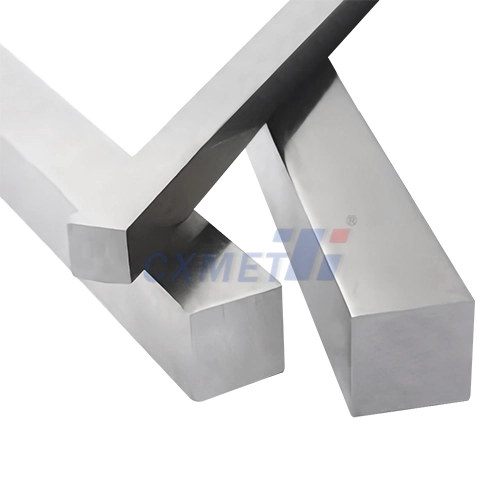
You can buy certified Titanium Square Bar from three main sources: mills that make the bar, specialized distributors that hold stock, and online industrial marketplaces. Mills suit recurring orders and custom sizes. Distributors suit small or urgent lots. Marketplaces expand your options, but you must verify each seller. In every case, the bar should arrive with a mill test certificate that matches the heat number stamped on the material. At CXMET, we produce Titanium Square Bar in Shaanxi, China, and we serve international clients. This guide shows you how to compare sources and place a confident order.
|
|
|

Why Certification Matters When Buying Titanium Square Bar?
What "Certified" Really Means?
Papers show what kind of metal a verified Titanium Square Bar is made of. A heat number links the bar to a single metal melt at the beginning of the paper path. After thtrailemistry and mechanical tests are done, the bar meets a standard. This is written on a mill test certificate, which is also called a material test report. Dimensional checking makes sure that the sides are the right length, straightness, and squareness, as per your order. For most business-to-business programs, ASTM B348 spells out the requirements that titanium bars and billets must meet. Without these records, you can't show proof of grade or tracking to a customer or agent.
Where Titanium Square Bar Earns Its Place?
Titanium Square Bar is used when steel is too heavy or rust makes, it less useful. Titanium weighs 4.51 g/cm³, which is about 60% as dense as steel. It can also handle seawater, chlorides, and many acids. Marine and oil teams use it for bases and cleaning systems that are out at sea. There are many chemical plants that use it in heat exchangers and reactors. It's used in power plants and gas turbines. Companies in the tech and medical fields like that it is safe and not magnetic. When machinists start with square stock, it's easy to make bases, frames, and parts with little waste.
How This Guide Reduces Your Risk?
This guide ws made for engineers, procurement managers, and R&D teams that need to back up every dollar they spend. It sorts mills, wholesalers, and internet sellers by how well they do their jobs. It then tells you how to read a quote, look at your grades, and pick a grade. Each step prepares for a common risk, such as getting the wrong grade, losing records, being late with the delivery, or being shocked by how much it all costs in the end. You can read each part in its own right, or you can jump to the one that fits your level. There you have it. What to check, what to ask, and what to write on your buy order are now clear.
Where Can You Buy a Certified Titanium Square Bar?
Manufacturers, Distributors, and Stockholders
There are two channels, and each one resolves a different problem. The company that makes the metal controls the steps of forging, rolling, or drawing so that they can meet standard needs, specific size needs, and OEM programs. These people are good for prototypes, repairs, and small orders that they can fill quickly because they keep goods in stock. But they might charge extra for certification or cutting. Using local sources can cut down on the time it takes to ship goods. We can give you quotes for both one-time and repeat orders because CXMET makes and sells non-ferrous metals. When you choose, don't just look at the price per unit. Make sure the channel fits your needs for number, time, and documentation.
Online Marketplaces and Regional Suppliers
It's easy to find more people who want to sell on the internet. There is more danger when there is a showing because it doesn't prove that there is stock or that the license is real. Before you pay, make sure the seller is who they say they are. Ask to see an example of a certificate and a picture of the real bar marking as well. Check if the material is in a warehouse or still needs to be made by comparing the grade to the standard. Read the terms of shipping and learn how to write a claim. You should ask the next question if the seller tries to avoid these ones.
Import Details for U.S. Buyers
When you buy something from outside the US, there are a few extra steps. First, agree on the terms of the deal. These terms specify who pays for shipping and security and who is responsible for preparing the goods for shipment abroad. Make sure you have the business papers, packing list, and licenses before the ship leaves. Someone who works for customs can tell you about the fees, taxes, and rules for bringing Titanium Square Bar into the country. Make sure you know the currency and how to pay before you place your order. Also, read any parts of your contract that talk about the country of birth. Give yourself extra time for shipping by sea or air so that your production schedule isn't rushed. The port doesn't have to be late because the terms of the quote are clear.
How to Verify a Certified Titanium Square Bar Supplier?
Start With the Standard and the Certificate
Start with the size that your drawing needs. To make general bars, ASTM B348 is often used. For surgical implants, ASTM F67 is used for unalloyed titanium, and ASTM F136 is used for Ti-6Al-4V ELI. There are guidelines for some projects that are unique to the company, AMS, or DIN. Then ask to see an example of a Mill Test Certificate. It should have the grade, size, number of heats, chemical make-up, mechanical properties, conditions of heat treatment, and test results written on it. For each number, please ensure it falls within the ranges specified in the standard. It's a clear warning sign if the seller doesn't want to give you a sample record.
Match the Heat Number and Check Capabilities
The heat number on the certificate, the record on the bar, and the label on the package must all match. It is false if it does not. Next, ask the service provider to describe what it does. It can sell, melt, forge, roll, draw, machine, or just roll. Mills should be clear about how they work and what the rules are for quality. Test it with ultrasonic waves to see if it can straighten, finish, and do any other checks you need. There are many warning signs, such as prices that are significantly below the market, vague grades like "titanium alloy," and papers that don't have heat numbers. Any of these should get more attention before you decide.
A Practical Supplier Checklist
You can use this short list to compare quotes next to each other. There are various types of risks discussed in each point.
- Technical fit: To make sure it works with the technology, check the supply condition, grade, standard, side length, tolerance, and surface condition. Find out from the seller if they can give you annealed, cold-drawn, hot-rolled, or rolled Titanium Square Bar, and make sure you get the inspection data that goes with it. Make sure that all of your needs are met by the price. After you place the order, there will be no doubt about what will happen.
- Commercial terms: Look at the unit price, the minimum order quantity, the payment terms, the Incoterms, the packing, and whether you can place more than one order. They should split the lines for freight, customs, and taxes, as you've asked. It's hard to understand these costs when they are all added up in a quote.
- Risk controls: Ask to be able to keep track of lots, have choices for third-party inspections, and get help with reports. First, place a small test order with a new supplier. In the purchase order, you should say how you will handle claims and materials that don't meet your standards. You should also say who will pay for the return freight and the new materials. Be sure to keep the sample license and test results in case you are audited again.
Your plan lets you look at different providers without giving them too much thought. Plus, it gives your quality team something to monitor.
Titanium Square Bar Grades, Properties, and Sizing
Comparing Grade 2, Grade 5, and Grade 23
The price, strength, resistance to rust, and ability to bond will depend on the grade you pick. ASTM B348 says that Grade 2 titanium must have a minimum yield strength of 275 MPa. It's clean enough to sell. It is often used in nautical, chemical, and heat transfer gear since it doesn't rust and can be joined together. At least 825 MPa of yield strength, Grade 5 (also called Ti-6Al-4V), is used for parts in medicine, industry, and airplanes. You should use Grade 23, which is the ELI form of Ti-6Al-4V, for medical and essential needs because it is more flexible and less likely to break. CXMET sells Gr1, Gr2, Gr3, Gr4, Gr5, Ti-6Al-4V ELI, Gr7, Gr9, Gr12, and Gr23. The only things that matter are your picture and the rules that go with it.
Key Properties and Weight Calculation
Titanium is dense (4.51 g/cm³), melts at 1668°C, and has an elongation force of 110 to 114 GPa. For MRI machines and devices that are easy to break, the fact that it's not magnetic is important. To figure out how much something weighs, multiply its width by its height by its length by its density. A bar that is one inch wide and one inch tall can hold twelve inches of space. At 0.163 lb/in³, it weighs about 1.96 pounds. That's okay, the real number is a little off. When you're grinding, be careful because the cutting edge gets hot because the material doesn't conduct heat well. Work hardening will happen if the tool stays in one place for too long. In order to keep the job from getting dirty, welding needs inert gas protection, such as argon.
Choosing the Right Size
You shouldn't just pick a size from a book. To begin, look at the finished part and how much it is loaded, worn, shaken, heated, and exposed to rust. Next, make sure there is room for machining so that the end sizes are correct after they are cut. Side length changes the flexural strength, the weight, and the cost of the material. Set the length of the cut, the accuracy, the squareness, the straightness, the corner radius, and the state of the surface. We can make any size Titanium Square Bar you need, whether it's more than 1,000 mm long or less than 6,000 mm long. Sizes range from 4 mm x 4 mm to 200 mm x 200 mm, which is 0.16 inches to 7.9 inches. Send your plan for the important parts and wait for engineers to approve it before you make a decision.
Titanium Square Bar vs. Other Metals, Pricing, and Supplier Choice
Titanium vs. Stainless Steel and Aluminum
Not only the price, but also the whole amount made. It is stronger than most stainless steels when it comes to weight, and it doesn't rust as easily in salt water. It costs more and has to be worked on more carefully and slowly. When weight doesn't matter, stainless steel is often better for general building tasks. Since aluminum has a density of about 2.7 g/cm³, it can be used to make parts with a low density and a moderate load. It does not work as well with salt as it does with titanium. Titanium Square Bar pieces that are long or short are also not the same. When you bend a square bar both ways, it stays straight. You can save weight or make rectangular stock fit in a small place by bending it. The style and the area will help you make the right choice.
Pricing and Procurement Factors
Prices are based on the type, length, amount, supply condition, tolerance, surface finish, certification, cutting, packing, freight, fees, and taxes of the metal. It can be hard to tell what the price per kilogram is when sellers charge different cutting or minimum-order fees. Rates should be changed to cost per foot or cost per piece instead. Buyers in bulk can often work out deals on unit prices, production schedules, and long-term supplies. It's possible that small buyers will have to pay extra to get in faster. Check to see if the bar is already made, on hold for another order, or in stock at all times. Then ask for a quote that includes all of the lines in the base price.
Why Work With a Specialized Supplier Like CXMET?
Shaanxi CXMET Technology Co., Ltd. was founded in 2005 in China's Titanium Valley. Our building is 50,000 square meters, and more than 80 experts help us make things and come up with new ideas. Tin, nickel, tantalum, niobium, tungsten, molybdenum, zirconium, and their alloys are bought by people in the vacuum, medical, electronics, power, marine, oil, chemical, power, metallurgy, and coating industries. You can roll our titanium square bar hot, cold, or warm. You can polish, brighten, machine, or grind its surfaces, and it meets the standards set by ASTM B348, ASTM F67, and ASTM F136. We can also change the sizes, standards, grades, packing, surface treatments, and OEM/ODM work for you. Talk to our team right away to make sure your grade, tolerance, and papers are correct the first time around.
Conclusion
You can buy Titanium Square Bar from mills, wholesalers, stockholders, and even online stores. Each way can send items at different times and in different sizes. The Mill Test Certificate, the heat number, the bar marking, and the data follow the rules, such as ASTM B348, which are the only things that make a certificate real. Grades are based on the service. Grade 2 is good for protecting against rust and being able to weld, Grade 5 is strong, and Grade 23 is for medical and important parts. From the drawing, you should be able to tell the finish, weight, and size. Titanium costs more than stainless steel or aluminum, but it is worth the extra money because it doesn't rust and is very strong for its weight. The budget stays the same because there is a clear standard and a price for the landed cost.
FAQ
Which standards apply to Titanium Square Bar?
Sections H2_007 and H3_016 of ASTM B348 talk about bars and billets made of titanium and titanium alloys. It is important to note that ASTM F67 and F136 cover different types of medical implants. Another thing is that your picture may need to meet AMS, DIN, or customer-specific standards. Before you place your order, make sure you know what they are.
What should a mill certificate show?
The grade, size, number of heats, chemical make-up, mechanical properties, heat-treatment state, and inspection data should all be put down. What is listed on the package and the number on the bar must match the heat number for every Titanium Square Bar.
Which grade fits marine or chemical service?
Some people pick Grade 2 because it doesn't rust and can be joined together. Grade 5 or Grade 23 should be used for parts that need to be strong or important. Your expert should make sure that the final score is in line with the service terms.
Can I order custom sizes?
Yes. You can set your own limits, widths, and lengths with CXMET. Send us your drawing and the number of items you need, and we'll let you know if the item is in stock and how long it will take to make.
How do I estimate weight?
To find the density, which is about 4.51 g/cm³ or 0.163 lb/in³, multiply the width, height, and length by the same number.
Request a Quote for Certified Titanium Square Bar From CXMET
Want to find a Titanium Square Bar source that can answer your technical questions quickly? Type your grade, length, amount of items, tolerances, surface, and delivery address into an email and send it to sales@cxmet.com. CXMET will look at your picture, let you know what we can do, and give you several price quotes for materials, time, and freight. Titanium Square Bar has grown with us for more than 20 years. You can get it in any grade or size you want. Visit https://www.cxmet-tech.com/ to learn more about the goods.
References
1. ASTM International, Standard Specification for Titanium and Titanium Alloy Bars and Billets (ASTM B348/B348M), 2019
2. ASTM International, Standard Specification for Unalloyed Titanium for Surgical Implant Applications (ASTM F67), 2017
3. ASTM International, Standard Specification for Wrought Titanium-6Aluminum-4Vanadium ELI Alloy for Surgical Implant Applications (ASTM F136), 2021
4. ASM International, Titanium: A Technical Guide, 2nd Edition, 2000
5. Wiley-VCH, Titanium and Titanium Alloys: Fundamentals and Applications, 2003
6. ASM International, Materials Properties Handbook: Titanium Alloys, 1994